Hot Articles
Popular Tags
Industrial Standards Gaps That Create Costly Rework
In Industrial Manufacturing, hidden gaps between Industrial Standards, ASME Standards, and IEEE Standards often trigger costly rework, delayed approvals, and supply disruptions. For teams in System Integration, Flow Control, and Strategic Sourcing, these misalignments can affect everything from High-Tensile Bolts to Autonomous Mobile Robots across the Global Supply Chain. Understanding where standards fail to align is the first step toward protecting quality, uptime, and procurement efficiency.
Where do industrial standards gaps actually create rework?
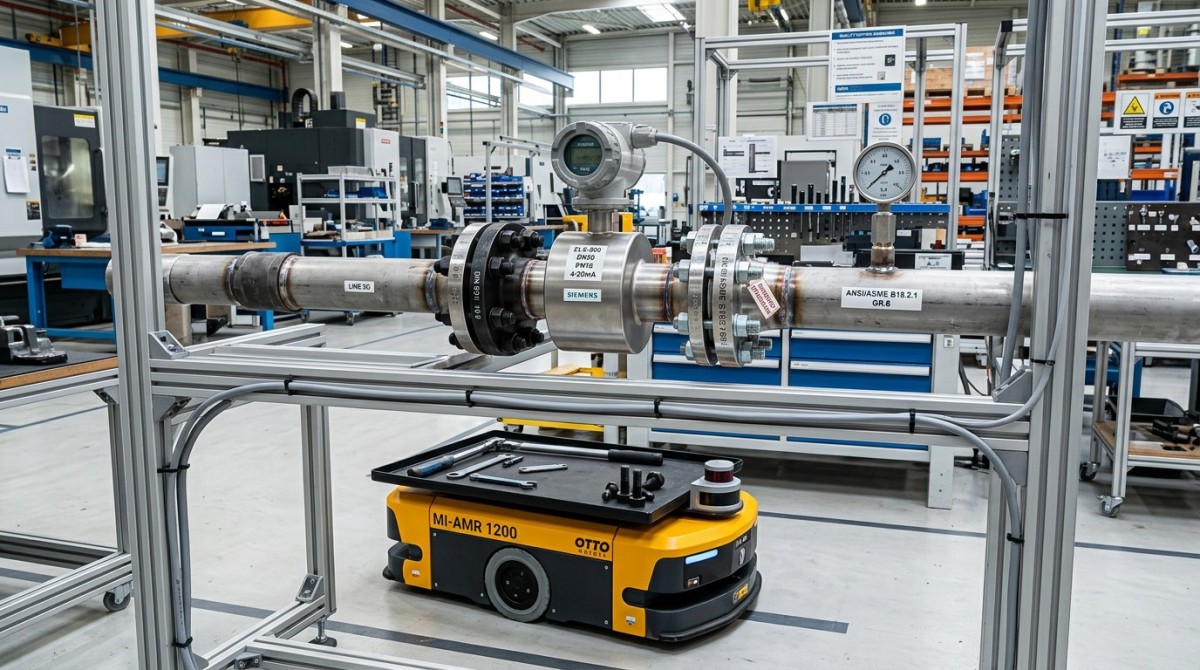
Costly rework rarely starts with a dramatic design failure. In most industries, it begins with a small mismatch between specification language, inspection criteria, and the actual operating environment. A drawing may call for an ASME-based pressure boundary, while the electrical interface follows IEEE conventions and the sourcing team compares suppliers using ISO-oriented documentation. The result is not just technical confusion. It becomes a schedule problem, a budget problem, and eventually a supply-chain problem.
For information researchers and procurement teams, the most common gap appears during cross-functional handoff. Engineering may approve one standard family, quality may audit against another, and the supplier may manufacture to a third regional norm such as DIN or a local equivalent. This is especially visible in critical components with tight tolerances, pressure ratings, vibration exposure, or digital control dependencies. A discrepancy of only 1 drawing revision or 1 test method can trigger 2–4 weeks of clarification.
Operators and system users feel the impact later. A component that technically fits may still fail commissioning if cable shielding, torque sequence, surface treatment, or documentation traceability does not align with plant acceptance rules. In automated facilities, even a ±0.5 mm mounting deviation or an incompatible communication specification can delay robot integration, sensor calibration, or flow-meter verification across several workstations.
For enterprise decision-makers, the hidden cost is cumulative. Rework affects engineering hours, retesting, quarantine inventory, expediting fees, and missed production windows. In projects with 3-stage approval gates—design review, factory acceptance, and site commissioning—an early standards gap can multiply into repeated reviews at every stage.
The four recurring failure points
- Specification mismatch: material grade, thread profile, pressure class, ingress protection, or signal protocol is defined differently across standard systems.
- Testing mismatch: one party expects hydrostatic testing, another requests electrical validation, while the supplier only provides dimensional inspection records.
- Documentation mismatch: certificates, inspection reports, and revision logs do not match the buyer’s approval workflow or regional compliance needs.
- Application mismatch: a compliant part is selected for the wrong duty cycle, temperature range, load pattern, or maintenance interval.
These issues are not limited to one sector. They affect hydraulic power units, industrial fasteners, AMH systems, metering devices, and supply-chain software integrations alike. G-ISC addresses this problem by mapping standards language to real procurement and operating conditions, allowing stakeholders to compare not only what is compliant on paper, but what is workable in production.
Which standards misalign most often across components and systems?
When companies source globally, the issue is rarely the absence of standards. The issue is overlap without equivalence. ISO, ASME, DIN, and IEEE often govern adjacent parts of the same system, yet they do not always define performance, testing, or documentation in the same way. A sourcing team that treats them as interchangeable may approve a supplier that looks acceptable in the quotation stage but fails at installation or final audit.
The table below highlights common standards-gap patterns seen in industrial manufacturing programs. These are not universal outcomes, but they reflect routine friction points in procurement, integration, and quality control for critical components.
The key insight is that standards gaps usually sit at the boundary between disciplines. Mechanical teams focus on fit and strength. Electrical teams focus on communication and safety integrity. Procurement focuses on lead time and cost. Without a shared verification matrix covering at least 5 key checks—design, material, test, interface, and traceability—rework becomes highly likely.
Why overlap does not mean equivalence
Two documents can appear to address the same product category and still produce different downstream outcomes. One may define dimensional interchangeability, another may define pressure design philosophy, and a third may define communication reliability. If a buyer uses only one lens, supplier comparison becomes incomplete.
A practical procurement rule
Before issuing a purchase order, separate requirements into 3 layers: mandatory compliance, application-specific performance, and customer approval documents. This simple structure reduces confusion during the 7–15 day quotation cycle and prevents suppliers from pricing different assumptions under the same item code.
G-ISC supports this process by benchmarking critical components across international standards and supply conditions. That makes it easier for sourcing specialists and system integrators to distinguish nominal compliance from real deployment readiness.
How should procurement teams evaluate rework risk before ordering?
A strong procurement process does more than compare price sheets. It asks whether a component will move from quotation to installation without hidden engineering changes. For buyers across multiple industries, the fastest way to reduce rework is to use a structured evaluation model before vendor award, especially for long-lead, safety-relevant, or integration-sensitive items.
The following table is useful when comparing suppliers of hydraulic components, fasteners, metering instruments, automation devices, or software-linked industrial equipment. It focuses on risk indicators that often surface only after purchase if they are not checked in advance.
This evaluation method works because it converts abstract standards discussions into purchasing checkpoints. It also helps decision-makers compare total landed risk rather than unit price alone. A supplier with a 5% lower quoted cost may create a much higher total project cost if retesting, expedited shipping, or on-site modifications become necessary.
A practical 4-step screening process
- Define criticality: classify items as standard replacement, engineered component, or integration-sensitive equipment.
- Freeze the approval basis: list standards, revisions, tests, and required certificates in one controlled document.
- Compare supplier assumptions: confirm lead time, manufacturing route, inspection scope, and deviations in writing.
- Review life-cycle impact: include maintenance interval, spare strategy, and field replacement complexity over 12–36 months.
For operators and plant teams, this approach also improves maintainability. If procurement checks part interchangeability, torque data, calibration intervals, and interface compatibility before order release, field teams spend less time resolving preventable discrepancies during startup.
What do standards gaps cost in real operations?
Rework costs are often underestimated because they spread across multiple budgets. Engineering logs design changes, quality records nonconformance, procurement pays expedite charges, and operations absorb downtime. In multi-vendor projects, a single nonaligned component can hold up an entire subsystem, especially when final acceptance depends on complete documentation and interface validation.
Typical cost exposure appears in 3 layers. The first is direct correction, such as remachining, replacement, recalibration, or document resubmission. The second is delay cost, often measured in 1–3 extra review cycles or 2–6 weeks of schedule movement. The third is strategic cost, including supplier distrust, emergency resourcing, and inventory distortion across the global supply chain.
This is particularly visible in industries that rely on critical components with volatile raw material inputs. Titanium, steel, and nickel price shifts can already pressure budgets. If rework forces repurchase or emergency substitution, the buyer is exposed not only to technical uncertainty but also to less favorable market timing and cross-border logistics constraints.
Common hidden cost drivers
- Repeated incoming inspection for items that lack the expected documentation package or test references.
- Field modification labor for components that fit physically but not functionally within the target system.
- Emergency freight when a nonconforming batch disrupts a shutdown window or launch schedule.
- Extra inventory buffers created because buyers no longer trust interchangeability across suppliers.
Why total cost matters more than piece price
For high-volume fasteners, metering devices, hydraulic seals, or automation subassemblies, even a low-cost discrepancy can scale quickly. If a plant receives a batch that requires sorting, retorque verification, relabeling, or firmware adjustment, the labor impact can exceed the original unit savings. That is why mature procurement teams track not just purchase price variance, but also approval time, defect escape risk, and commissioning readiness.
G-ISC helps organizations connect technical benchmarking with commercial intelligence. By monitoring supply trends, standards interpretation, and cross-border conditions across five industrial pillars, it supports sourcing decisions that reduce surprise cost rather than merely chasing the lowest quote.
How can companies prevent standards-related rework across the supply chain?
Prevention starts with standardization of internal decisions, not just external supplier demands. Many companies require suppliers to be compliant, yet their own teams use fragmented templates, mixed revision histories, and inconsistent approval language. A workable control method should cover at least 6 items: specification source, revision date, application limits, required tests, document package, and acceptance owner.
Cross-functional review is essential. Engineering, quality, operations, and procurement should align before RFQ release, not after the first discrepancy report. In practical terms, that means holding a pre-award review for high-risk items and defining what cannot be substituted. For engineered components, a 30-minute standards alignment review can prevent weeks of corrective action later.
Digital traceability also matters. In AMH projects, flow control systems, and connected industrial equipment, documentation should link the approved specification to the delivered part, firmware version, and inspection record. If each item can be traced through 3 checkpoints—quotation, production, and site acceptance—teams can identify deviations early instead of discovering them during commissioning.
Recommended controls for buyers and operators
- Use one controlled requirement sheet for each critical item instead of scattered drawings, emails, and verbal approvals.
- Require suppliers to declare deviations explicitly, even if the part is considered “equivalent” in their local market.
- Define acceptance tests by method and record format, not only by general performance intent.
- Review maintainability factors such as spare compatibility, torque tools, calibration frequency, and replacement access.
Where G-ISC adds strategic value
G-ISC combines technical intelligence with supply-chain visibility. That is especially useful when buyers need to compare standards-based suitability, raw material exposure, and delivery feasibility at the same time. Instead of treating compliance, sourcing, and commercial timing as separate discussions, decision-makers can evaluate them together and select options that are more robust across the full procurement cycle.
This is relevant for multinational manufacturers, system integrators, and strategic sourcing teams managing complex production lines. Whether the issue involves hydraulic assemblies, aerospace-grade fasteners, AMR interfaces, precision valves, or predictive orchestration software, the same principle applies: standard alignment must be verified at the component, system, and documentation levels.
FAQ: what should buyers, users, and decision-makers ask first?
The questions below reflect common search and procurement intent across industrial manufacturing programs. They are useful for early-stage research, supplier prequalification, and internal project alignment.
How do I know whether two standards are equivalent for procurement?
Do not assume equivalence from similar terminology alone. Check 4 points: scope, performance basis, test method, and documentation output. Two standards may both apply to the same category yet define different acceptance logic. If any of those 4 points differs, request a formal deviation review before purchase.
Which products are most exposed to costly rework from standards gaps?
Items with safety, pressure, load, motion, or communication sensitivity carry the highest exposure. Common examples include hydraulic cylinders, high-tensile fasteners, flow meters, smart control devices, and AMR subsystems. These products usually involve more than one discipline, so hidden gaps appear faster and cost more to resolve.
What should procurement request from suppliers during quotation?
At minimum, ask for applicable standards, revision references, material declaration, inspection scope, lead time range, and declared deviations. For engineered items, also request interface details and sample document formats. This can usually be organized into a 6-point RFQ checklist and completed before commercial comparison begins.
How long does standards clarification usually delay a project?
In common industrial procurement cycles, a simple clarification may add 3–7 business days. If it affects testing, material substitution, or customer approval, the delay often expands to 2–4 weeks. In multi-vendor systems, the downstream effect can be longer because one unresolved interface can block broader commissioning activities.
Why choose us for standards alignment and sourcing decisions?
G-ISC is built for organizations that cannot afford avoidable rework in critical components and industrial systems. Our advantage is not limited to catalog comparison. We connect standards interpretation, component benchmarking, supply-chain intelligence, and sourcing judgment across Advanced Hydraulic & Fluid Power, Precision Industrial Fasteners & Connectors, Automated Material Handling, Intelligent Flow Metering & Control, and AI-Driven Supply-Chain Orchestration Software.
If your team is reviewing a new project or correcting a recurring approval problem, we can support the most practical decision points: parameter confirmation, standards mapping, supplier comparison, lead-time review, material-risk visibility, documentation expectations, and custom sourcing strategy. This is especially valuable when multiple standards families intersect in one system and internal teams need a clearer decision basis.
You can contact us to discuss 5 concrete topics: specification alignment, product selection, delivery cycle planning, certification and document requirements, and sample or quotation coordination. For complex programs, we can also help structure a pre-award review framework so that procurement, engineering, and operations evaluate the same risk picture before orders are released.
When rework risk is driven by gaps between Industrial Standards, ASME Standards, IEEE Standards, and real operating conditions, the right support should clarify both technical fit and commercial consequences. That is where a standards-aware, supply-chain-informed approach creates measurable value.
Recommended News
 Oct 09, 2026How to Assess a Jade Bangles Manufacturer for Authenticity and OEM QualityAssess a jade bangles manufacturer for authenticity, treatment disclosure, OEM consistency, quality control, certification, and export-ready documentation.● Marcus Valve
 Oct 02, 2026How Aircraft Hydraulic Safety Alerts Help Detect Leaks and Pressure Loss EarlyAircraft hydraulic safety alerts detect leaks and pressure loss early through smarter monitoring of pressure, fluid quantity, temperature, pump behavior, and actuator response.● Marcus Valve
 Sep 27, 2026Hydraulic Accumulator Precharge: How to Set It for Reliable Pressure ControlHydraulic accumulator precharge guide: set nitrogen pressure accurately for stable control, usable fluid volume, safer operation, and longer system life.● Marcus Valve
 Sep 26, 2026Valve Leakage Class Data: How to Interpret Allowable Leakage for Critical ServiceValve leakage class data explained: learn how to assess allowable leakage, test media, pressure differential, seat design, and standards for critical valve service.● Marcus Valve
 Sep 21, 2026Wholesale Vending Machines: A Buyer’s Checklist for Pricing, Capacity, and Service SupportWholesale vending machines buyer’s checklist: compare delivered pricing, real product capacity, payment options, installation needs, and dependable service support.● Marcus Valve
 Sep 20, 2026How to Evaluate a Hydraulic Manifold Manufacturer for High-Pressure SystemsHydraulic Manifolds manufacturer evaluation guide: compare pressure ratings, materials, machining, testing, cleanliness, and traceability for reliable high-pressure systems.● Marcus Valve
 Sep 08, 2026How to Specify High-Pressure Fluid Power Systems for Demanding Industrial Duty CyclesFluid Power high pressure system specification guide: optimize duty cycles, fatigue life, cleanliness, thermal control, safety, and supplier reliability.● Marcus Valve
 Sep 02, 2026How to Set Piston Accumulator Precharge Pressure for Reliable Hydraulic PerformancePiston accumulator precharge pressure: learn how to set P0, P1, and P2 for dependable hydraulic energy storage, safety reserves, and pulsation control.● Marcus Valve
 Aug 27, 2026How to Reduce Hydraulic Manifold Pressure Drop Without Undersizing Flow CapacityHydraulic manifold pressure drop: learn practical ways to cut energy loss, protect flow capacity, improve thermal stability, and optimize valve and port design.● Marcus Valve
 Aug 17, 2026How to Choose the Right Outdoor Patio Heater for Commercial SpacesOutdoor patio heaters for commercial spaces: learn how to choose the right model for comfort, safety, durability, and lower operating costs.● Marcus Valve
 Aug 12, 2026How to Select Hydraulic Components for Industrial Machinery by Load, Pressure, and Duty CycleHydraulic components for industrial machinery: learn how to match load, pressure, and duty cycle to reduce downtime, avoid oversizing, and improve reliability.● Marcus Valve
 Aug 09, 2026How to Size a High Pressure Hydraulic Accumulator for Peak Load StabilityHigh pressure hydraulic accumulator sizing made clear: learn how to define pressure windows, usable oil volume, and response speed for stable peak loads and smarter selection.● Marcus Valve
 Aug 03, 2026What Criteria Matter Most When Comparing Solutions for a B2B Buying Decision?Solution comparison criteria for B2B buying: learn how to weigh technical fit, supplier reliability, TCO, scalability, and supply-chain risk to choose with confidence.● Marcus Valve
 Jul 27, 2026How to Choose Custom Printed Guitar Picks for Branding, Events, and Retail SalesGuitar picks custom printed: learn how to choose the right material, thickness, print quality, packaging, and supplier for branding, events, and retail success.● Marcus Valve
 Jul 24, 2026How Do Metronomes and Tuners Work Together to Improve Practice Accuracy?Metronomes and tuners work best together to improve practice accuracy. Discover how they sharpen timing, stabilize pitch, and help musicians build more reliable performance results.● Marcus Valve
 Jul 23, 2026Product Selection for Electronic Components: Key Criteria for Reliable Design ChoicesProduct Selection for electronic components starts with reliability. Learn how to evaluate thermal, compliance, and supply-chain risks to build durable, cost-efficient designs.● Marcus Valve
 Jul 21, 2026How to Select Stainless Steel Level Transmitters for Corrosive Liquid ApplicationsStainless steel Level Transmitters selection for corrosive liquids starts with media, seals, and pressure. Learn how to choose reliable, compliant options that cut failure risk and downtime.● Marcus Valve
 Jul 12, 2026Luxury Vinyl Tile for Commercial Spaces: How to Compare Wear, Cost, and MaintenanceLuxury vinyl tile commercial flooring guide: compare wear layer, lifecycle cost, and maintenance needs to choose a durable, low-risk option for busy commercial spaces.● Marcus Valve
 Jul 10, 2026Component Specification Requirements Explained: How to Review Tolerance, Load, and FitComponent specification requirements explained clearly: learn how to review tolerance, load, and fit to reduce risk, improve uptime, and make smarter approval decisions.● Marcus Valve
 Jul 09, 2026Playground Borders: Which Materials Work Best for Drainage, Safety, and Low MaintenancePlayground borders compared by drainage, safety, and maintenance. Discover whether rubber, concrete, timber, composite, or metal is the best fit for your project.● Marcus Valve
 Jul 08, 2026Digital Pressure Transmitters Selection Guide: Accuracy, Output Signal, and Pressure RangeDigital Pressure Transmitters selection guide covering accuracy, output signal, and pressure range. Learn how to compare options for reliable performance, compatibility, and lower lifecycle costs.● Marcus Valve
 Jul 05, 2026Indoor Playground Maintenance Checklist: Daily, Weekly, and Monthly Tasks That MatterIndoor playground maintenance made practical: discover the daily, weekly, and monthly tasks that improve safety, reduce downtime, and extend equipment life.● Marcus Valve
 Jun 30, 2026Product Selection by Current Rating: How to Match Electrical Loads and Safety MarginsProduct Selection by current rating made practical: learn how to match real electrical loads, derating factors, and safety margins for safer systems, longer component life, and smarter buying decisions.● Marcus Valve
 Jun 26, 2026Pressure Transmitters Selection Guide: Key Specifications for Industrial SystemsPressure Transmitters selection guide for industrial systems: learn key specs, avoid costly mistakes, and choose the right fit for reliable performance.● Marcus Valve