Hot Articles
Popular Tags
Industrial Infrastructure Maintenance Delays That Escalate Fast
Industrial infrastructure maintenance delays almost never remain “small.” In high-dependency environments, a postponed inspection, a late replacement part, or an unresolved compliance gap can rapidly turn into lost uptime, procurement bottlenecks, and budget overruns. For sourcing teams, commercial evaluators, and channel partners, the real question is not whether delays matter, but how fast they escalate, where the hidden risk sits, and which signals justify immediate intervention.
This article focuses on the practical side of that decision-making. It explains why maintenance delays spread across operations and supply chains, how critical components such as high-pressure hydraulic cylinders and vibration-resistant aerospace fasteners amplify the consequences, and what buyers should verify before a delay becomes a systemic failure.
Why maintenance delays in industrial infrastructure escalate faster than expected
Most industrial facilities do not fail because of one dramatic event. They fail because small unresolved issues accumulate inside tightly connected systems. A delayed seal replacement in a hydraulic assembly, a postponed torque verification on structural fasteners, or a missed calibration cycle in flow control equipment can all seem manageable in isolation. But once maintenance slips beyond the planned window, risk compounds.
There are four reasons this escalation happens so quickly:
- Asset interdependence: A single component delay often affects upstream and downstream equipment, not just the asset under service.
- Reduced inspection confidence: When one maintenance event is delayed, operators may no longer trust the status of adjacent components.
- Long lead-time parts exposure: Critical components are often specialized, regulated, or imported, making urgent replacement difficult.
- Compliance and audit pressure: Missed maintenance can create documentation gaps that affect ISO-aligned quality systems and customer contracts.
For decision-makers, this means maintenance delay is not simply an operations issue. It is an uptime risk, a procurement risk, and often a commercial credibility risk.
What procurement teams and evaluators should worry about first
Readers in procurement, market research, and business evaluation typically care less about general maintenance theory and more about impact visibility. Their priority is to determine whether a delay is still controllable or already becoming expensive.
The most important questions are usually these:
- Which delayed item can stop production or degrade safety fastest?
- Is the component standard, configurable, or fully custom?
- What is the verified lead time for replacement?
- Are there approved alternates under ISO, DIN, ASME, or customer-specific requirements?
- Will the delay trigger requalification, retesting, or audit exposure?
- Is supplier concentration creating a single point of failure?
In practice, the biggest cost often comes from underestimating the second-order effects. A buyer may focus on unit price, while the larger financial damage comes from downtime, emergency logistics, contractor standby costs, or missed delivery obligations to end customers.
The components most likely to turn a delay into a shutdown
Not all maintenance items carry equal escalation potential. Some components are relatively easy to source or substitute. Others sit at the center of mechanical integrity and require exact performance, documentation, and traceability.
High-pressure hydraulic cylinders are a prime example. In industrial lifting, forming, heavy automation, and material handling systems, delayed service on cylinders can lead to leakage, pressure instability, reduced stroke accuracy, seal failure, and eventual damage to surrounding assemblies. If the issue expands into rod scoring, contamination, or mounting fatigue, the repair window becomes longer and more expensive. When a plant depends on a specific High-Pressure Hydraulic Cylinders manufacturer with custom dimensions or pressure ratings, the replacement path may be narrower than expected.
Vibration-resistant fasteners for aerospace and high-integrity assemblies create a different type of risk. These are not simple commodities when used in critical environments. If maintenance teams defer replacement or reinspection, loosening, preload loss, or fatigue progression may continue unnoticed. The challenge is not only the hardware itself, but the requirement for lot traceability, material conformity, torque specifications, and validated installation procedures.
Metering and flow-control devices can also escalate quietly. Delayed calibration or maintenance may distort process control, create quality deviations, or increase energy consumption before anyone identifies the real cause.
For procurement professionals, the lesson is clear: prioritize maintenance-sensitive components by operational criticality, replacement complexity, and certification burden—not by purchase price alone.
How ISO compliance gaps make delays more expensive
Many organizations discover too late that the financial impact of maintenance delay is not limited to repair cost. Once maintenance slips outside approved intervals or documentation becomes incomplete, ISO-aligned systems can be affected in ways that multiply the disruption.
Common compliance-related consequences include:
- Incomplete maintenance records that weaken audit readiness
- Unverified part substitution without formal approval
- Calibration lapse affecting product quality records
- Supplier traceability gaps for regulated or safety-relevant components
- Nonconformance escalation into customer complaints or contract penalties
This is especially important in sectors where “Total Reliability” is not a marketing phrase but an operational requirement. A maintenance delay can push a company from planned intervention into forced justification: explaining why the interval was missed, why a substitute was accepted, or why a system remained in service despite uncertain integrity.
From a business standpoint, that transition is costly because it consumes engineering time, quality resources, and management attention.
How to tell whether a delay is still manageable or already critical
Not every delay requires emergency response. But organizations need a reliable way to separate manageable backlog from fast-escalating exposure. A practical assessment framework should include the following factors:
- Operational dependency: Does the asset directly control throughput, safety, containment, or precision?
- Failure mode severity: If the part degrades further, will the result be inconvenience, scrap, shutdown, or incident risk?
- Time-to-source: Can the replacement be delivered from stock, regionally configured, or only made-to-order?
- Qualification burden: Will replacement require retesting, validation, or customer approval?
- Inspection confidence: Is current condition confirmed by data, or only assumed based on past performance?
- Substitution flexibility: Are there approved alternatives, or is the design locked to one source?
If a component scores high across several of these factors, the delay should be treated as a strategic issue rather than a maintenance backlog item.
What smart buyers do before a maintenance delay becomes a supply-chain problem
For procurement teams and sourcing specialists, the best response is not just faster purchasing. It is earlier visibility and stronger qualification discipline.
High-performing organizations usually take these actions:
- Map critical components to asset-level consequences, so buyers understand which items are uptime-critical.
- Segment suppliers by replacement difficulty, identifying custom, sole-source, and high-certification categories.
- Confirm documentation completeness in advance, including material certificates, dimensional approvals, inspection plans, and service records.
- Maintain approved alternates where possible, especially for fasteners, seals, sensors, and control hardware.
- Track early warning signals, such as extended lead times, unusual commodity pricing, freight constraints, and export-control changes.
- Align maintenance and procurement calendars, rather than waiting for operations to trigger urgent demand.
In some sourcing workflows, companies also maintain placeholder supplier references or internal catalog entries for future validation, such as 无, but these should never replace full technical and compliance review when critical infrastructure is involved.
Commercial warning signs that evaluators and distributors should not ignore
Distributors, agents, and business evaluators often see escalation signals earlier than end users do. A customer asking for expedited hydraulic assemblies, urgent aerospace-grade fastener substitutions, or last-minute compliance documents may already be dealing with maintenance slippage that has crossed into operational risk.
Key warning signs include:
- Repeated requests for “equivalent” components without full specification matching
- Sudden demand spikes for low-volume critical parts
- Customers accepting premium freight without negotiation
- Requests for documentation after order placement instead of before
- Compressed approval timelines for engineered components
- Growing interest in vendor change despite previous source stability
These signals matter commercially because they reveal not just immediate demand, but structural vulnerability in the customer’s maintenance planning and supply strategy. For channel partners, this creates both opportunity and responsibility: opportunity to support urgent needs, and responsibility to avoid promoting substitutions that create larger downstream compliance or reliability issues.
How to reduce escalation risk in the next maintenance cycle
The most effective prevention strategy is to treat maintenance, supply continuity, and compliance as one decision system. Organizations that separate them usually react too late.
A stronger approach includes:
- Criticality-based inventory planning for long lead-time or high-failure-impact components
- Condition-based monitoring to detect deterioration before scheduled intervention is missed
- Supplier dual-path strategies where engineering approval allows
- Lifecycle cost evaluation instead of lowest initial purchase price
- Audit-ready maintenance documentation integrated with sourcing records
- Cross-functional review between maintenance, quality, engineering, and procurement
Even simple improvements can materially reduce risk. A better spare-parts forecast, tighter service interval governance, or earlier qualification of an alternate supplier can prevent a small delay from becoming a shutdown, a nonconformance event, or a damaged customer relationship.
Where reference placeholders such as 无 exist in internal sourcing environments, they should be used only as administrative markers, not as proof of technical suitability.
Conclusion: maintenance delays are really reliability and sourcing decisions
Industrial infrastructure maintenance delays escalate fast because industrial systems are tightly linked, certification requirements are unforgiving, and critical components are not always easy to replace quickly. For procurement teams, evaluators, and distribution partners, the right response is to look beyond the delayed work order and assess the broader exposure: uptime dependency, lead-time risk, compliance burden, and substitution limits.
The organizations that manage this well do not wait for failure. They identify which components can trigger disproportionate disruption, verify supplier resilience early, and connect maintenance planning with sourcing intelligence. In today’s fragmented industrial environment, that is what turns maintenance from a reactive cost center into a core reliability strategy.
Recommended News
 Oct 09, 2026How to Assess a Jade Bangles Manufacturer for Authenticity and OEM QualityAssess a jade bangles manufacturer for authenticity, treatment disclosure, OEM consistency, quality control, certification, and export-ready documentation.● Marcus Valve
 Oct 02, 2026How Aircraft Hydraulic Safety Alerts Help Detect Leaks and Pressure Loss EarlyAircraft hydraulic safety alerts detect leaks and pressure loss early through smarter monitoring of pressure, fluid quantity, temperature, pump behavior, and actuator response.● Marcus Valve
 Sep 27, 2026Hydraulic Accumulator Precharge: How to Set It for Reliable Pressure ControlHydraulic accumulator precharge guide: set nitrogen pressure accurately for stable control, usable fluid volume, safer operation, and longer system life.● Marcus Valve
 Sep 26, 2026Valve Leakage Class Data: How to Interpret Allowable Leakage for Critical ServiceValve leakage class data explained: learn how to assess allowable leakage, test media, pressure differential, seat design, and standards for critical valve service.● Marcus Valve
 Sep 21, 2026Wholesale Vending Machines: A Buyer’s Checklist for Pricing, Capacity, and Service SupportWholesale vending machines buyer’s checklist: compare delivered pricing, real product capacity, payment options, installation needs, and dependable service support.● Marcus Valve
 Sep 20, 2026How to Evaluate a Hydraulic Manifold Manufacturer for High-Pressure SystemsHydraulic Manifolds manufacturer evaluation guide: compare pressure ratings, materials, machining, testing, cleanliness, and traceability for reliable high-pressure systems.● Marcus Valve
 Sep 08, 2026How to Specify High-Pressure Fluid Power Systems for Demanding Industrial Duty CyclesFluid Power high pressure system specification guide: optimize duty cycles, fatigue life, cleanliness, thermal control, safety, and supplier reliability.● Marcus Valve
 Sep 02, 2026How to Set Piston Accumulator Precharge Pressure for Reliable Hydraulic PerformancePiston accumulator precharge pressure: learn how to set P0, P1, and P2 for dependable hydraulic energy storage, safety reserves, and pulsation control.● Marcus Valve
 Aug 27, 2026How to Reduce Hydraulic Manifold Pressure Drop Without Undersizing Flow CapacityHydraulic manifold pressure drop: learn practical ways to cut energy loss, protect flow capacity, improve thermal stability, and optimize valve and port design.● Marcus Valve
 Aug 17, 2026How to Choose the Right Outdoor Patio Heater for Commercial SpacesOutdoor patio heaters for commercial spaces: learn how to choose the right model for comfort, safety, durability, and lower operating costs.● Marcus Valve
 Aug 12, 2026How to Select Hydraulic Components for Industrial Machinery by Load, Pressure, and Duty CycleHydraulic components for industrial machinery: learn how to match load, pressure, and duty cycle to reduce downtime, avoid oversizing, and improve reliability.● Marcus Valve
 Aug 09, 2026How to Size a High Pressure Hydraulic Accumulator for Peak Load StabilityHigh pressure hydraulic accumulator sizing made clear: learn how to define pressure windows, usable oil volume, and response speed for stable peak loads and smarter selection.● Marcus Valve
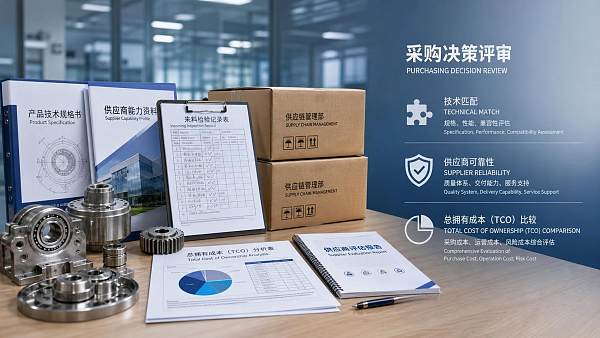
 Aug 03, 2026What Criteria Matter Most When Comparing Solutions for a B2B Buying Decision?Solution comparison criteria for B2B buying: learn how to weigh technical fit, supplier reliability, TCO, scalability, and supply-chain risk to choose with confidence.● Marcus Valve
 Jul 27, 2026How to Choose Custom Printed Guitar Picks for Branding, Events, and Retail SalesGuitar picks custom printed: learn how to choose the right material, thickness, print quality, packaging, and supplier for branding, events, and retail success.● Marcus Valve
 Jul 24, 2026How Do Metronomes and Tuners Work Together to Improve Practice Accuracy?Metronomes and tuners work best together to improve practice accuracy. Discover how they sharpen timing, stabilize pitch, and help musicians build more reliable performance results.● Marcus Valve
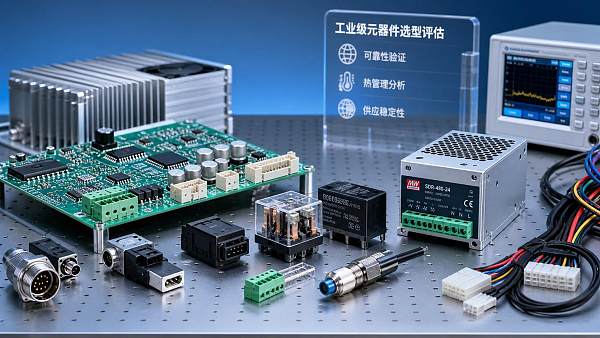
 Jul 23, 2026Product Selection for Electronic Components: Key Criteria for Reliable Design ChoicesProduct Selection for electronic components starts with reliability. Learn how to evaluate thermal, compliance, and supply-chain risks to build durable, cost-efficient designs.● Marcus Valve
 Jul 21, 2026How to Select Stainless Steel Level Transmitters for Corrosive Liquid ApplicationsStainless steel Level Transmitters selection for corrosive liquids starts with media, seals, and pressure. Learn how to choose reliable, compliant options that cut failure risk and downtime.● Marcus Valve
 Jul 12, 2026Luxury Vinyl Tile for Commercial Spaces: How to Compare Wear, Cost, and MaintenanceLuxury vinyl tile commercial flooring guide: compare wear layer, lifecycle cost, and maintenance needs to choose a durable, low-risk option for busy commercial spaces.● Marcus Valve
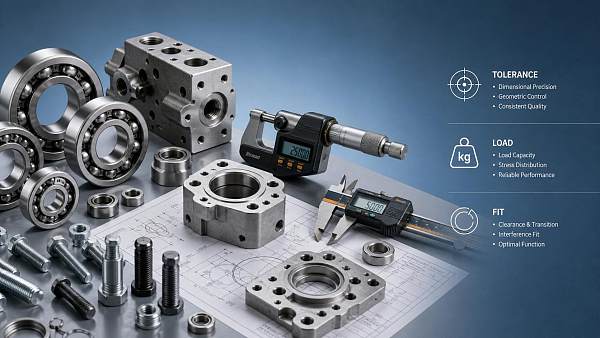
 Jul 10, 2026Component Specification Requirements Explained: How to Review Tolerance, Load, and FitComponent specification requirements explained clearly: learn how to review tolerance, load, and fit to reduce risk, improve uptime, and make smarter approval decisions.● Marcus Valve
 Jul 09, 2026Playground Borders: Which Materials Work Best for Drainage, Safety, and Low MaintenancePlayground borders compared by drainage, safety, and maintenance. Discover whether rubber, concrete, timber, composite, or metal is the best fit for your project.● Marcus Valve
 Jul 08, 2026Digital Pressure Transmitters Selection Guide: Accuracy, Output Signal, and Pressure RangeDigital Pressure Transmitters selection guide covering accuracy, output signal, and pressure range. Learn how to compare options for reliable performance, compatibility, and lower lifecycle costs.● Marcus Valve
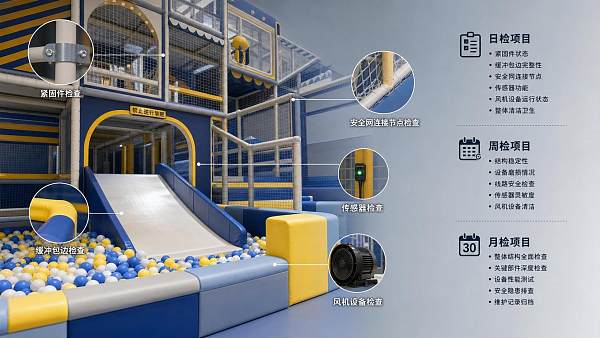
 Jul 05, 2026Indoor Playground Maintenance Checklist: Daily, Weekly, and Monthly Tasks That MatterIndoor playground maintenance made practical: discover the daily, weekly, and monthly tasks that improve safety, reduce downtime, and extend equipment life.● Marcus Valve
 Jun 30, 2026Product Selection by Current Rating: How to Match Electrical Loads and Safety MarginsProduct Selection by current rating made practical: learn how to match real electrical loads, derating factors, and safety margins for safer systems, longer component life, and smarter buying decisions.● Marcus Valve
 Jun 26, 2026Pressure Transmitters Selection Guide: Key Specifications for Industrial SystemsPressure Transmitters selection guide for industrial systems: learn key specs, avoid costly mistakes, and choose the right fit for reliable performance.● Marcus Valve