Hot Articles
Popular Tags
ASME Standards Questions That Delay Pressure Equipment Approval
ASME Standards questions often delay pressure equipment approval for one simple reason: the issue is usually not the metal, the vessel, or the design itself—it is the gap between what was designed, what was documented, and what the reviewer expects to verify. For industrial buyers, project teams, operators, and business decision-makers, that gap can translate into missed delivery dates, resubmittals, supplier disputes, and avoidable compliance risk.
In practice, most approval delays happen around a predictable set of questions: Which ASME code section applies? Is the equipment in scope for code stamping? Are material traceability, welding procedures, NDE records, pressure test reports, and nameplate data complete? Does the package satisfy local jurisdictional requirements in addition to ASME requirements? When these questions are handled late, pressure equipment approval becomes a bottleneck for manufacturing schedules and global sourcing plans.
This article focuses on the questions that most commonly slow approval, why they matter, and how procurement teams, engineering leaders, and sourcing decision-makers can reduce delay before equipment reaches the review stage.
Which ASME standards questions usually hold up pressure equipment approval?
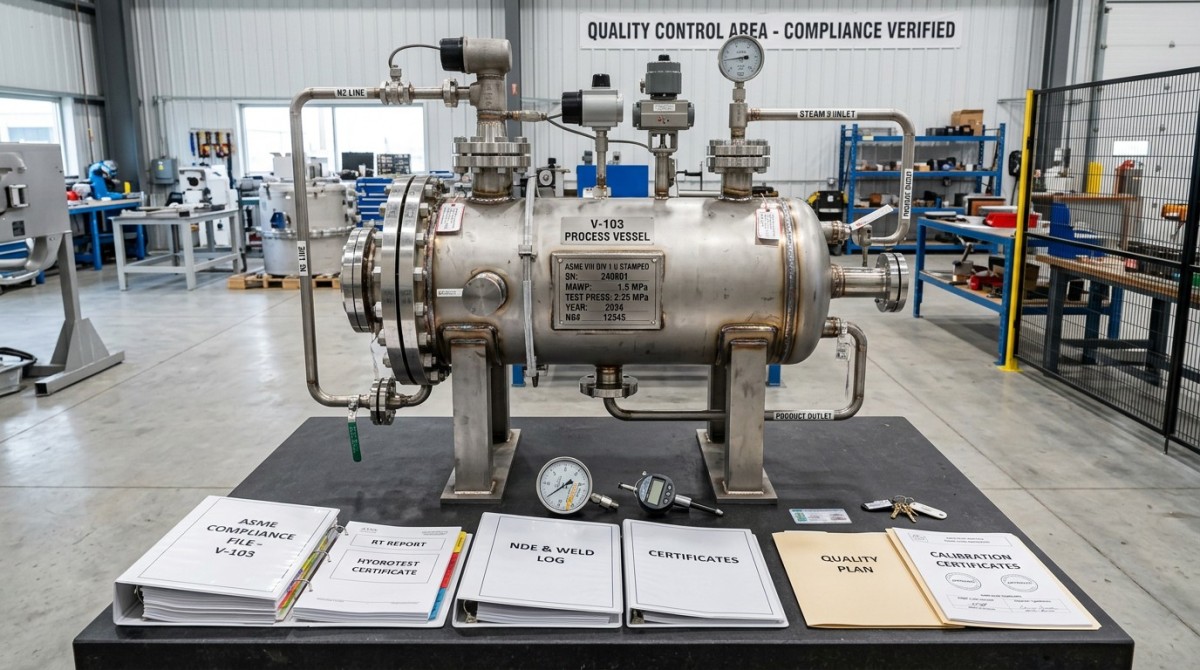
The biggest delays rarely come from obscure technical details. They usually come from a short list of approval-critical questions that reviewers, inspectors, customers, or authorities ask repeatedly. If these are not answered clearly and early, the approval process slows down.
Common delay-triggering questions include:
- Which ASME code applies? Pressure vessels, piping, boilers, and related components may fall under different code sections. Misclassification is one of the most common early-stage errors.
- Is ASME certification or code stamping required? Not every pressure component needs the same certification pathway, but assuming a stamp is optional when it is actually required can stop shipment or site acceptance.
- What are the design conditions? Approval reviewers look for clarity on design pressure, design temperature, corrosion allowance, fluid service, and operating envelope.
- Are materials code-compliant and traceable? Material certificates, heat numbers, and traceability records must align with the approved design and bill of materials.
- Are welding procedures and welder qualifications valid? Missing or expired WPS, PQR, and welder qualification records are frequent reasons for approval delay.
- Is the NDE scope sufficient and documented? Radiography, ultrasonic testing, PT, MT, and visual inspection records must match code and project requirements.
- Has pressure testing been performed correctly? Hydrotest or pneumatic test pressure, medium, duration, calibration, and witness records must be complete.
- Does the data report package match the physical equipment? Nameplate details, serial numbers, drawings, revisions, and manufacturing records must be consistent.
- Are local regulatory requirements also met? ASME compliance does not automatically equal acceptance in every country or jurisdiction.
For buyers and sourcing managers, the key point is this: approval delays are usually documentation and interpretation problems before they become product problems.
Why do these questions create delays even when the equipment is already built?
By the time a pressure vessel, skid, cylinder, or flow-control assembly is finished, many approval issues become expensive to fix. A reviewer may question code applicability, joint efficiency assumptions, material substitutions, or inspection scope only after fabrication is complete. At that stage, the project is exposed to rework, retesting, document recovery, or even full rejection.
Several structural reasons explain why this happens:
- Design, procurement, and quality teams work from different assumptions. Engineering may specify one code path, while procurement sources equivalent-looking materials or subcontracted fabrication without fully matching code requirements.
- Supplier documentation is incomplete or inconsistent. In global supply chains, technical files often arrive in fragments across multiple plants, subcontractors, or regions.
- ASME standards are interpreted together with customer specifications. Many projects fail not because ASME was ignored, but because customer-specific requirements were stricter than the base code.
- Jurisdictional requirements are overlooked. National registration, notified body review, local inspection, or import compliance may sit outside the core ASME package but still determine approval.
- Late-stage design changes are poorly controlled. A nozzle change, material substitution, or revised pressure rating can invalidate parts of the earlier compliance record.
For enterprise decision-makers, this means pressure equipment approval should be treated as a cross-functional risk-management activity, not as a final QA checkbox.
What do procurement teams and sourcing leaders need to verify before placing an order?
Procurement has a larger impact on ASME approval than many organizations realize. The right commercial decision is not just the lowest unit price; it is the supplier package most likely to pass technical review without schedule disruption.
Before placing an order, procurement teams should verify these points:
- Code scope is written into the purchase specification. The RFQ and PO should clearly state the applicable ASME section, edition if relevant, stamping requirements, MDR expectations, and inspection hold points.
- Supplier certification status is current. If ASME code stamping is required, confirm the manufacturer holds valid authorization for the required scope.
- Material sourcing controls are defined. Ask how the supplier maintains traceability from raw material receipt to final assembly.
- Subcontracted processes are controlled. Welding, heat treatment, machining, coating, and NDE performed by third parties must still remain within the approved quality system.
- Document deliverables are listed line by line. Do not rely on generic wording such as “full quality dossier.” Specify drawings, calculations, MTCs, WPS/PQR, welder qualifications, NDE reports, calibration records, pressure test reports, nameplate details, and final data book contents.
- Inspection milestones are agreed in advance. Witness points, hold points, and release conditions should be defined before production starts.
- Deviation approval rules are formalized. No material substitution or design deviation should proceed without written technical review.
In strategic sourcing terms, this is how organizations reduce the hidden cost of “cheap but approval-risky” supply.
Which technical documents are most often missing or questioned during review?
If a pressure equipment approval package is delayed, the problem often lies in a few high-risk documents. These are the files reviewers use to connect design intent, code compliance, fabrication quality, and final equipment identity.
The most frequently questioned documents include:
- General arrangement and fabrication drawings with correct revision control
- Design calculations showing code basis, load assumptions, and allowable stresses
- Material Test Certificates linked to actual components installed
- PMI or traceability records for critical alloy materials
- WPS, PQR, and welder performance qualifications
- NDE procedures and reports including acceptance criteria
- PWHT records where required
- Hydrotest or pneumatic test documentation with calibrated gauges and witness records
- Nameplate and stamping details matching the approved design file
- Manufacturer’s Data Report or equivalent final documentation package
A common issue is not total absence, but mismatch. For example, the drawing revision may not match the pressure test report, or the material certificate may reference heats that do not align with fabrication records. These inconsistencies trigger questions because they undermine confidence in the whole approval file.
How can operators and technical users identify approval risk before equipment arrives on site?
Operators, maintenance leaders, and system users are often the first to feel the impact of delayed approval, even if they were not involved in supplier selection. They can still help reduce risk by checking a few practical indicators before commissioning.
Useful pre-arrival checks include:
- Confirm that the equipment nameplate data matches the approved purchase specification.
- Verify maximum allowable pressure, temperature range, fluid service, and installation limitations.
- Request the final document package before shipment, not after delivery.
- Check whether spare parts, seals, fittings, and pressure boundary accessories are included in the approved scope.
- Review whether site operating conditions differ from original design assumptions.
- Make sure local inspection or registration steps are scheduled before startup planning.
For facilities handling hydraulic systems, flow control assemblies, metering skids, or other pressure-bearing equipment, this early review helps avoid a common problem: physically installed equipment that cannot be legally or safely commissioned on time.
How should decision-makers evaluate suppliers when approval speed matters as much as product quality?
For business leaders, the best supplier is not simply the one with manufacturing capability. It is the one that can repeatedly produce approval-ready equipment with low documentation friction. That capability should be evaluated explicitly.
When comparing suppliers, decision-makers should ask:
- How often does this supplier deliver ASME-compliant pressure equipment for similar applications?
- What is their record on first-pass documentation acceptance?
- Do they control critical components in-house or through qualified subcontractors?
- How strong is their revision control and traceability system?
- Can they support multiple jurisdictions and export documentation needs?
- How quickly can they answer technical clarifications during review?
In global industrial manufacturing, approval delay is a supply-chain cost. It affects installation windows, labor utilization, inventory exposure, and customer commitments. A supplier with stronger technical governance may offer better total value than a lower-price source with repeated approval issues.
What is the most effective way to prevent ASME standards questions from slowing future projects?
The most effective approach is to shift approval readiness upstream. Instead of treating ASME standards review as an end-of-project event, build it into specification, sourcing, manufacturing control, and document management from day one.
A practical prevention framework looks like this:
- Define code and regulatory scope early. Align engineering, procurement, and quality before RFQ release.
- Use approval-focused supplier qualification. Evaluate not only capacity and price, but documentation maturity and certification scope.
- Create a mandatory document matrix. Make every required record visible, owned, and time-bound.
- Control deviations tightly. Any design or material change should trigger documented compliance review.
- Review the manufacturing record before shipment. Catch missing items while corrective action is still feasible.
- Coordinate ASME requirements with local industrial standards. This is especially important for cross-border projects and strategic sourcing programs.
Organizations that do this well reduce approval uncertainty, protect delivery schedules, and improve reliability across the global supply chain.
ASME Standards questions delay pressure equipment approval most often when code scope, documentation, traceability, and jurisdictional expectations are not aligned early enough. For procurement professionals, operators, engineers, and business leaders, the lesson is clear: approval is not just about manufacturing a compliant product, but about proving compliance in a way reviewers can trust quickly.
When teams define requirements clearly, qualify suppliers beyond price, and manage the compliance file as seriously as the equipment itself, approval becomes faster, risk drops, and pressure equipment can move into service with fewer disruptions to industrial operations.
Recommended News
 Oct 09, 2026How to Assess a Jade Bangles Manufacturer for Authenticity and OEM QualityAssess a jade bangles manufacturer for authenticity, treatment disclosure, OEM consistency, quality control, certification, and export-ready documentation.● Marcus Valve
 Oct 02, 2026How Aircraft Hydraulic Safety Alerts Help Detect Leaks and Pressure Loss EarlyAircraft hydraulic safety alerts detect leaks and pressure loss early through smarter monitoring of pressure, fluid quantity, temperature, pump behavior, and actuator response.● Marcus Valve
 Sep 27, 2026Hydraulic Accumulator Precharge: How to Set It for Reliable Pressure ControlHydraulic accumulator precharge guide: set nitrogen pressure accurately for stable control, usable fluid volume, safer operation, and longer system life.● Marcus Valve
 Sep 26, 2026Valve Leakage Class Data: How to Interpret Allowable Leakage for Critical ServiceValve leakage class data explained: learn how to assess allowable leakage, test media, pressure differential, seat design, and standards for critical valve service.● Marcus Valve
 Sep 21, 2026Wholesale Vending Machines: A Buyer’s Checklist for Pricing, Capacity, and Service SupportWholesale vending machines buyer’s checklist: compare delivered pricing, real product capacity, payment options, installation needs, and dependable service support.● Marcus Valve
 Sep 20, 2026How to Evaluate a Hydraulic Manifold Manufacturer for High-Pressure SystemsHydraulic Manifolds manufacturer evaluation guide: compare pressure ratings, materials, machining, testing, cleanliness, and traceability for reliable high-pressure systems.● Marcus Valve
 Sep 08, 2026How to Specify High-Pressure Fluid Power Systems for Demanding Industrial Duty CyclesFluid Power high pressure system specification guide: optimize duty cycles, fatigue life, cleanliness, thermal control, safety, and supplier reliability.● Marcus Valve
 Sep 02, 2026How to Set Piston Accumulator Precharge Pressure for Reliable Hydraulic PerformancePiston accumulator precharge pressure: learn how to set P0, P1, and P2 for dependable hydraulic energy storage, safety reserves, and pulsation control.● Marcus Valve
 Aug 27, 2026How to Reduce Hydraulic Manifold Pressure Drop Without Undersizing Flow CapacityHydraulic manifold pressure drop: learn practical ways to cut energy loss, protect flow capacity, improve thermal stability, and optimize valve and port design.● Marcus Valve
 Aug 17, 2026How to Choose the Right Outdoor Patio Heater for Commercial SpacesOutdoor patio heaters for commercial spaces: learn how to choose the right model for comfort, safety, durability, and lower operating costs.● Marcus Valve
 Aug 12, 2026How to Select Hydraulic Components for Industrial Machinery by Load, Pressure, and Duty CycleHydraulic components for industrial machinery: learn how to match load, pressure, and duty cycle to reduce downtime, avoid oversizing, and improve reliability.● Marcus Valve
 Aug 09, 2026How to Size a High Pressure Hydraulic Accumulator for Peak Load StabilityHigh pressure hydraulic accumulator sizing made clear: learn how to define pressure windows, usable oil volume, and response speed for stable peak loads and smarter selection.● Marcus Valve
 Aug 03, 2026What Criteria Matter Most When Comparing Solutions for a B2B Buying Decision?Solution comparison criteria for B2B buying: learn how to weigh technical fit, supplier reliability, TCO, scalability, and supply-chain risk to choose with confidence.● Marcus Valve
 Jul 27, 2026How to Choose Custom Printed Guitar Picks for Branding, Events, and Retail SalesGuitar picks custom printed: learn how to choose the right material, thickness, print quality, packaging, and supplier for branding, events, and retail success.● Marcus Valve
 Jul 24, 2026How Do Metronomes and Tuners Work Together to Improve Practice Accuracy?Metronomes and tuners work best together to improve practice accuracy. Discover how they sharpen timing, stabilize pitch, and help musicians build more reliable performance results.● Marcus Valve
 Jul 23, 2026Product Selection for Electronic Components: Key Criteria for Reliable Design ChoicesProduct Selection for electronic components starts with reliability. Learn how to evaluate thermal, compliance, and supply-chain risks to build durable, cost-efficient designs.● Marcus Valve
 Jul 21, 2026How to Select Stainless Steel Level Transmitters for Corrosive Liquid ApplicationsStainless steel Level Transmitters selection for corrosive liquids starts with media, seals, and pressure. Learn how to choose reliable, compliant options that cut failure risk and downtime.● Marcus Valve
 Jul 12, 2026Luxury Vinyl Tile for Commercial Spaces: How to Compare Wear, Cost, and MaintenanceLuxury vinyl tile commercial flooring guide: compare wear layer, lifecycle cost, and maintenance needs to choose a durable, low-risk option for busy commercial spaces.● Marcus Valve
 Jul 10, 2026Component Specification Requirements Explained: How to Review Tolerance, Load, and FitComponent specification requirements explained clearly: learn how to review tolerance, load, and fit to reduce risk, improve uptime, and make smarter approval decisions.● Marcus Valve
 Jul 09, 2026Playground Borders: Which Materials Work Best for Drainage, Safety, and Low MaintenancePlayground borders compared by drainage, safety, and maintenance. Discover whether rubber, concrete, timber, composite, or metal is the best fit for your project.● Marcus Valve
 Jul 08, 2026Digital Pressure Transmitters Selection Guide: Accuracy, Output Signal, and Pressure RangeDigital Pressure Transmitters selection guide covering accuracy, output signal, and pressure range. Learn how to compare options for reliable performance, compatibility, and lower lifecycle costs.● Marcus Valve
 Jul 05, 2026Indoor Playground Maintenance Checklist: Daily, Weekly, and Monthly Tasks That MatterIndoor playground maintenance made practical: discover the daily, weekly, and monthly tasks that improve safety, reduce downtime, and extend equipment life.● Marcus Valve
 Jun 30, 2026Product Selection by Current Rating: How to Match Electrical Loads and Safety MarginsProduct Selection by current rating made practical: learn how to match real electrical loads, derating factors, and safety margins for safer systems, longer component life, and smarter buying decisions.● Marcus Valve
 Jun 26, 2026Pressure Transmitters Selection Guide: Key Specifications for Industrial SystemsPressure Transmitters selection guide for industrial systems: learn key specs, avoid costly mistakes, and choose the right fit for reliable performance.● Marcus Valve