Hot Articles
Popular Tags
How to compare an aerospace fasteners supplier beyond price
When evaluating an Aerospace Fasteners supplier, price alone cannot guarantee Total Reliability standards or long-term Operational Uptime improvement. Procurement teams and business evaluators should compare certification depth, material traceability, quality consistency, and supply resilience—supported by predictive supply chain case studies in manufacturing—to identify partners that reduce risk, protect performance, and deliver lasting value across critical industrial components.
Why price is a weak standalone metric in aerospace fasteners sourcing
In aerospace procurement, the visible unit price of a bolt, nut, insert, or specialty fastener is only one layer of the commercial picture. The real cost sits in rejected lots, delayed line release, duplicate inspections, emergency freight, concession handling, and field risk. For procurement teams managing 3 to 5 decision criteria at once, a lower quote can quickly become the most expensive option when documentation or process stability is weak.
Aerospace fasteners operate inside systems where vibration resistance, fatigue performance, corrosion behavior, torque consistency, and material conformity all affect downstream reliability. If one supplier cannot hold process discipline across multiple batches over 6 to 12 months, the buyer may face production interruptions, MRO complications, or internal re-qualification work. That is why an aerospace fasteners supplier should be assessed as a risk-control partner, not merely a source of parts.
For information researchers, commercial evaluators, and distributors, the key question is simple: what protects continuity when the market becomes unstable? Global raw material fluctuations in titanium, steel, and nickel can alter lead times, production schedules, and substitution options. A supplier with stable sourcing visibility and disciplined quality systems often delivers better total value than one offering only a short-term price advantage.
This is where G-ISC adds decision value. By aligning engineering benchmarks, compliance logic, cross-border trade developments, and industrial supply intelligence, G-ISC helps buyers compare aerospace fasteners suppliers using operational criteria that matter before the first purchase order is released.
- Visible cost: quoted unit price, tooling charges, MOQ, and packaging terms.
- Hidden cost: nonconformance handling, expediting, retesting, and supplier development time.
- Strategic cost: production downtime, program delays, customer claims, and reputational exposure.
What should you compare beyond price when selecting an aerospace fasteners supplier?
A useful supplier comparison model should include at least 5 core dimensions: certification scope, material traceability, quality consistency, engineering responsiveness, and supply resilience. In many sourcing exercises, teams focus heavily on drawing compliance and quotation speed, yet underestimate whether the supplier can maintain the same control level across first articles, repeat production, and urgent replenishment orders.
The table below is designed for procurement staff, sourcing managers, and business evaluators who need an actionable comparison framework. It avoids broad labels such as “better service” and instead focuses on review points that can be validated through documents, audit findings, sample records, and communication discipline over a 2 to 4 week review cycle.
A supplier that performs well across these dimensions is generally more valuable than one that only wins on line-item price. In practice, buyers often score suppliers on a weighted basis, for example 30% quality system, 25% traceability, 20% delivery reliability, 15% technical support, and 10% price. The weighting can change by program criticality, but the logic remains consistent.
How to validate a supplier during pre-qualification
Pre-qualification should not rely on a brochure or a single sample lot. A stronger method combines document review, interview-based process verification, sample evaluation, and commercial scenario testing. Over a typical 10 to 20 business day review window, this approach reveals whether the supplier can communicate clearly under real purchasing pressure.
Ask the supplier to explain what happens when raw material is delayed by 2 weeks, when a heat lot is quarantined, or when a customer requires revised documentation within 48 hours. The quality of the response often tells more than the initial quotation. A disciplined supplier will describe escalation paths, change control, and contingency planning in concrete terms.
If your team is also screening distribution channels, it is useful to compare how stocking distributors and factory-direct suppliers handle batch control and document retention. For some buyers, a hybrid strategy is more resilient than a single-channel model. In early-stage research, even a placeholder reference such as 无 can be cataloged as part of your internal comparison matrix without overcommitting to a source.
A 4-step review sequence
- Document screen: confirm standards familiarity, traceability depth, and available inspection records.
- Process interview: review special process control, subcontractor management, and nonconformance handling.
- Sample or pilot order: verify product consistency, packing integrity, and certificate accuracy.
- Commercial stress test: assess lead-time credibility, communication speed, and flexibility under schedule change.
Which standards, certifications, and records matter most?
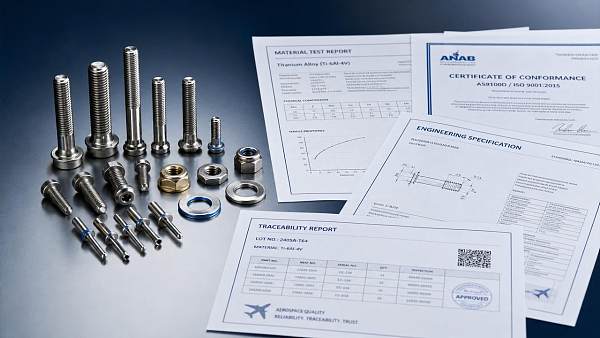
Certification should be treated as evidence of system discipline, not as a shortcut for blind trust. Depending on program requirements, buyers may review quality management alignment, manufacturing controls, inspection methods, and record retention practices. In aerospace fasteners, documentation quality often determines whether a shipment can move directly into production or gets stalled in receiving for extended verification.
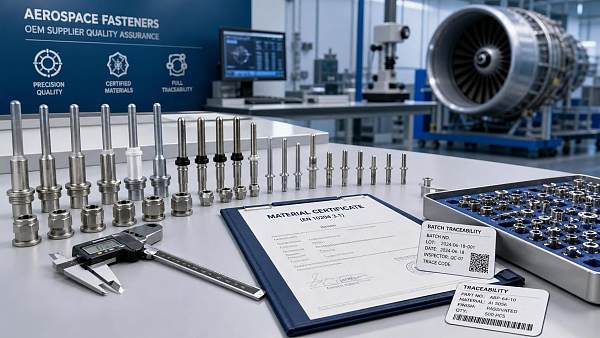
The practical review should cover 3 layers. First, determine whether the supplier understands applicable standards and customer specifications. Second, verify whether traceability is preserved from raw material to finished batch. Third, confirm whether corrective action records show disciplined closure over time. These checks are especially important when parts involve high-strength alloys, corrosion-resistant materials, or tightly controlled dimensions.
G-ISC supports this type of assessment by framing industrial components against internationally recognized standards such as ISO, DIN, ASME, and IEEE where relevant to comparative evaluation logic. For aerospace fasteners supplier screening, that means buyers can move beyond marketing claims and organize their review around technical evidence, compliance maturity, and supply-chain integrity.
The next table summarizes a practical compliance review structure. It is not a substitute for customer-specific qualification, but it helps procurement teams build a consistent checklist across 3 to 6 candidate suppliers.
A strong compliance file reduces total sourcing friction. It shortens approval cycles, lowers internal clarification emails, and helps distributors or resellers support their own downstream customers. For many organizations, that administrative reduction alone justifies paying a moderate premium over a poorly documented source.
Common compliance mistakes buyers should avoid
One frequent mistake is accepting generic certificates without checking whether they actually relate to the specific batch or process in question. Another is assuming that an approved sample guarantees routine production stability. Aerospace fasteners procurement should distinguish between sample capability and controlled repeatability over multiple deliveries.
A second mistake is treating documentation as a purely quality-department issue. In reality, documentation quality affects logistics release, customs review in some cases, customer acceptance, and warranty defense. Procurement, quality, engineering, and commercial teams should align their checklist before the RFQ stage rather than after the first discrepancy appears.
A third mistake is overlooking record accessibility. If a supplier needs 5 to 7 days to retrieve standard traceability documents, the risk is not only slow paperwork. It may indicate weak data discipline, weak digital organization, or poor sub-tier control.
How do delivery resilience and commercial intelligence affect supplier value?
Delivery resilience is one of the most underestimated evaluation areas in aerospace fasteners sourcing. A supplier may quote attractively today yet struggle when alloy availability tightens, when trade policy shifts, or when air freight capacity becomes constrained. In those moments, buyers discover whether the supplier can protect continuity across 2 to 3 supply scenarios rather than just promise nominal lead times.
Procurement teams should ask for lead-time structure, not just lead-time numbers. For example, what portion depends on raw material procurement? What portion depends on coating, testing, or external processing? Can the supplier explain a standard cycle of 4 to 8 weeks versus an expedited cycle of 7 to 15 days, and what trade-offs apply? This clarity is more important than a single optimistic date on a quotation sheet.
G-ISC’s strength lies in linking technical sourcing with broader market intelligence. Because raw material price movements, project tender activity, and cross-border policy shifts can affect component availability, buyers need more than part-level data. They need context. That context helps commercial evaluators understand whether a supplier’s current offer is sustainable, especially for medium-batch and recurring procurement programs.
This is also relevant for distributors and agents. A supplier that provides forecast visibility, substitution discussion, and documented communication rhythms is easier to represent in the market. It lowers the risk of overpromising delivery to downstream accounts that depend on stable replenishment cycles every month or every quarter.
Signals of a resilient aerospace fasteners supplier
- Clear distinction between stock items, make-to-order items, and long-lead items requiring special material planning.
- Ability to discuss alternative delivery plans, including partial shipments, safety stock logic, or scheduled releases.
- Visibility into sub-tier dependencies for plating, heat treatment, or testing steps that may add 1 to 3 weeks.
- Consistent communication cadence, especially when programs involve engineering changes or forecast volatility.
Scenario-based commercial review
A practical method is to test three sourcing scenarios: stable demand, demand surge, and disruption response. In a stable-demand scenario, compare how suppliers handle routine releases and documentation. In a surge scenario, assess capacity flexibility and expediting logic. In a disruption scenario, evaluate transparency, escalation speed, and feasible alternatives. This model produces a more realistic supplier ranking than headline price alone.
If your sourcing database includes exploratory vendor entries such as 无, keep them separated from approved sources and classify them by evidence maturity. That prevents early research data from being confused with qualified supplier status during internal reporting.
What does a practical procurement decision process look like?
A good procurement process turns supplier comparison into an auditable decision rather than a subjective preference. This matters for strategic sourcing specialists, procurement directors, and distributor networks that need to defend supplier selection internally. In most B2B environments, a 4-stage process works well: requirement definition, supplier screening, pilot validation, and performance review after the first 1 to 3 deliveries.
Start by separating critical fasteners from standard industrial items. If the part affects structural integrity, vibration resistance, pressure retention, or regulated documentation, your evaluation threshold should be higher. That may include enhanced sample review, deeper traceability checks, and stricter approval controls. Not every fastener requires the same governance intensity.
Next, build a scoring sheet that reflects both technical and commercial risk. Many teams use 5 to 7 indicators to keep the model practical. Too few indicators oversimplify risk. Too many make the review slow and inconsistent. The goal is not bureaucratic complexity; it is a repeatable method that improves supplier visibility before recurring orders begin.
The table below provides a simple decision structure that can be adapted to OEM, MRO, and industrial distribution use cases.
This staged method helps teams balance urgency with rigor. It also makes internal alignment easier between procurement, quality, engineering, and commercial stakeholders. If one supplier is cheaper but fails during pilot validation, the organization can reject it based on documented business criteria rather than opinion.
FAQ for buyers comparing aerospace fasteners suppliers
How many suppliers should be compared in a serious sourcing review?
For most programs, 3 to 6 candidate suppliers is a practical range. Fewer than 3 may limit benchmarking. More than 6 often creates review fatigue unless the spend is large or the category is strategically critical. The focus should be evidence quality, not supplier quantity.
Is a lower MOQ always better?
Not necessarily. A low MOQ can help during qualification or low-volume demand, but it may come with weaker process economics, less stable scheduling, or premium pricing elsewhere. Buyers should compare MOQ alongside lead time, documentation quality, and repeat-order consistency.
What is the biggest sourcing risk beyond price?
In many cases, the biggest risk is incomplete traceability combined with unstable process control. When a defect or discrepancy appears, weak records delay containment and increase cost across quality, production, and customer communication. That risk can outweigh a meaningful unit-price difference.
How important is communication speed?
It is highly important, especially when programs involve engineering changes, urgent replacements, or strict release dates. A supplier that responds clearly within 24 to 48 hours on technical or documentation issues usually reduces downstream coordination cost and decision delay.
Why work with a technical intelligence partner for supplier evaluation?
Choosing an aerospace fasteners supplier is no longer only a price negotiation exercise. It is a decision about quality discipline, traceability depth, compliance readiness, and supply continuity in a fragmented global environment. G-ISC supports this decision with an integrated view across critical components, engineering standards, raw material movement, and cross-border commercial conditions.
For procurement teams, this means faster clarification on supplier comparison logic, better alignment between technical and commercial reviews, and more confidence when presenting sourcing recommendations internally. For distributors and agents, it means improved screening before introducing a source to customers who expect reliability, documentation, and predictable replenishment.
You can engage G-ISC for targeted support around supplier benchmarking, certification and compliance review, traceability expectations, lead-time and resilience assessment, and category-level sourcing intelligence. If your team is deciding between multiple aerospace fasteners supplier options, we can help structure the evaluation around 5 practical areas: parameter confirmation, product selection, delivery cycle analysis, certification requirements, and quotation comparison logic.
Contact us when you need a clearer sourcing framework for critical industrial components. We can help you review technical requirements, compare supplier documentation, discuss sample support, evaluate standard versus urgent delivery windows, and identify where a low quote may hide long-term risk.
Recommended News
 Oct 12, 2026How to Specify Low-VOC Fastener Coatings for Corrosion Protection and ComplianceLow VOC fastener coating specification guide: balance corrosion resistance, torque control, VOC compliance, and supplier validation for reliable assemblies.● Dr. Aris Alloy
 Oct 08, 2026Selecting Precision Fasteners for Semiconductor Equipment Vacuum and Cleanroom ServicePrecision Fasteners for semiconductor equipment: learn how to select vacuum- and cleanroom-ready hardware for reliable preload, low contamination, and long-term serviceability.● Dr. Aris Alloy
 Oct 04, 2026Selecting Stainless Micro Screws for Corrosion Resistance and Precision AssemblyStainless micro screws guide: choose corrosion-resistant alloys, precision threads, and reliable drive designs for demanding assemblies. Explore key selection tips.● Dr. Aris Alloy
 Oct 04, 2026How Do You Verify Precision Fastener Tolerances From a Datasheet?How do I verify precision fastener tolerances from a datasheet? Learn the key checks for thread class, dimensions, coatings, materials, and inspection methods.● Dr. Aris Alloy
 Sep 15, 2026Selecting Threaded Rods for Construction: Load, Corrosion, and Code RequirementsThreaded rods for construction: learn how to match load paths, corrosion protection, installation details, and code requirements for safer, compliant connections.● Dr. Aris Alloy
 Aug 16, 2026What Makes a High Strength Alloy Suitable for Aerospace Parts?High strength alloy for aerospace selection depends on more than tensile strength. Learn how fatigue, corrosion, heat, and manufacturability determine safer, lighter parts.● Dr. Aris Alloy
 Jul 26, 2026How Strong Are 3D Printed Fasteners in Load-Bearing Assemblies?3d printed fastener strength explained for load-bearing assemblies: learn where printed bolts work, where they fail, and how to choose safer, smarter fastening options.● Dr. Aris Alloy
 Jul 22, 2026How to Evaluate a Blind Bolt Custom OEM Partner for Aerospace Fastener ProjectsBlind bolt custom OEM sourcing for aerospace demands more than price. Learn how to assess quality systems, material traceability, engineering support, and supply stability before choosing a partner.● Dr. Aris Alloy
 Jul 18, 2026Salt Spray Hours for Fasteners: How to Compare Coatings and Corrosion ResistanceSalt spray hours fasteners explained: compare coatings, test limits, and real corrosion resistance to choose the right finish for longer service life and smarter sourcing.● Dr. Aris Alloy
 Jul 15, 2026Precision Fasteners Cost Factors: Materials, Tolerances, Finishes, and Order VolumePrecision Fasteners cost factors explained: compare materials, tolerances, finishes, and order volume to reduce sourcing risk, control total cost, and make smarter buying decisions.● Dr. Aris Alloy
 Jul 14, 2026How to Read a Titanium Alloy Weight Chart for Fastener and Aerospace Part SelectionTitanium alloy weight chart guide for fastener and aerospace part selection. Learn how to compare grade, density, dimensions, and standards to reduce sourcing risk.● Dr. Aris Alloy
 Jul 12, 2026How to Read Fastener Vibration Test Data for Joint Reliability DecisionsFastener vibration test data explained for smarter joint reliability decisions. Learn how to assess preload loss, residual clamp load, and test validity before sourcing or design approval.● Dr. Aris Alloy
 Jul 09, 2026Fastener Coating Cost Breakdown: What Changes Price by Material, Finish, and VolumeFastener coating cost explained: see how material, finish, volume, geometry, and compliance affect pricing, and learn how to compare quotes smarter while controlling total sourcing cost.● Dr. Aris Alloy
 Jul 06, 2026Self Tapping Industrial Screws: Types, Materials, and When to Use EachSelf tapping Industrial Screws guide: compare thread-forming, thread-cutting, and self-drilling types, materials, and best-use scenarios to choose faster, stronger, more reliable assemblies.● Dr. Aris Alloy
 Jul 05, 2026High-Tensile Bolts ASTM: How to Read Grades, Strength Classes, and Spec RequirementsHigh-Tensile Bolts ASTM guide: learn how to read grades, strength classes, specs, markings, and certificates to avoid sourcing mistakes and choose compliant bolts with confidence.● Dr. Aris Alloy
 Jul 04, 2026Stainless Automotive Fasteners Manufacturer: What Certifications and Materials Matter Most?Stainless automotive fasteners manufacturer selection starts with certifications, traceability, and the right alloys. Learn what matters most for reliable, compliant sourcing.● Dr. Aris Alloy
 Jul 03, 2026Fastener Price Trend 2026: What Steel Costs, Freight, and Demand Mean for BuyersFastener price trend 2026 explained: see how steel costs, freight volatility, and uneven demand may affect budgets, lead times, and sourcing decisions—so buyers can plan smarter.● Dr. Aris Alloy
 Jul 02, 2026Why Smart Fastener Battery Life Drops Early and How to Extend Service IntervalsSmart fastener battery life dropping too soon? Learn the real causes behind early drain and discover practical ways to extend service intervals without sacrificing monitoring accuracy.● Dr. Aris Alloy
 Jun 28, 2026Marine Grade Stainless Corrosion: What Causes It and How to Prevent Tea StainingMarine grade stainless corrosion often starts with tea staining. Learn the real causes, high-risk environments, and practical prevention steps to protect performance and cut lifecycle costs.● Dr. Aris Alloy
 Jun 26, 2026How to Choose Vibration-Resistant Fasteners for Aerospace AssembliesVibration-Resistant Fasteners for aerospace help protect critical assemblies from loosening, corrosion, and fatigue. Learn how to choose the right solution for safer, longer-lasting performance.● Dr. Aris Alloy
 Jun 23, 2026Fastener Hardness Explained: When to Use Rockwell vs Vickers TestingFastener hardness (Rockwell/Vickers) explained: learn when to use Rockwell for fast production checks and Vickers for precise surface analysis to improve quality, compliance, and reliability.● Dr. Aris Alloy
 Jun 15, 2026Wholesale Aerospace Fasteners: Specs, Materials, and Certifications Buyers Should CheckWholesale aerospace fasteners buyers should verify specs, material traceability, and certifications before ordering. Learn the key checks to reduce risk and source with confidence.● Dr. Aris Alloy
 Jun 07, 2026Instrument Cases Buying Guide: Hard vs Soft Cases, Protection Ratings, and FitInstrument cases buying guide: compare hard vs soft cases, understand IP protection ratings, and choose the right fit to protect sensitive equipment, reduce downtime, and buy with confidence.● Dr. Aris Alloy
 Jun 06, 2026How Global Construction Fastener Tenders Work: Bid Requirements, Specs, and Common RisksGlobal construction fastener tenders explained: learn bid requirements, key specs, compliance checks, and common risks to improve tender decisions and avoid costly project delays.● Dr. Aris Alloy