Hot Articles
Popular Tags
What predictive supply chain case studies reveal in manufacturing
What do predictive supply chain case studies in manufacturing really reveal? For procurement teams and market evaluators, they show how Total Reliability standards, Advanced Hydraulic technology, and data-driven planning support Operational Uptime improvement across complex production networks. From High-Pressure Hydraulic Cylinders for construction to selecting an Aerospace Fasteners supplier, these insights help decision-makers compare risk, performance, and long-term supply resilience.
For information researchers, buyers, commercial evaluation teams, and channel partners, the value of these case studies is not in abstract digital transformation language. Their real value lies in measurable lessons: where downtime starts, how supplier variability spreads across plants, which components create hidden bottlenecks, and what planning signals improve service levels by 5% to 15% without inflating inventory by 20% or more.
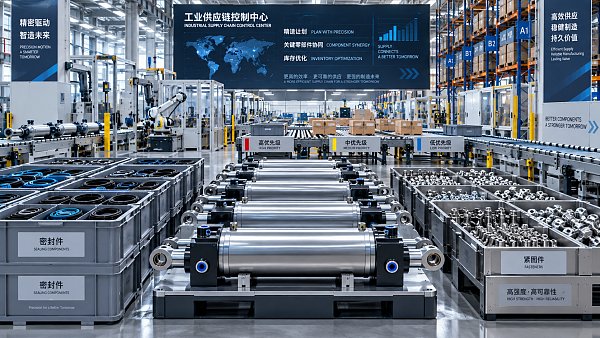
In manufacturing, predictive supply chain analysis is increasingly connected to five high-impact areas: hydraulic and fluid power systems, precision fasteners and connectors, automated material handling, intelligent flow metering, and AI-driven orchestration software. Case studies across these domains reveal a practical truth: resilience is built through technical detail, procurement discipline, and cross-functional visibility, not through a single software deployment.
Why Predictive Supply Chain Case Studies Matter in Manufacturing
A manufacturing case study becomes valuable when it translates data into operational decisions. Predictive supply chain programs often begin with 3 core questions: which parts are most failure-sensitive, which suppliers create lead-time volatility, and which production nodes are least tolerant of delay. In sectors dependent on hydraulic cylinders, industrial fasteners, valves, sensors, and AMR fleets, even a 48-hour disruption can create a cascading effect across assembly, testing, and outbound delivery.
What many case studies reveal is that the most serious risk is rarely total supplier absence. More often, it is unstable consistency. A supplier may meet pricing targets for 2 quarters, yet show material tolerance drift, documentation lag, or uneven lot performance that increases inspection time by 10% to 25%. For procurement professionals, this changes the evaluation model from lowest unit cost to total landed reliability.
This is especially true in complex manufacturing environments where one delayed component can idle multiple assets. In a hydraulic press line, a delayed high-pressure seal kit or cylinder rod assembly may hold up a maintenance window. In aerospace or rail-related assembly, a nonconforming fastener batch can trigger additional verification steps under ISO, DIN, or ASME-aligned quality processes, extending release cycles from 3 days to 2 weeks.
What decision-makers actually learn from these studies
The strongest manufacturing case studies do not just show a dashboard improvement. They expose relationships between engineering specifications, sourcing risk, and production uptime. Teams learn which SKUs should be dual sourced, which components require stricter incoming inspection, and where demand forecasting must account for maintenance cycles rather than only sales orders.
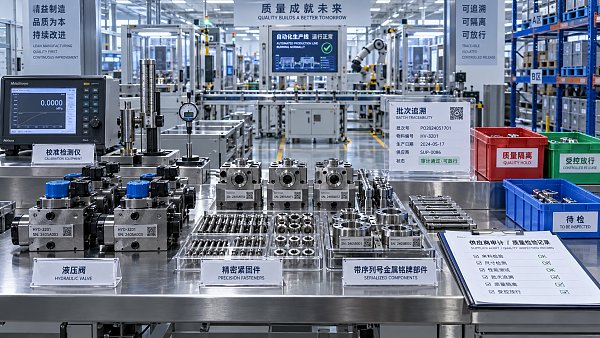
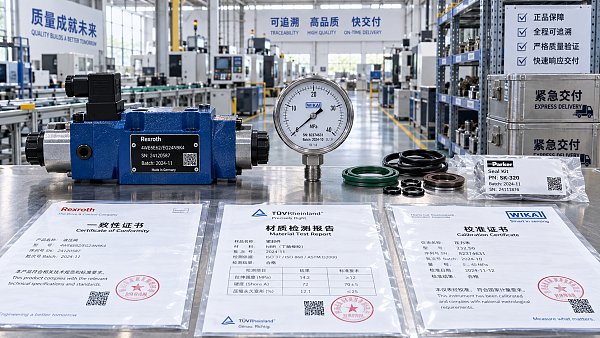
They also reveal the importance of supplier intelligence beyond product data sheets. For example, a sourcing team comparing a construction-grade hydraulic component supplier with an aerospace fasteners supplier should evaluate not only compliance documents, but also response time, metallurgy traceability, packaging controls, revision management, and recovery plans for steel or nickel price swings.
- Lead-time predictability is often more important than nominal lead-time length.
- Critical components need risk scoring by functional consequence, not just annual spend.
- Procurement and engineering alignment can reduce emergency buys within 1 to 2 planning cycles.
In some content audits and sourcing research workflows, buyers may also encounter placeholder product references such as 无. Even when such entries contain limited direct value, their presence is a reminder that data cleanliness, specification completeness, and supplier documentation maturity are part of predictive procurement readiness.
Common Patterns Revealed Across Manufacturing Case Studies
Across industries, predictive supply chain case studies repeatedly point to 4 recurring patterns: concentration risk, demand signal distortion, maintenance blind spots, and weak technical-commercial synchronization. These patterns are visible whether the plant builds construction equipment, process skids, automation modules, or precision assemblies for export.
Concentration risk appears when one supplier controls 40% to 70% of a critical category, such as high-pressure cylinders, vibration-resistant bolts, or specialty flow control assemblies. This does not always fail during normal demand periods. The weakness becomes visible when raw material costs move sharply, when trade policy changes documentation requirements, or when a sudden order surge compresses available production slots.
Demand signal distortion is another frequent lesson. Planning teams often forecast by finished-goods history, while maintenance and aftermarket consumption follow different rhythms. In one common scenario, a factory may hold 90 days of standard inventory but only 12 days of a high-failure spare part. Predictive models improve when service records, machine utilization rates, and seasonal maintenance windows are incorporated into the planning baseline.
Typical issues uncovered during predictive analysis
Many teams discover that component criticality is poorly mapped. A low-cost fitting, connector, or fastening element worth less than 1% of BOM value can still stop a full production line. By contrast, a higher-value component with a 6-week lead time may have sufficient safety stock and present lower actual risk.
The table below summarizes how recurring case-study findings usually translate into sourcing action in manufacturing environments.
The key conclusion is straightforward: predictive supply chain performance improves when planning data, supplier qualification, and engineering requirements are connected early. Companies that treat these as separate workstreams often react too late, especially when component tolerances or compliance obligations are strict.
Why this matters for channel partners and evaluators
Distributors and commercial evaluators benefit because these studies clarify where value-added services matter most. Buffer stock, technical document support, alternate sourcing, and lot traceability can be more commercially decisive than small price reductions. In industrial markets, a 3% price delta may be justified if it reduces emergency freight, line stoppage risk, or customer penalty exposure.
How Critical Components Change the Predictive Supply Chain Equation
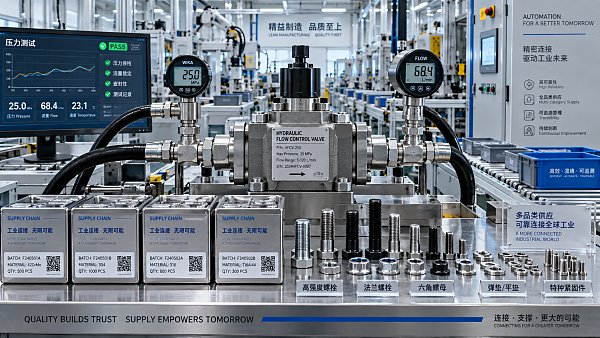
Predictive supply chain case studies in manufacturing become more actionable when viewed through the lens of critical components. G-ISC’s focus areas—Advanced Hydraulic & Fluid Power, Precision Fasteners & Connectors, Automated Material Handling, Intelligent Flow Metering & Control, and AI-Driven Orchestration Software—reflect categories where technical deviation has direct uptime consequences.
Take high-pressure hydraulic cylinders as an example. Their sourcing risk is not only about lead time. It also includes bore consistency, rod surface finish, seal compatibility, pressure-cycle expectations, and field maintenance access. A cylinder arriving on time but failing early under duty cycles of 2,000 to 5,000 operating hours can erase any apparent procurement savings. Predictive case studies therefore connect quality history and service performance to future sourcing decisions.
Precision fasteners present a similar challenge. In transportation, heavy machinery, and aerospace-adjacent manufacturing, fastener reliability depends on material grade, coating integrity, vibration resistance, and traceability discipline. A buyer choosing an Aerospace Fasteners supplier must evaluate not only availability, but also batch consistency and documentation response under audit pressure. These factors influence both direct assembly efficiency and downstream warranty exposure.
Comparing critical component categories
The following comparison shows why predictive supply chain models must be category-specific rather than generic.
The lesson from these categories is that predictive supply chain maturity depends on linking procurement records with equipment behavior. Companies that analyze spend without tracking performance miss the most actionable warning signals. Even a simple 12-month review of line stoppages, incoming quality holds, and supplier expedites can identify the top 10 risk-bearing SKUs.
A practical sourcing checklist
- Map the top 20 components by downtime consequence, not by purchase value alone.
- Track supplier on-time delivery, but also revision accuracy and document completeness.
- Review 6 to 12 months of failure, maintenance, and urgent replacement records.
- Separate standard items from engineered-to-order parts with longer validation cycles.
For research-driven organizations, even a sparse listing such as 无 can highlight a broader procurement issue: if source data is incomplete, predictive models will inherit uncertainty. Clean part master data remains one of the least glamorous but most important reliability investments.
What Procurement Teams Should Measure Before Making Decisions
One of the strongest messages from predictive supply chain case studies is that procurement teams need a tighter measurement framework. Too many sourcing decisions are still based on 3 familiar fields—unit price, quoted lead time, and MOQ—while ignoring release accuracy, supplier recovery speed, and quality escape cost. In manufacturing, those missing metrics often determine whether production remains stable during volatile periods.
A useful baseline starts with 5 measurement groups: supply continuity, technical conformity, documentation responsiveness, logistics stability, and total cost of disruption. Together, these create a more realistic evaluation model for system integrators, OEM buyers, and distributors managing strategic accounts. A part that is 7% cheaper but creates one additional line stop per quarter may be commercially weaker than a more stable alternative.
Procurement teams should also segment parts into at least 3 classes: routine consumables, operationally sensitive components, and mission-critical components. Each class needs different review frequency. For example, routine items may be reviewed quarterly, while mission-critical hydraulic, fastener, or control components may require monthly monitoring, especially if inbound quality incidents exceed 1% to 2% of lots.
Recommended evaluation framework
The table below provides a practical scorecard structure that can be adapted to manufacturing categories with different risk profiles.
This framework helps convert predictive insights into buying decisions. Instead of reacting only when inventory falls below reorder point, teams can intervene earlier when process indicators begin to deteriorate. That is often the difference between controlled mitigation and premium freight plus emergency qualification work.
Implementation steps for sourcing teams
- Build a 90-day risk dashboard using supplier performance, quality holds, and expedite frequency.
- Identify the top 10 to 15 parts with the highest downtime consequence.
- Align engineering, planning, and procurement on approved alternates and validation priorities.
- Review raw material sensitivity for categories exposed to steel, nickel, or titanium volatility.
When executed well, this approach improves commercial decision quality for both direct buyers and channel intermediaries. It also supports better customer communication, because distributors and agents can explain not only what is available now, but why a specific sourcing route offers stronger continuity over the next 1 to 2 quarters.
From Insight to Execution: Building a More Reliable Manufacturing Supply Network
The final insight from predictive supply chain case studies is that analysis alone does not improve uptime. Execution does. The best manufacturing organizations turn predictive signals into rule-based action: inventory buffers for specific SKUs, alternate supplier qualification schedules, engineering review triggers, and cross-border logistics contingency plans. This is where strategic intelligence platforms become useful, especially when they combine technical standards, raw material movements, and tender activity in one decision environment.
For companies operating across hydraulic systems, precision connectors, AMH equipment, and flow control assemblies, execution requires a shared language between engineering and procurement. Technical teams may focus on tolerance bands and performance curves, while sourcing teams focus on cost, lead time, and contract terms. Predictive case studies show that resilience improves when both groups work from the same criticality map and review the same 6 to 8 risk indicators each month.
A practical operating model usually includes 3 layers. First, a monitoring layer captures supplier, inventory, maintenance, and production signals. Second, an evaluation layer ranks risks by consequence and probability. Third, an execution layer assigns clear actions with owners and timeframes, such as dual-source qualification in 12 weeks, stock policy revision in 30 days, or incoming inspection enhancement for 1 quarter.
Common mistakes that weaken execution
- Relying on historical averages while ignoring new demand volatility or maintenance events.
- Overvaluing unit-price savings and undervaluing documentation or traceability performance.
- Treating all suppliers equally instead of separating strategic, critical, and routine categories.
- Using predictive dashboards without clear response rules, owners, or review frequency.
For market researchers and evaluation teams, this is also where intelligence quality matters. A strong industrial information source should connect standards, application context, material shifts, and sourcing implications. That is especially relevant in fragmented global markets where local disruptions can affect component categories differently, from bolts and seals to valves, sensors, and mobile robotic subsystems.
FAQ: practical questions buyers often ask
How long does predictive supply chain improvement usually take?
A first visibility phase can often be built within 4 to 8 weeks if supplier data, inventory records, and maintenance logs are accessible. More meaningful sourcing changes, such as alternate qualification or parameter revisions, commonly take 2 to 6 months depending on part complexity and validation requirements.
Which manufacturers benefit most from this approach?
It is especially useful for plants with high downtime cost, long-tail spare parts, export compliance requirements, or multi-site operations. Heavy equipment, process manufacturing, automation integrators, and precision assembly environments often see the clearest value because a small number of critical parts can disproportionately affect uptime.
What should be reviewed before selecting a new strategic supplier?
Review technical conformity, lot traceability, recovery planning, response time for documents, and category-specific performance evidence. For critical components, it is wise to compare at least 2 to 3 qualified options and define escalation rules before disruption occurs, not after.
Predictive supply chain case studies reveal that manufacturing resilience is rarely the result of one technology layer alone. It comes from combining component intelligence, supplier discipline, planning accuracy, and clear execution rules. For procurement leaders, evaluators, and distribution partners, that means making decisions with a sharper view of technical risk, lead-time variability, and long-term operational uptime.
If your organization is assessing hydraulic systems, fasteners, AMH assets, flow control components, or AI-driven orchestration tools, a structured intelligence approach can shorten evaluation cycles and improve supply confidence. To explore category-specific guidance, compare sourcing risks, or obtain a more tailored reliability framework, contact us today to get a customized solution and learn more about the right industrial supply-chain strategy for your application.
Recommended News
 Oct 16, 2026How to Use Supply Chain Risk Scores to Screen Suppliers in EuropeNeed a supply chain risk score Europe procurement teams can trust? Learn how to verify suppliers, uncover hidden risks, and build a defensible shortlist before you buy.● Lina Cloud
 Oct 15, 2026Cloud SCM Pricing: How to Compare Uptime SLAs and Downtime CostsCompare SCM cloud uptime pricing, SLA exclusions, downtime costs, and recovery options. Learn how to assess true value, reduce disruption risk, and choose the right cloud SCM plan.● Lina Cloud
 Oct 14, 2026How Do You Identify Supply Chain Risks for Critical Components?How can I identify supply chain risks for critical components? Discover how to map hidden dependencies, compare inventory with recovery time, and prioritize actions that protect uptime.● Lina Cloud
 Oct 14, 2026When Should You Approve a Second-Source Supplier?When should I approve a second source supplier? Discover key checks for quality, capacity, compliance, and supply risk to make confident approvals and protect production.● Lina Cloud
 Oct 11, 2026Predictive Supply Chain Case Studies: Reducing Global Sourcing Disruption RiskPredictive supply chain case studies for global sourcing: uncover disruption risks, protect critical components, and build resilient project delivery.● Lina Cloud
 Oct 03, 2026How to Evaluate Supply Chain Orchestration Software for Multi-Site OperationsSupply chain orchestration software: learn how to evaluate data, workflows, integrations, and governance for resilient multi-site operations.● Lina Cloud
 Oct 01, 2026How Procurement Teams Can Evaluate Supply Chain Risk Management Tools Before BuyingSupply chain risk management tool for procurement: learn how to evaluate data accuracy, part-level impact, alerts, workflows, integrations, and auditability before you buy.● Lina Cloud
 Oct 10, 2026Can Oracle supply planning reduce shortages without raising inventory?Oracle supply planning helps reduce shortages without inflating inventory through smarter allocation, scenario planning, and constraint-based decisions. Discover practical strategies.● Lina Cloud
 Oct 07, 2026What Happens When a Supplier Fails an Industrial Standards Audit?What happens if a supplier fails an industrial standards audit? Learn how to contain risk, protect traceability, manage corrective actions, and maintain supply continuity.● Lina Cloud
 Oct 06, 2026How Do You Document Standards Compliance for a Supplier Tender?How do I document standards compliance for a supplier tender? Use a compliance matrix, traceable test evidence, and clear deviations to strengthen bids and speed evaluation.● Lina Cloud
 Oct 02, 2026Which Supplier Records Should Be Checked Before an Urgent Purchase?Which supplier records should be checked before an urgent industrial purchase? Discover essential checks for quality, traceability, compliance, delivery, and risk control.● Lina Cloud
 Oct 01, 2026How Should Buyers Compare Suppliers Across Industrial Categories?How do I compare suppliers across different industrial categories? Use a practical framework for risk, quality, cost, resilience, and technical fit.● Lina Cloud
 Sep 30, 2026What Should Be Included in a Strategic Sourcing Plan?What should be included in a strategic sourcing plan? Explore essential steps for supplier strategy, total cost, risk control, compliance, and resilient industrial procurement.● Lina Cloud
 Sep 29, 2026How Do Raw Material Prices Affect Industrial Component Lead Times?How do raw material prices affect component lead times? Learn how availability, supplier inventory, and qualification risks shape delivery planning.● Lina Cloud
 Sep 19, 2026How to Evaluate an OEM Supplier for Real-Time Shipment Tracking IntegrationReal time shipment tracking OEM supplier evaluation: compare integration, data accuracy, security, costs, and pilot accountability to protect critical deliveries.● Lina Cloud
 Sep 12, 2026OEM Cooperation Process: Key Milestones for Managing Quality, Costs, and DeliveryOEM cooperation process guide: discover key milestones to control quality, total costs, and delivery risk for stronger, more reliable supplier partnerships.● Lina Cloud
 Aug 25, 2026How to Evaluate a Cloud OMS for OEM Operations with Complex Order WorkflowsEvaluate an order management system OMS OEM cloud platform for complex workflows. Learn what matters most in integration, traceability, scalability, and risk control.● Lina Cloud
 Aug 23, 2026What to Check Before Buying Bridal Tiaras Wholesale for a Retail CollectionBridal tiaras wholesale buying starts with quality, materials, MOQ, and supplier checks. Learn how to reduce risk, protect margins, and build a retail collection that sells.● Lina Cloud
 Aug 22, 2026How to Evaluate Poker Tables Wholesale Suppliers for Quality, MOQ, and CustomizationPoker tables wholesale buying guide: learn how to evaluate suppliers for quality, MOQ, customization, packaging, and lead times to reduce risk and choose scalable partners.● Lina Cloud
 Aug 18, 2026How Can a Supply Chain Digital Twin Improve Procurement Decisions and Supplier Risk?Supply chain digital twin procurement helps buyers compare suppliers, model disruption risk, and improve sourcing decisions with stronger cost, resilience, and performance insight.● Lina Cloud
 Aug 14, 2026What Is Procurement Planning? A Practical Guide for Reducing Buying RiskProcurement Planning helps reduce buying risk by aligning demand, specs, budget, and sourcing strategy. Learn how to buy smarter, avoid delays, and control costs.● Lina Cloud
 Aug 02, 2026How Polymer Raw Materials Affect Sensor Cost, Durability, and Design Trade-OffsImpact of raw material on sensor costs polymers goes far beyond resin price. Learn how polymer choice shapes durability, yield, sealing, and smarter sensor design decisions.● Lina Cloud
 Jul 29, 2026How to Evaluate a Supply Chain Sustainability Tracker Vendor for Reporting NeedsSupply chain sustainability tracker vendor evaluation starts with data integrity, framework mapping, and supplier workflows. Learn how to choose a platform that supports credible reporting and faster procurement decisions.● Lina Cloud
 Jul 28, 2026How Shippers Can Evaluate a Transportation Management System for Cost and Carrier ControlTransportation management system shippers can rely on to cut freight costs, improve carrier control, and boost visibility. Learn what to test before choosing a TMS.● Lina Cloud