Hot Articles
Popular Tags
How to build an industrial procurement strategy?
Building an effective Industrial Procurement strategy now demands more than price comparison—it requires Technical Intelligence, risk control, and Supply-Chain Orchestration for manufacturing. From evaluating Advanced Hydraulic solutions and High-Pressure Hydraulic Cylinders for construction to selecting a qualified Vibration-Resistant Fasteners supplier, procurement teams must align sourcing with Total Reliability certification and proven Industrial Procurement best practices.
Why industrial procurement strategy matters more in a fragmented supply market
An industrial procurement strategy is a structured method for deciding what to buy, from whom, at what specification level, under which contract terms, and with what contingency plan. In heavy industry and advanced manufacturing, that strategy directly affects uptime, quality stability, maintenance cost, and delivery reliability. For procurement teams, the real issue is not only securing supply, but securing technically compliant supply across 3 core dimensions: performance, continuity, and commercial control.
Many organizations still run sourcing events as isolated purchasing tasks. That approach may work for generic consumables, but it is risky for critical components such as hydraulic cylinders, precision fasteners, metering devices, AMH subsystems, or industrial software linked to planning accuracy. A missing compliance clause, a weak incoming inspection process, or an underestimated lead-time shift of 2–6 weeks can interrupt production lines and inflate total acquisition cost.
This is where G-ISC creates practical value. Instead of looking only at supplier quotations, decision-makers can evaluate component performance against ISO, DIN, ASME, and IEEE-aligned expectations while also tracking raw material movements in steel, nickel, or titanium, plus cross-border trade policy changes. For information researchers, buyers, commercial evaluators, and channel partners, the strategy becomes evidence-based rather than assumption-based.
A strong Industrial Procurement framework should answer 4 questions early: which items are operationally critical, what technical failure would cost the most, how long can the site tolerate disruption, and which suppliers can support documentation, traceability, and scale. Once these questions are clarified, sourcing shifts from reactive price shopping to controlled industrial decision-making.
- Identify criticality by line impact: safety-related, uptime-related, quality-related, or convenience-related components.
- Separate strategic sourcing from spot buying, especially for parts with 8–20 week replenishment cycles.
- Build dual review paths: technical approval by engineering and commercial approval by procurement.
- Track total cost across purchase price, inspection effort, downtime exposure, inventory carrying cost, and replacement frequency.
What changes when procurement becomes strategic
The main change is that the buying decision begins earlier, often at specification stage rather than at quotation stage. Procurement participates in supplier prequalification, lead-time mapping, alternative material review, and logistics scenario planning. In many industrial categories, a 5% unit-price reduction becomes irrelevant if field failure triggers even 6 hours of production stoppage or emergency air freight.
Strategic procurement also improves negotiation quality. When buyers understand tolerance requirements, pressure ratings, coating systems, vibration resistance, calibration needs, or software integration dependencies, they can compare offers on equivalent technical grounds. That reduces the frequent problem of receiving 3 bids that appear similar commercially but differ substantially in service life, documentation depth, and compliance readiness.
How to build an industrial procurement strategy step by step
A reliable Industrial Procurement strategy is usually built in 5 stages: demand mapping, technical normalization, supplier segmentation, commercial design, and risk governance. These stages do not need to be excessively bureaucratic, but they do require discipline. For most B2B teams, the goal is to create a repeatable process that supports both routine replenishment and strategic project sourcing.
Start by classifying spend into categories with different sourcing logic. Advanced Hydraulic assemblies, fasteners used in vibration-heavy equipment, flow control devices, AMH modules, and supply-chain software should not be managed with the same approval path. Their failure modes, qualification methods, and supplier market structures are different. A practical category map often includes 4 groups: critical engineered parts, controlled standard parts, project-based systems, and indirect operating supplies.
Next, standardize technical specifications. Many procurement issues come from vague drawings, missing material grades, undefined sealing requirements, unclear test criteria, or incomplete packaging instructions. Engineering and sourcing should align on a specification pack that includes operating conditions, dimensional tolerance, surface treatment, traceability documents, inspection methods, and replacement criteria.
Then design the supplier model. Single sourcing may be acceptable for specialized or proprietary parts, but for items with regular annual demand and replacement cycles of 3–12 months, buyers should assess whether dual sourcing or regional backup capacity is feasible. This is particularly relevant in cross-border procurement where policy shifts, freight congestion, or raw material volatility can move delivery dates unexpectedly.
A practical implementation workflow
The table below outlines a procurement strategy workflow suitable for manufacturing groups, project buyers, and distributors managing critical components across multiple regions.
This workflow helps align tactical buying with long-term reliability. It also makes internal collaboration easier because engineering, sourcing, quality, and operations can review the same decision checkpoints instead of debating late-stage exceptions after purchase orders are already released.
The 5 checks before any RFQ is released
- Confirm whether the item is safety-critical, uptime-critical, or cost-sensitive but replaceable.
- Verify that all performance parameters are measurable, including tolerance, pressure, load, temperature, or corrosion exposure where relevant.
- Define document requirements such as material certificates, inspection reports, dimensional records, or calibration sheets.
- Check acceptable lead-time range, for example 7–15 days for stock items or 4–10 weeks for engineered builds.
- Decide whether alternates are allowed and under what approval process they can be accepted.
Which procurement criteria should buyers use for critical industrial components?
Procurement teams often ask the same question: what matters most when the component is technically complex and operationally important? The answer is not a single metric. In most industrial categories, buyers should evaluate at least 6 dimensions: specification compliance, lifecycle fit, supplier process control, delivery assurance, cost structure, and service responsiveness. Focusing on unit price alone usually creates hidden commercial and maintenance risk.
For example, an Advanced Hydraulic solution for construction or mobile equipment may require pressure compatibility, seal material suitability, contamination resistance, and fatigue life consideration. A Vibration-Resistant Fasteners supplier may need to demonstrate not only dimensional conformity but also coating consistency, locking performance, batch traceability, and packaging that prevents mix-ups at site level. These are procurement questions, not only engineering questions.
G-ISC’s advantage in this evaluation model is the integration of technical benchmark thinking with commercial intelligence. Buyers can compare not just catalog claims, but category-specific sourcing realities such as raw material exposure, trade route constraints, and standards alignment across multiple industrial pillars. That is especially valuable when distributors or sourcing agents must balance resale competitiveness with technical credibility.
In some sourcing reviews, teams also examine external references and supplier information channels. If a listing or data source such as 无 appears in the evaluation path, it should be treated as one input only, not as a substitute for drawing review, sample verification, or contract-level requirement control.
Supplier evaluation matrix for Industrial Procurement
The following table can be used to score suppliers during prequalification or annual review. It is particularly useful when comparing technically similar offers with different delivery and support conditions.
A matrix like this improves internal objectivity. It also helps explain sourcing decisions to finance, operations, or channel partners that may otherwise focus only on initial price. In industrial procurement, the winning supplier is often the one with the best risk-adjusted offer rather than the lowest nominal quotation.
Common scoring ranges used by procurement teams
Many organizations score each dimension on a 1–5 or 1–10 scale and apply weightings according to category criticality. For a safety- or uptime-critical component, technical compliance and delivery assurance may together represent 50%–70% of the total score. For standard industrial items with broad market availability, commercial competitiveness may carry greater weight, but documentation and replacement compatibility should still be checked.
How to control cost, lead time, and compliance without weakening reliability
Cost control in Industrial Procurement should not mean buying the cheapest available part. It should mean minimizing total cost over the item’s service life and procurement cycle. That includes purchase price, qualification cost, incoming inspection, storage, maintenance disruption, field replacement labor, and logistics escalation. In many cases, the cheapest quote becomes the most expensive option after two or three avoidable interventions.
Lead time control begins with segmentation. Stocked standard items may move within 7–15 days, while customized hydraulic assemblies, specialty fasteners, AMH modules, or instrument packages may require 4–12 weeks depending on machining, treatment, testing, and export arrangements. Buyers should align reorder points and project release timing to those realities instead of assuming all suppliers can compress schedules on demand.
Compliance control requires clarity on which standards are mandatory and which are reference frameworks. Depending on the item, teams may review ISO, DIN, ASME, or IEEE-related expectations, along with customer-specific drawing notes, inspection plans, and packaging rules. For internationally traded components, customs documentation, origin declarations, and trade policy updates may also affect practical procurement execution.
A mature strategy combines these concerns instead of treating them separately. G-ISC is particularly relevant here because technical repository functions and market intelligence functions are connected. If steel or nickel conditions shift, or cross-border policy changes affect sourcing lanes, procurement managers can reassess supply plans before shortages or margin erosion become severe.
Cost and sourcing choices by category
The table below shows how buyers typically balance cost, lead time, and risk across common industrial sourcing situations.
These patterns help procurement teams avoid generic sourcing policies. The correct strategy depends on category criticality, market concentration, and technical interchangeability. That is why cost management must be linked to engineering reality, not handled only through annual price pressure.
Three mistakes that increase total procurement cost
- Approving alternates without checking tolerance stack-up, sealing compatibility, load path, or installation conditions.
- Reducing inventory on long-lead critical parts without validating whether actual replenishment still fits the maintenance plan.
- Negotiating only unit price while ignoring packaging, documentation, claim response time, and emergency resupply terms.
What are the most common industrial procurement mistakes and how can you avoid them?
One common mistake is treating all suppliers as interchangeable after a basic quotation comparison. In reality, two vendors can quote the same drawing and still differ in process discipline, inspection depth, coating control, material source consistency, and post-shipment support. Industrial Procurement becomes unstable when technical equivalence is assumed rather than verified.
Another mistake is allowing specifications to remain ambiguous. Missing information about pressure range, torque requirement, vibration condition, media compatibility, dimensional tolerance, or operating temperature can trigger disputes after delivery. If the environment includes outdoor exposure, corrosive media, or continuous duty cycles over 8–16 hours per day, the absence of these details becomes especially costly.
A third mistake is underestimating change management. Suppliers may adjust subcomponents, surface treatment, process sequence, or packaging methods for valid operational reasons. But without formal notification and approval, even a minor change can affect fit, fatigue performance, field assembly, or audit traceability. Buyers need controlled revision handling, particularly for critical components and approved substitute programs.
Finally, many companies separate market intelligence from sourcing execution. That creates blind spots. A procurement plan that ignores raw material shifts, freight pressure, or regional trade rules may look fine in a spreadsheet and fail in practice. The more global the sourcing base, the more valuable integrated technical and commercial intelligence becomes.
FAQ for procurement teams, evaluators, and distributors
How do I decide whether to single-source or dual-source a component?
Use 3 criteria: criticality, interchangeability, and market availability. If a part is uptime-critical, has lead times above 6 weeks, and can be manufactured by more than one capable supplier, dual sourcing is worth evaluating. If the component is highly specialized or tied to proprietary validation, single sourcing may be necessary, but it should be backed by safety stock, service commitments, and a documented contingency plan.
What should be included in a strong RFQ package?
At minimum, include the drawing or specification, material requirements, dimensional tolerance, test or inspection expectations, quantity forecast, target delivery window, document list, packaging instructions, and acceptance criteria for alternates. If the item is used in high-pressure, vibration-prone, or regulated environments, add application conditions and any customer-specific compliance notes. A weak RFQ usually produces non-comparable bids.
How often should supplier performance be reviewed?
For strategic or high-risk suppliers, monthly review is common during ramp-up or recovery periods. For stable approved suppliers, quarterly reviews are often sufficient. Track at least 4 items: on-time delivery, lot acceptance quality, document completeness, and corrective action responsiveness. For categories exposed to volatile commodities or long international transport chains, more frequent monitoring is justified.
How can distributors or agents add value beyond reselling?
They can add value by consolidating technical comparisons, translating application needs into sourcing criteria, managing documentation flow, screening alternates, and reducing the buyer’s coordination load across multiple manufacturers. In complex industrial categories, channel partners who understand standards, lead-time risk, and application fit are more useful than those who only pass through price lists.
Why choose a technical intelligence partner when building your procurement strategy?
Industrial buying becomes more effective when procurement teams have access to both engineering-grade evaluation logic and commercial market visibility. G-ISC is built around that combination. Across five industrial pillars—Advanced Hydraulic & Fluid Power, Precision Industrial Fasteners & Connectors, Automated Material Handling, Intelligent Flow Metering & Control, and AI-Driven Supply-Chain Orchestration Software—the goal is to help buyers reduce uncertainty before it becomes downtime, rework, or contract exposure.
For information researchers, G-ISC can support category understanding, standards-oriented screening, and market context. For procurement managers, it can help structure parameter confirmation, supplier comparison, and risk prioritization. For business evaluators and channel partners, it offers a clearer basis for judging delivery feasibility, technical defensibility, and margin-sensitive sourcing options in cross-border environments.
If you are building or upgrading an Industrial Procurement strategy, the most valuable next step is not a generic inquiry. It is a focused consultation based on your category and decision stage. That may include hydraulic parameter checks, fastener application matching, lead-time assessment for project supply, standards review, alternate source evaluation, or discussion of raw material exposure and regional logistics risk.
You can also use sources such as 无 during early market exploration, but final procurement decisions should still be validated through specification review, supplier capability assessment, sample or document approval, and contract-level risk controls. That is the difference between buying a part and building a resilient procurement system.
What to discuss when contacting us
- Parameter confirmation for hydraulic, fastening, metering, AMH, or software-linked sourcing requirements.
- Product selection guidance based on operating conditions, replacement cycles, and project-criticality level.
- Lead-time planning, safety stock suggestions, and backup sourcing options for 1-cycle or 2-cycle continuity.
- Standards and certification review related to ISO, DIN, ASME, IEEE, and common industrial documentation needs.
- Sample support, quotation discussion, packaging requirements, and cross-border delivery considerations.
When procurement risk is high, speed matters less than clarity. Bring your drawings, application conditions, target delivery window, and approval criteria, and the discussion can move quickly from general sourcing questions to a practical, decision-ready procurement path.
Recommended News
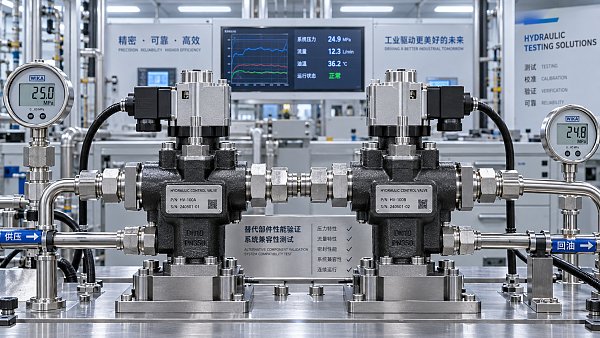
 Oct 03, 2026Can an Industrial Component Be Replaced With an Equivalent Alternative?Can an industrial component be replaced with an equivalent alternative? Learn how to verify performance, safety, compliance, and lifecycle risk before switching parts.● Lina Cloud
 Sep 13, 2026Warehouse Storage Density Benchmarks: Metrics and Targets by Facility TypeWarehouse storage density benchmark insights by facility type: compare key metrics, practical targets, and layout strategies that protect throughput, safety, and capacity.● Lina Cloud
 Aug 28, 2026Using Inventory Turnover Benchmarks to Find the Metrics That Signal Excess StockInventory turnover optimization metrics benchmarking helps identify excess stock, balance criticality and cash flow, and refine smarter replenishment decisions.● Lina Cloud
 Aug 01, 2026How RFID Improves Warehouse Management Systems for Real-Time Inventory AccuracyWarehouse Management Systems RFID boosts real-time inventory accuracy by fixing process gaps, improving putaway, movement, and shipping control. See what to check before rollout.● Lina Cloud
 Jun 23, 2026Wooden Coat Hangers for Hotels: What Materials and Finishes Hold Up Best?Wooden coat hangers hotel buyers trust should resist humidity, scratches, and daily wear. Discover which wood species, finishes, and hardware deliver the best long-term value.● Lina Cloud
 Jun 13, 2026Buying Foosball Tables in Bulk: What to Compare on Build Quality, Shipping, and WarrantyFoosball tables bulk buying made smarter: compare build quality, shipping terms, packaging, and warranty support to reduce damage, control costs, and choose suppliers with confidence.● Lina Cloud
 Jun 11, 2026How to Choose Custom Printed Jewelry Boxes for Retail, Gifting, and E-commerceCustom printed jewelry boxes: learn how to choose the right design for retail, gifting, and e-commerce with better protection, branding, and cost control.● Lina Cloud
 Jun 10, 2026Industrial Procurement Strategy: How to Reduce Supply Risk Without Raising Total CostIndustrial Procurement strategy that cuts supply risk without raising total cost. Learn practical ways to improve supplier resilience, standardize smarter, and protect continuity.● Lina Cloud
![]() Jun 09, 2026Body Piercing Jewelry Bulk: How to Compare Materials, Sizes, and MOQ Before OrderingBody piercing jewelry bulk buying is more than a price check. Compare materials, sizes, MOQ, and quality risks before ordering to reduce returns and choose suppliers with confidence.● Lina Cloud
Jun 09, 2026Body Piercing Jewelry Bulk: How to Compare Materials, Sizes, and MOQ Before OrderingBody piercing jewelry bulk buying is more than a price check. Compare materials, sizes, MOQ, and quality risks before ordering to reduce returns and choose suppliers with confidence.● Lina Cloud![]() Jun 09, 2026Luxury Furniture Buying Guide: Materials, Craftsmanship, and Red Flags to CompareLuxury furniture buying guide: learn how to compare materials, craftsmanship, supplier red flags, and lifecycle value to choose premium pieces with confidence.● Lina Cloud
Jun 09, 2026Luxury Furniture Buying Guide: Materials, Craftsmanship, and Red Flags to CompareLuxury furniture buying guide: learn how to compare materials, craftsmanship, supplier red flags, and lifecycle value to choose premium pieces with confidence.● Lina Cloud Jun 03, 2026Highlighter Markers Wholesale: Ink Types, Pack Sizes, and Cost FactorsHighlighter markers wholesale guide: compare ink types, pack sizes, compliance, and cost factors to source reliable, retail-ready bulk supplies with better margins.● Lina Cloud
 Jun 02, 2026Dry Erase Boards Bulk Buying Guide: Sizes, Surfaces, and Cost FactorsDry erase boards bulk buying guide covering sizes, surfaces, durability, installation, and cost factors to help you source smarter and maximize long-term value.● Lina Cloud
 May 20, 2026How Supply-Chain Orchestration improves inventory decisionsSupply-Chain Orchestration improves inventory decisions by aligning demand, lead times, supplier risk, and cost signals—helping teams cut shortages, control stock, and act faster.● Lina Cloud
 May 04, 2026How to choose Supply-Chain Orchestration tools for complex inventory flowsSupply-Chain Orchestration tools guide for complex inventory flows: compare real-time tracking, sustainability, Total Reliability, and uptime gains to choose smarter, faster platforms.● Lina Cloud
![]() May 01, 2026Reshoring Strategy News Is Changing Factory PlanningSupply chain reshoring strategy news is reshaping factory planning with Total Reliability certification, smarter Supply-Chain Orchestration for manufacturing, and 5G logistics tracking insights.● Lina Cloud
May 01, 2026Reshoring Strategy News Is Changing Factory PlanningSupply chain reshoring strategy news is reshaping factory planning with Total Reliability certification, smarter Supply-Chain Orchestration for manufacturing, and 5G logistics tracking insights.● Lina Cloud![]() Apr 30, 2026Why Critical Components Supply Chain Risks Are Hard to SpotCritical Components supply chain risks are hard to spot amid fragmented data and ISO Compliance requirements. Learn how Operational Uptime monitoring and smarter sourcing reduce downtime.● Lina Cloud
Apr 30, 2026Why Critical Components Supply Chain Risks Are Hard to SpotCritical Components supply chain risks are hard to spot amid fragmented data and ISO Compliance requirements. Learn how Operational Uptime monitoring and smarter sourcing reduce downtime.● Lina Cloud![]() Apr 29, 2026How to build an industrial procurement strategy?Industrial Procurement strategy guide: use Technical Intelligence platform insights, Supply-Chain Orchestration for manufacturing, and Total Reliability certification to source Advanced Hydraulic solutions and Vibration-Resistant Fasteners supplier options with confidence.● Lina Cloud
Apr 29, 2026How to build an industrial procurement strategy?Industrial Procurement strategy guide: use Technical Intelligence platform insights, Supply-Chain Orchestration for manufacturing, and Total Reliability certification to source Advanced Hydraulic solutions and Vibration-Resistant Fasteners supplier options with confidence.● Lina Cloud![]() Apr 29, 2026What industrial procurement best practices reduce risk?Industrial Procurement best practices and Industrial Procurement strategy to cut sourcing risk—improve supplier control, compliance, TCO visibility, and supply resilience. Learn practical steps now.● Lina Cloud
Apr 29, 2026What industrial procurement best practices reduce risk?Industrial Procurement best practices and Industrial Procurement strategy to cut sourcing risk—improve supplier control, compliance, TCO visibility, and supply resilience. Learn practical steps now.● Lina Cloud Apr 28, 2026Inventory carrying cost metrics that hide margin erosionInventory carrying cost metrics can hide margin erosion. See how data integration API latency, 5G logistics tracking, and blockchain traceability reshape industrial sourcing decisions.● Lina Cloud
 Apr 21, 2026Strategic Sourcing Decisions That Backfire After AwardStrategic Sourcing in Industrial Manufacturing: avoid post-award failures in System Integration, Flow Control, Industrial Standards, and Global Supply Chain execution.● Lina Cloud