Hot Articles
Popular Tags
Strategic Sourcing Decisions That Backfire After Award
In industrial manufacturing, strategic sourcing decisions often look successful at contract award but fail later in execution. The usual reason is not a single bad supplier choice. It is a mismatch between technical requirements, operational realities, compliance obligations, and global supply-chain resilience. For procurement teams, engineering leaders, operators, and executives, the real question is simple: how do you avoid awarding to a supplier that appears competitive on paper but creates cost, quality, and uptime problems after implementation? The answer lies in evaluating post-award risk before award, especially for critical components and systems such as hydraulic assemblies, flow control devices, high-tensile fasteners, automated material handling equipment, and intelligent supply-chain software.
If you are researching why strategic sourcing backfires after award, your core concern is likely one of these: unexpected delays, non-conformance to ISO/ASME/IEEE standards, integration failures, hidden total cost, poor supplier responsiveness, or operational downtime after go-live. The most useful way to assess sourcing decisions is not by unit price alone, but by supplier fit, validation depth, lifecycle support, and ability to sustain delivery under changing market and trade conditions.
Why strategic sourcing decisions fail after award even when the bid looked strong
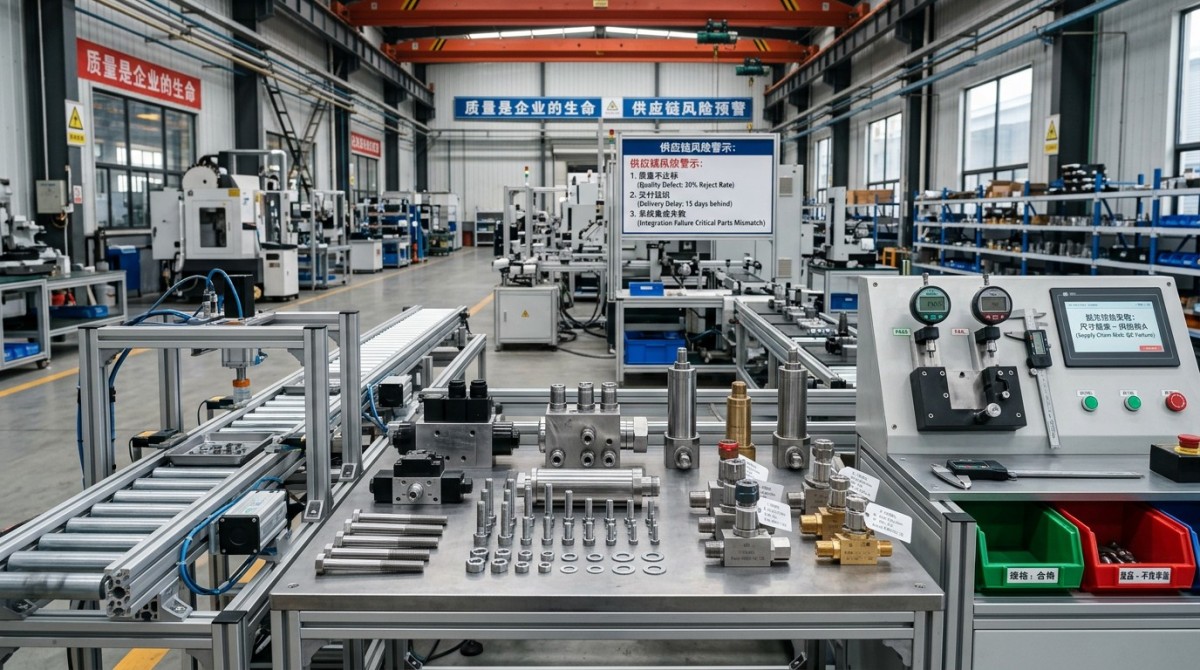
Many sourcing failures begin with a good-looking award decision based on price, lead time promises, and surface-level compliance claims. Problems appear later because the award process did not test the supplier against real operating conditions.
Common post-award failure points include:
- Specification interpretation gaps: The supplier quotes to the document, but not to the application reality.
- Weak standards verification: Claimed compliance with ISO, DIN, ASME, or IEEE is not fully documented or not applicable to the exact use case.
- Integration risk: Components fit individually but fail within the broader system architecture.
- Unstable upstream supply: Raw material volatility, export controls, or regional disruptions affect continuity after contract signature.
- Insufficient change management: Engineering revisions, site conditions, or demand shifts expose supplier limitations.
- Service model mismatch: The supplier can ship product but cannot support qualification, troubleshooting, or field recovery.
In practice, a sourcing award backfires when procurement optimizes for the transaction, while the business ultimately needs reliability in operation. This is especially true in complex industrial environments where one failed cylinder, fastener, valve, or AMR subsystem can interrupt a full production line.
What different stakeholders actually care about before and after award
A high-value SEO article on strategic sourcing should not treat all readers the same. In this case, the audience includes researchers, operators, procurement professionals, and business decision-makers. Each group evaluates sourcing risk differently.
- Information researchers want a clear framework: why sourcing failures happen, what signals to check, and how to compare suppliers beyond marketing claims.
- Operators and users care about uptime, maintainability, installation fit, spare parts access, training, and fault response speed.
- Procurement teams focus on total cost of ownership, contractual risk, supplier performance, compliance evidence, and continuity of supply.
- Executives care about margin protection, production continuity, regulatory exposure, capital efficiency, and long-term supplier resilience.
This means the best sourcing content must connect technical quality with business outcomes. A cheaper awarded supplier is not a strategic win if they increase commissioning delays, warranty claims, maintenance burden, or inventory exposure.
How to identify post-award risk before you sign the contract
The most effective sourcing teams evaluate suppliers against post-award execution scenarios, not just pre-award proposal quality. A practical assessment should include the following areas.
1. Application fit, not just catalog fit
For hydraulic cylinders, flow meters, valves, fasteners, connectors, or automated systems, check whether the supplier understands the operating duty cycle, environmental conditions, pressure range, vibration profile, media compatibility, and maintenance realities. A technically acceptable quote may still fail under actual field conditions.
2. Standards evidence, not standards language
Many suppliers reference ISO, ASME, DIN, or IEEE standards in general terms. Procurement and engineering teams should verify exact certifications, test reports, traceability records, material grades, dimensional tolerances, and inspection protocols. This is particularly critical for aerospace-grade fasteners, safety-relevant hydraulic components, metering devices, and digitally connected automation assets.
3. Manufacturing and supply continuity
Ask where critical subcomponents come from, what raw materials are exposed to price volatility, and whether the supplier has alternate qualified sources. Titanium, nickel, alloy steel, semiconductors, and electronic control units can all become post-award constraints. A supplier with weak upstream visibility is a hidden continuity risk.
4. Integration support capability
For system-level purchases such as AMRs, intelligent flow control, or AI-driven supply-chain software, supplier value depends heavily on implementation support. Review onboarding plans, integration interfaces, commissioning resources, documentation quality, cybersecurity posture, and escalation procedures.
5. Commercial durability
Award decisions also backfire when pricing is unsustainable. Extremely aggressive bids may lead to scope disputes, quality drift, delayed delivery, or repeated commercial renegotiation. Strategic sourcing requires confidence that the supplier can profitably fulfill the contract.
The hidden costs that make a low-price award expensive later
One of the most common search intents behind this topic is understanding the true cost of a sourcing mistake. In industrial procurement, the largest losses usually do not appear in the PO value. They appear later.
Hidden post-award costs often include:
- Delayed production start-up
- Line stoppages and reduced OEE
- Requalification and retesting expense
- Engineering rework and redesign effort
- Additional inspections and expedited logistics
- Higher spare parts inventory
- Field service interventions
- Warranty claims and customer penalties
- Internal time spent on supplier recovery
For executives, this is why strategic sourcing should be measured against total business impact, not initial purchase savings. For procurement teams, it means supplier selection should include risk-adjusted cost modeling. A supplier that is 6% cheaper at award can become 20% more expensive over the first year if performance instability creates downtime and emergency corrections.
Where sourcing backfires most often across critical industrial categories
Although the title applies across industries, some categories are especially vulnerable to post-award failure because they combine technical complexity with operational consequences.
Hydraulic and fluid power systems
Backfire often occurs when seal compatibility, pressure spikes, contamination tolerance, or duty-cycle assumptions are misunderstood. A minor mismatch can lead to leakage, pressure loss, and unplanned maintenance.
Precision fasteners and connectors
With high-tensile bolts and vibration-resistant assemblies, the risk is often in material traceability, coating performance, preload consistency, and installation behavior. If these are not verified, joint integrity can degrade in service even when dimensions appear correct.
Flow metering and control
Flow meters, valves, and control devices can fail expectations when process media, temperature variation, calibration needs, or communication protocols are not fully aligned with the application. This can affect process accuracy, compliance reporting, and energy efficiency.
Automated material handling and AMRs
In AMH environments, sourcing backfires when buyers focus on hardware price without validating software interoperability, facility mapping, battery lifecycle, safety logic, and support responsiveness. Deployment then slows, user adoption drops, and the expected automation ROI slips.
AI-driven supply-chain orchestration software
These solutions can underperform after award if data quality, ERP integration, governance ownership, and adoption planning were underestimated. The issue is rarely the software demo. It is operational readiness.
What a stronger strategic sourcing decision process looks like
To prevent post-award failure, organizations need a sourcing process that combines technical diligence, commercial realism, and operational input.
A stronger process typically includes:
- Cross-functional requirement definition involving procurement, engineering, quality, operations, and maintenance.
- Criticality-based supplier evaluation so high-risk components receive deeper validation than routine purchases.
- Evidence-based compliance review with documented standards verification.
- Factory and process capability assessment where quality consistency matters.
- Pilot, sample, or first-article validation before full-scale release.
- Supply continuity mapping including sub-tier dependencies and geographic risk.
- Clear post-award governance with KPIs for quality, delivery, responsiveness, and corrective action.
For procurement leaders, this is the bridge between strategic sourcing and operational reliability. The goal is not simply to choose a supplier. It is to choose a supplier that continues to perform when production pressure, specification changes, and market disruptions occur.
Questions to ask before awarding any critical industrial supplier
If your team wants a practical filter, these questions are more useful than broad claims about partnership or innovation:
- Can the supplier prove compliance to the exact standards relevant to this application?
- What failure modes have appeared in similar deployments, and how were they corrected?
- Which sub-tier materials or electronics are supply constrained?
- What is the supplier’s plan if demand doubles or a raw material spike occurs?
- Who supports installation, commissioning, and field troubleshooting?
- What lead time assumptions depend on non-stocked materials or outsourced processes?
- How is lot traceability managed?
- What service levels are contractually guaranteed after award?
- Has the solution been validated under conditions similar to ours?
These questions help readers move from passive research to actionable evaluation, which is exactly what high-intent search users need.
Conclusion: the best sourcing decision is the one that still works after implementation
Strategic sourcing decisions that backfire after award usually fail for predictable reasons: incomplete technical validation, weak compliance proof, poor system fit, fragile upstream supply, or unrealistic commercial assumptions. The lesson is not to avoid competitive sourcing. It is to award with a full view of post-award reality.
For industrial manufacturers, the most resilient sourcing decisions come from aligning procurement logic with engineering truth, operator needs, and business continuity goals. Whether you are evaluating hydraulic components, precision fasteners, flow control devices, AMRs, or supply-chain software, the winning supplier is rarely the one that only looks best at bid stage. It is the one that can sustain quality, compliance, and delivery when the contract becomes operational.
That is the real standard for strategic sourcing success: not who wins the award, but whose performance protects uptime, cost control, and long-term industrial reliability after the award is made.
Recommended News
 Oct 03, 2026Can an Industrial Component Be Replaced With an Equivalent Alternative?Can an industrial component be replaced with an equivalent alternative? Learn how to verify performance, safety, compliance, and lifecycle risk before switching parts.● Lina Cloud
 Sep 13, 2026Warehouse Storage Density Benchmarks: Metrics and Targets by Facility TypeWarehouse storage density benchmark insights by facility type: compare key metrics, practical targets, and layout strategies that protect throughput, safety, and capacity.● Lina Cloud
 Aug 28, 2026Using Inventory Turnover Benchmarks to Find the Metrics That Signal Excess StockInventory turnover optimization metrics benchmarking helps identify excess stock, balance criticality and cash flow, and refine smarter replenishment decisions.● Lina Cloud
 Aug 01, 2026How RFID Improves Warehouse Management Systems for Real-Time Inventory AccuracyWarehouse Management Systems RFID boosts real-time inventory accuracy by fixing process gaps, improving putaway, movement, and shipping control. See what to check before rollout.● Lina Cloud
 Jun 23, 2026Wooden Coat Hangers for Hotels: What Materials and Finishes Hold Up Best?Wooden coat hangers hotel buyers trust should resist humidity, scratches, and daily wear. Discover which wood species, finishes, and hardware deliver the best long-term value.● Lina Cloud
 Jun 13, 2026Buying Foosball Tables in Bulk: What to Compare on Build Quality, Shipping, and WarrantyFoosball tables bulk buying made smarter: compare build quality, shipping terms, packaging, and warranty support to reduce damage, control costs, and choose suppliers with confidence.● Lina Cloud
 Jun 11, 2026How to Choose Custom Printed Jewelry Boxes for Retail, Gifting, and E-commerceCustom printed jewelry boxes: learn how to choose the right design for retail, gifting, and e-commerce with better protection, branding, and cost control.● Lina Cloud
 Jun 10, 2026Industrial Procurement Strategy: How to Reduce Supply Risk Without Raising Total CostIndustrial Procurement strategy that cuts supply risk without raising total cost. Learn practical ways to improve supplier resilience, standardize smarter, and protect continuity.● Lina Cloud
![]() Jun 09, 2026Body Piercing Jewelry Bulk: How to Compare Materials, Sizes, and MOQ Before OrderingBody piercing jewelry bulk buying is more than a price check. Compare materials, sizes, MOQ, and quality risks before ordering to reduce returns and choose suppliers with confidence.● Lina Cloud
Jun 09, 2026Body Piercing Jewelry Bulk: How to Compare Materials, Sizes, and MOQ Before OrderingBody piercing jewelry bulk buying is more than a price check. Compare materials, sizes, MOQ, and quality risks before ordering to reduce returns and choose suppliers with confidence.● Lina Cloud![]() Jun 09, 2026Luxury Furniture Buying Guide: Materials, Craftsmanship, and Red Flags to CompareLuxury furniture buying guide: learn how to compare materials, craftsmanship, supplier red flags, and lifecycle value to choose premium pieces with confidence.● Lina Cloud
Jun 09, 2026Luxury Furniture Buying Guide: Materials, Craftsmanship, and Red Flags to CompareLuxury furniture buying guide: learn how to compare materials, craftsmanship, supplier red flags, and lifecycle value to choose premium pieces with confidence.● Lina Cloud Jun 03, 2026Highlighter Markers Wholesale: Ink Types, Pack Sizes, and Cost FactorsHighlighter markers wholesale guide: compare ink types, pack sizes, compliance, and cost factors to source reliable, retail-ready bulk supplies with better margins.● Lina Cloud
 Jun 02, 2026Dry Erase Boards Bulk Buying Guide: Sizes, Surfaces, and Cost FactorsDry erase boards bulk buying guide covering sizes, surfaces, durability, installation, and cost factors to help you source smarter and maximize long-term value.● Lina Cloud
 May 20, 2026How Supply-Chain Orchestration improves inventory decisionsSupply-Chain Orchestration improves inventory decisions by aligning demand, lead times, supplier risk, and cost signals—helping teams cut shortages, control stock, and act faster.● Lina Cloud
 May 04, 2026How to choose Supply-Chain Orchestration tools for complex inventory flowsSupply-Chain Orchestration tools guide for complex inventory flows: compare real-time tracking, sustainability, Total Reliability, and uptime gains to choose smarter, faster platforms.● Lina Cloud
![]() May 01, 2026Reshoring Strategy News Is Changing Factory PlanningSupply chain reshoring strategy news is reshaping factory planning with Total Reliability certification, smarter Supply-Chain Orchestration for manufacturing, and 5G logistics tracking insights.● Lina Cloud
May 01, 2026Reshoring Strategy News Is Changing Factory PlanningSupply chain reshoring strategy news is reshaping factory planning with Total Reliability certification, smarter Supply-Chain Orchestration for manufacturing, and 5G logistics tracking insights.● Lina Cloud![]() Apr 30, 2026Why Critical Components Supply Chain Risks Are Hard to SpotCritical Components supply chain risks are hard to spot amid fragmented data and ISO Compliance requirements. Learn how Operational Uptime monitoring and smarter sourcing reduce downtime.● Lina Cloud
Apr 30, 2026Why Critical Components Supply Chain Risks Are Hard to SpotCritical Components supply chain risks are hard to spot amid fragmented data and ISO Compliance requirements. Learn how Operational Uptime monitoring and smarter sourcing reduce downtime.● Lina Cloud![]() Apr 29, 2026How to build an industrial procurement strategy?Industrial Procurement strategy guide: use Technical Intelligence platform insights, Supply-Chain Orchestration for manufacturing, and Total Reliability certification to source Advanced Hydraulic solutions and Vibration-Resistant Fasteners supplier options with confidence.● Lina Cloud
Apr 29, 2026How to build an industrial procurement strategy?Industrial Procurement strategy guide: use Technical Intelligence platform insights, Supply-Chain Orchestration for manufacturing, and Total Reliability certification to source Advanced Hydraulic solutions and Vibration-Resistant Fasteners supplier options with confidence.● Lina Cloud![]() Apr 29, 2026What industrial procurement best practices reduce risk?Industrial Procurement best practices and Industrial Procurement strategy to cut sourcing risk—improve supplier control, compliance, TCO visibility, and supply resilience. Learn practical steps now.● Lina Cloud
Apr 29, 2026What industrial procurement best practices reduce risk?Industrial Procurement best practices and Industrial Procurement strategy to cut sourcing risk—improve supplier control, compliance, TCO visibility, and supply resilience. Learn practical steps now.● Lina Cloud Apr 28, 2026Inventory carrying cost metrics that hide margin erosionInventory carrying cost metrics can hide margin erosion. See how data integration API latency, 5G logistics tracking, and blockchain traceability reshape industrial sourcing decisions.● Lina Cloud
 Apr 21, 2026Strategic Sourcing Decisions That Backfire After AwardStrategic Sourcing in Industrial Manufacturing: avoid post-award failures in System Integration, Flow Control, Industrial Standards, and Global Supply Chain execution.● Lina Cloud