Hot Articles
Popular Tags
Industrial Connectors: what causes intermittent downtime?
Industrial Connectors and the Hidden Cost of Intermittent Downtime
Industrial Connectors often stay invisible until a line stops, a sensor drops out, or a control cabinet shows unstable signals.
That is why intermittent downtime is more difficult than total failure. It appears briefly, disappears, and returns under changing load, heat, or vibration.
In integrated industries, connector reliability affects robotics, drives, hydraulic controls, metering systems, conveyors, and data networks at the same time.
Understanding root causes helps reduce troubleshooting hours, protect compliance, and improve lifecycle value across critical assets.
Basic Definition and Failure Pattern
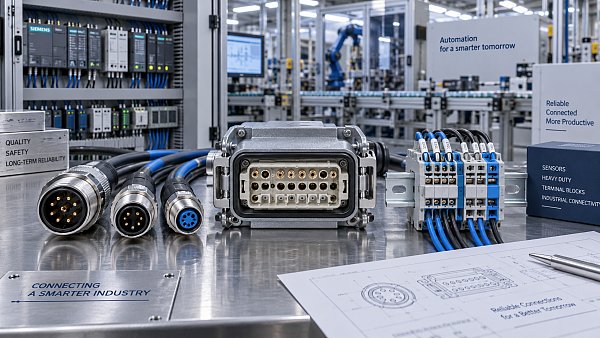
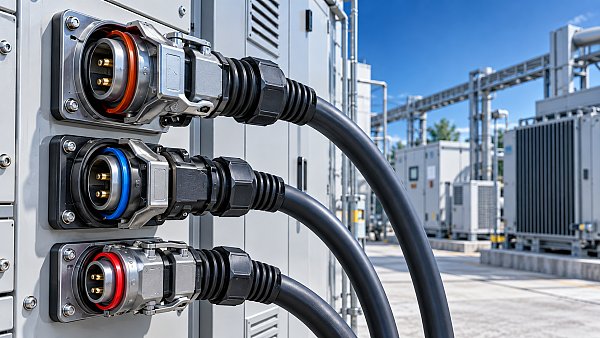
Industrial Connectors are electromechanical interfaces that carry power, signal, or data between machines, modules, cables, and field devices.
Unlike consumer connectors, they operate under dust, moisture, shock, chemical exposure, thermal cycling, and continuous vibration.
Intermittent downtime usually means contact continuity is unstable, not permanently broken. The connection works, then degrades under specific conditions.
Typical symptoms include random PLC alarms, signal noise, communication retries, motor trips, encoder faults, and unexplained restarts.
These symptoms often mislead maintenance teams toward software, sensors, or power quality, while the connector remains the hidden cause.
Why intermittent faults are harder to diagnose
- They appear only during motion, temperature rise, or peak current.
- Visual inspection may show no obvious damage.
- Temporary reconnection can hide the root issue.
- Multiple small defects can combine into one unstable event.
Main Causes Behind Industrial Connectors Downtime
Most intermittent downtime comes from a small group of recurring reliability failures. Each one weakens contact stability in a different way.
1. Vibration and mechanical shock
Repeated motion can loosen threaded couplings, stress crimp zones, and reduce contact normal force inside Industrial Connectors.
This is common near motors, presses, AMR charging stations, conveyors, and hydraulic power units.
2. Contamination ingress
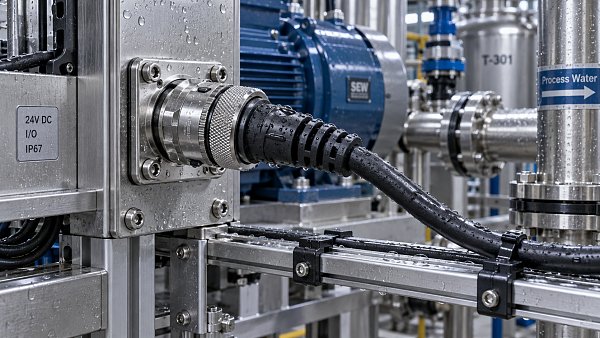
Dust, oil mist, coolant, salt spray, and cleaning chemicals can enter poorly sealed interfaces and damage conductivity.
A connector may still mate physically, but the electrical path becomes unstable as residue grows on the contact surface.
3. Poor mating and incomplete engagement
Many failures come from partial insertion, misalignment, wrong keying, or coupling torque below specification.
The connection may pass startup checks, then fail when equipment moves or when current demand increases.
4. Material mismatch
Contact plating, housing polymer, seal elastomer, and cable jacket must match the operating environment.
Incorrect material choice accelerates corrosion, embrittlement, swelling, or thermal distortion, especially in mixed industrial environments.
5. Installation errors
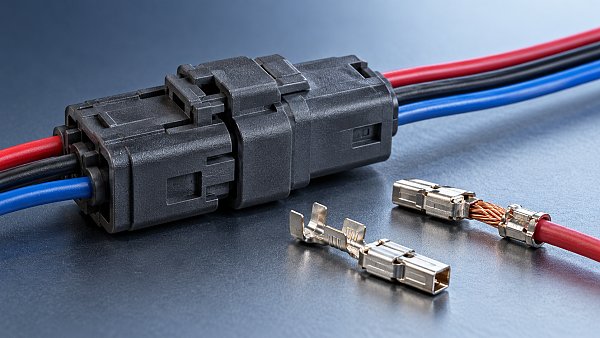
Over-stripping, poor crimp geometry, insufficient strain relief, and tight bend radius create hidden weak points.
These faults often survive commissioning, then fail after repeated cycles or seasonal temperature changes.
Current Industry Signals That Increase Connector Risk
Several broad industry shifts are making Industrial Connectors more critical to uptime than before.
These signals explain why connector selection is now both an engineering and supply-chain decision.
Operational Value of Stable Industrial Connectors
Stable Industrial Connectors do more than prevent stoppages. They support measurable operational performance across multiple systems.
- Higher equipment availability through fewer false faults.
- Lower maintenance time because root causes become clearer.
- Better data integrity for metering, controls, and traceability.
- Improved safety where emergency circuits depend on contact reliability.
- Longer service life for cables, sensors, and mating hardware.
In high-mix facilities, a reliable connector strategy also reduces spare complexity and shortens mean time to repair.
Reference documentation, even basic catalog mapping such as 无, should align with actual environmental duty.
Typical Failure Scenarios Across Industrial Environments
The same connector issue behaves differently depending on the application. Context matters when diagnosing intermittent downtime.
Practical Prevention and Inspection Priorities
Reducing connector-related downtime requires discipline in specification, installation, inspection, and replacement timing.
Specification phase
- Match IP rating to actual washdown, dust, and outdoor exposure.
- Verify temperature range, mating cycles, and vibration resistance.
- Check material compatibility with oils, solvents, and UV exposure.
- Use recognized standards such as IEC, ISO, DIN, ASME, or IEEE where relevant.
Installation phase
- Apply the correct crimp tooling and torque values.
- Protect connectors from cable tension and sharp bending.
- Confirm full engagement and correct keying before energizing systems.
- Label mating pairs to avoid cross-connection during maintenance.
Inspection phase
- Look for discoloration, cracked seals, loosened backshells, and plating wear.
- Monitor intermittent faults during motion and under thermal load.
- Use continuity, insulation, and network diagnostics where applicable.
- Replace components showing repeated instability, not only visible damage.
Some organizations maintain approved connector references, including entries like 无, to support change control.
A Practical Next Step for Reliability Improvement
A useful next step is to review every recurring downtime event that lacks a confirmed root cause.
Then classify each event by environment, connector type, mating frequency, and failure symptom.
This simple mapping often reveals patterns around vibration zones, washdown areas, thermal hotspots, or inconsistent installation practice.
Industrial Connectors should be treated as reliability-critical assets, not passive accessories.
When specification, handling, and inspection improve together, intermittent downtime becomes measurable, preventable, and far less disruptive.
Recommended News
 Oct 18, 2026Choosing Wire-to-Wire Connectors: Current Rating, Wire Gauge, and LockingChoose the right wire to wire electronic connector with expert guidance on current ratings, wire gauge, and locking features. Reduce harness failures and make confident selections.● Dr. Aris Alloy
 Oct 18, 2026How Do You Choose Between Industrial Connector Types?How do I choose between industrial connector types? Compare electrical ratings, sealing, compatibility, and lifecycle costs to select reliable connections and reduce costly downtime.● Dr. Aris Alloy
 Oct 18, 2026What Causes Industrial Connector Failure in Harsh Environments?What causes industrial connector failure in harsh environments? Explore moisture, vibration, heat, and assembly risks—and learn how to select reliable connectors that reduce downtime.● Dr. Aris Alloy
 Oct 05, 2026Smart Valve Policy Standards: What Engineers Need for Industrial ComplianceSmart valve policy standards guide engineers through safety, cybersecurity, interoperability, and lifecycle compliance for reliable industrial valve deployment.● Dr. Aris Alloy
 Oct 08, 2026How Do You Assess Component Reliability for Industrial Infrastructure?How do I assess component reliability for industrial infrastructure projects? Explore duty cycles, failure modes, supplier controls, testing, and lifecycle risk.● Dr. Aris Alloy
 Sep 25, 2026Selecting Power Supply Connectors for Voltage, Current, and Harsh EnvironmentsElectronic Connectors power supply selection guide for voltage, current, heat, vibration, moisture, sealing, and reliable high-performance installations.● Dr. Aris Alloy
 Aug 21, 20263-A Compliance Requirements for Hygienic Connectors: What Engineers Must Verify3-A compliance requirements explained for hygienic connectors: learn what engineers must verify on cleanability, materials, seals, drainability, and documentation before approval.● Dr. Aris Alloy
 Jul 15, 20262 Way Solenoid Valves Explained: Types, Operating Modes, and Common Uses2 way Solenoid Valves explained clearly: compare types, operating modes, and common uses to choose the right valve, reduce downtime, and improve system reliability.● Dr. Aris Alloy
 Jul 11, 2026Geometry Sets Wholesale Buying Guide: Materials, Packaging, MOQ, and School OrdersGeometry sets wholesale buying guide covering materials, packaging, MOQ, and school orders. Compare total cost, reduce sourcing risks, and choose reliable suppliers with confidence.● Dr. Aris Alloy
 Jul 10, 2026Circular Connector Price Guide: What Affects Cost by Material, IP Rating, and Pin Count?Circular connector price explained: compare how material, IP rating, and pin count affect cost, reliability, and sourcing value so you can buy smarter and avoid overpaying.● Dr. Aris Alloy
 Jul 08, 2026Pipe Connectors Nickel Plated: When to Use Them and What Specs Matter MostPipe Connectors nickel plated guide: learn when they are the right choice, which specs matter most, and how to avoid costly selection mistakes in industrial systems.● Dr. Aris Alloy
 Jul 05, 20263D Printed Fastener Strength Explained: Materials, Load Limits, and Design Trade-Offs3d printed fastener strength explained: compare materials, load limits, print orientation, and design trade-offs to choose safer, smarter fastening solutions.● Dr. Aris Alloy
 Jul 03, 2026Industrial Connector Factory China: How to Verify Quality Control and Export ComplianceIndustrial connector factory China verification starts with quality control and export compliance. Learn how to assess testing, traceability, certifications, and shipment readiness before you buy.● Dr. Aris Alloy
 Jul 01, 2026Industrial Connectors Manufacturer Comparison: What to Check Before Requesting SamplesIndustrial Connectors manufacturer comparison starts before samples. Learn what to check in quality, certifications, testing, lead time, and sourcing stability to choose a reliable supplier.● Dr. Aris Alloy
 Jun 28, 2026How to Evaluate a Stainless Cable Gland Manufacturer for Outdoor and Marine UseStainless cable gland manufacturer selection for outdoor and marine use starts with material grade, sealing, and compliance. Learn how to compare suppliers and reduce corrosion, downtime, and risk.● Dr. Aris Alloy
 Jun 27, 2026Specification Preparation with RoHS Compliance: What to Include Before RFQ and ProductionSpecification Preparation with RoHS compliance: learn what to define before RFQ and production to reduce compliance risk, speed approvals, improve quote accuracy, and protect sourcing decisions.● Dr. Aris Alloy
 Jun 25, 2026Automatic Soap Dispensers: Types, Sensor Options, and How to Choose the Right ModelAutomatic soap dispensers guide: compare types, sensor options, refill systems, and durability to choose the right model for cleaner operations, lower maintenance, and better value.● Dr. Aris Alloy
 Jun 24, 2026How to Choose Pipe Connectors: Thread Type, Pressure Rating, and Material GuidePipe Connectors selection starts with the right thread, pressure rating, and material. Learn how to avoid leaks, improve reliability, and choose fittings with confidence.● Dr. Aris Alloy
 Jun 22, 2026Science Lab Furniture: Key Materials, Layout Options, and Safety Features to EvaluateScience lab furniture selection affects safety, workflow, and cost. Explore key materials, layout options, and safety features to choose a lab setup that fits real operating needs.● Dr. Aris Alloy
 Jun 21, 2026Ceiling Speakers Wholesale: How to Compare Power, Coverage, and Installation OptionsCeiling speakers wholesale guide: compare power, coverage, and installation options to reduce project cost, improve audio performance, and choose the right commercial speaker solution.● Dr. Aris Alloy
 Jun 20, 2026Stage Lighting Equipment Checklist: What to Buy for Schools, Theaters, and Live EventsStage lighting equipment checklist for schools, theaters, and live events. Learn what to buy, which specs matter, and how to avoid costly mistakes before you invest.● Dr. Aris Alloy
 Jun 18, 2026Brass Jewelry Manufacturer vs General Metal Supplier: Which Is Better for Custom Orders?Brass jewelry manufacturer or general metal supplier? Compare custom order quality, sampling speed, finish control, cost, and scalability to choose the best partner.● Dr. Aris Alloy
 Jun 17, 2026Connector Cycle Life Benchmarks Explained: What Counts as Reliable in Repeated MatingConnector cycle life benchmarks explained clearly: learn what reliable repeated mating really means, how to compare datasheet claims, and how to reduce failure risk in demanding applications.● Dr. Aris Alloy
 Jun 11, 2026Cable Gland Manufacturer Wholesale: What Certifications and Materials Matter Most?Cable gland manufacturer wholesale guide: learn which certifications, materials, and supplier checks matter most to reduce compliance risk, improve durability, and choose the right partner faster.● Dr. Aris Alloy