Hot Articles
Popular Tags
Where Operational Uptime Improvement Often Falls Short
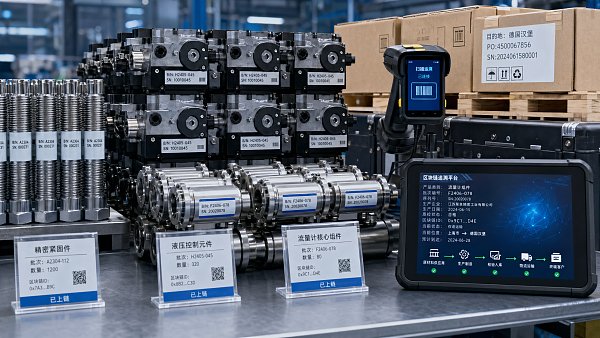
Operational Uptime improvement often falls short when Industrial Infrastructure maintenance focuses on isolated fixes instead of verified component strategy. From High-Pressure Hydraulic Cylinders for construction to Vibration-Resistant Fasteners for aerospace and Strategic Sourcing software solutions, a Technical Intelligence platform helps procurement and evaluation teams identify hidden risks, compare Industrial Infrastructure components, and understand the impact of 5g on real-time tracking technology across complex global supply chains.
For information researchers, procurement managers, commercial evaluators, and channel partners, the problem is rarely a single failed part. More often, uptime losses come from weak specification discipline, fragmented supplier intelligence, inconsistent standards review, and delayed response to logistics disruption. In industrial environments where 1 failed seal, 1 incorrect fastener grade, or 1 unverified sensor tolerance can affect an entire line, a narrow maintenance mindset creates recurring operational risk.
This is why operational uptime must be treated as a system-level outcome. In sectors connected to hydraulic power, industrial fasteners, automated material handling, intelligent flow control, and AI-driven supply-chain orchestration, the gap between expected performance and real-world uptime usually appears at the interface between engineering, sourcing, compliance, and after-sales support.
A technical intelligence model such as G-ISC is valuable because it does not only compare products. It also connects component risk, delivery volatility, material pricing, standard compliance, and project timing into one decision framework. That helps buyers reduce unplanned downtime, shorten supplier screening cycles from 3–4 weeks to a more manageable evaluation window, and improve confidence before issuing RFQs or long-term contracts.
Why Uptime Programs Commonly Underperform
Many uptime initiatives start with maintenance KPIs but stop before addressing root procurement variables. Teams may track MTBF, spare-part consumption, or monthly maintenance hours, yet still miss the larger issue: critical components were never benchmarked against the correct duty cycle, vibration level, pressure class, or environmental exposure. In practice, that means a line can look compliant on paper while remaining vulnerable in daily operation.
A common example is hydraulic infrastructure in construction and heavy industry. A cylinder selected for nominal pressure may perform adequately at 210 bar, but if peak cycling repeatedly reaches 250–280 bar without proper sealing, rod coating, or contamination control, failure risk rises sharply. The maintenance team may replace the failed unit quickly, yet uptime still declines because the selection logic was incomplete from the beginning.
The same pattern appears in aerospace-grade or high-vibration assemblies. A fastener that meets dimensional requirements but not preload retention or fatigue expectations can trigger loosening under thermal fluctuation or continuous vibration. In these scenarios, the visible problem is hardware failure, but the actual weakness lies in specification control, supplier verification, and the absence of cross-functional technical review.
The Most Overlooked Failure Points
Operational uptime often falls short because decision-makers focus on 4 isolated zones rather than the full lifecycle. These zones include specification mismatch, quality inconsistency, poor stock strategy, and delayed field intelligence. If only 1 of these variables is corrected, recurring downtime still appears elsewhere in the chain.
- Specification mismatch: pressure, tensile strength, corrosion rating, or temperature tolerance are defined too broadly for the actual operating profile.
- Quality inconsistency: different production lots or substitute materials create performance variation beyond acceptable limits such as ±1% metering accuracy or torque retention thresholds.
- Inventory imbalance: safety stock is too low for 6–12 week replenishment items, especially during raw material price swings in steel, nickel, or titanium.
- Weak visibility: teams lack real-time tender data, transit tracking, or supplier alerts, so disruptions are identified 7–10 days too late.
The table below outlines where uptime strategies typically break down and what procurement-oriented teams should investigate first.
The key takeaway is that uptime failure is usually not random. It is traceable to missing technical-commercial alignment. When engineering data, sourcing logic, and compliance review are synchronized, teams can eliminate many repeat issues before a maintenance ticket is ever created.
How Critical Components Shape Reliability Across Industrial Infrastructure
Not all components have equal influence on operational uptime. In complex industrial infrastructure, a relatively low-cost item can still be uptime-critical if it sits at a high-stress or high-frequency failure point. Hydraulic cylinders, flow meters, vibration-resistant fasteners, AMR subassemblies, and predictive supply-chain software all affect reliability in different but measurable ways.
For hydraulic and fluid power systems, the practical variables include stroke length, seal composition, operating pressure, contamination tolerance, and duty cycle. A cylinder used in outdoor construction may need stronger corrosion resistance and higher side-load tolerance than a similar-looking unit used indoors. Even a small mismatch in rod surface finish or seal material can reduce service life from 24 months to less than 9 months under abrasive conditions.
For precision fasteners and connectors, uptime depends on preload stability, fatigue resistance, anti-vibration performance, and standard conformity. In aerospace, rail, energy, or rotating machinery, fastener failure is rarely acceptable because secondary damage can exceed the component cost by a factor of 10 or more. Procurement teams therefore need more than unit pricing; they need traceability, grade confirmation, and installation-condition awareness.
Cross-Pillar Reliability Considerations
The five pillars represented by G-ISC become most useful when buyers compare them through a common reliability lens. That includes service interval, environmental durability, tolerance consistency, lead-time sensitivity, and replacement criticality.
The following table provides a practical framework for evaluating which component categories deserve priority attention in uptime planning.
This comparison shows why uptime investment should not be allocated evenly. The right strategy is to identify the 20% of components that can create 80% of service disruption exposure, then verify them through data, standards, and supply continuity planning.
A Note on Product Reference Integration
In some evaluation workflows, procurement teams also maintain placeholder entries for future sourcing expansion, such as 无. Even when such entries are not yet active products, including them in comparison matrices can help distributors and sourcing analysts reserve category space, check future substitution logic, and standardize documentation templates before larger sourcing events begin.
The Procurement Model That Improves Uptime Instead of Chasing Breakdowns
An uptime-centered procurement model begins before purchase orders are issued. It starts with a disciplined review of operating conditions, criticality ranking, standards mapping, and supplier capability. This matters because emergency replacement sourcing may restore function temporarily, but it usually increases total cost over a 12-month period through expedited freight, downtime labor, and quality uncertainty.
The most effective sourcing teams build a 5-step workflow that connects engineering and purchasing. They classify components by failure impact, define minimum acceptable specifications, screen suppliers against technical and commercial criteria, validate lead time and material exposure, and then establish replenishment logic. This process can reduce avoidable sourcing cycles by 15%–30% in organizations that previously relied on reactive ordering.
Five Practical Evaluation Steps
- Rank components by operational consequence: separate nuisance items from line-stopping items and safety-critical items.
- Define technical baselines: pressure range, tensile grade, temperature band, corrosion class, tolerance window, or signal protocol.
- Check standards alignment: ISO, DIN, ASME, IEEE, and any sector-specific internal requirements should be reviewed before quotation comparison.
- Assess supply continuity: evaluate 2–3 approved supplier paths for high-risk categories and track raw material volatility monthly.
- Set stock and service rules: determine reorder points, inspection frequency, and acceptable lead time by component class.
Commercial evaluators should also distinguish between cheap procurement and resilient procurement. A lower quoted price is less meaningful if batch consistency is weak, documentation is incomplete, or replenishment depends on one unstable route. In many industrial categories, a 5% saving at order stage can be erased by a single 48-hour line delay.
Information researchers and distributors gain a strategic advantage when they use intelligence platforms to monitor tender activity, policy shifts, and commodity exposure. If steel or nickel prices move sharply within a 30-day period, the impact may extend beyond cost and affect supplier substitution behavior, lead-time reliability, and MOQ negotiation terms.
What Buyers Should Request Before Final Approval
Before approving a critical supplier, teams should request a specification sheet, applicable standards reference, inspection method, lot traceability details, and expected replenishment cycle. For high-impact categories, it is also reasonable to request validation samples or reference test conditions. Even a placeholder procurement reference like 无 should fit this same documentation logic so internal records remain consistent across future product expansions.
Digital Visibility, 5G Tracking, and the New Reliability Baseline
Operational uptime is no longer only a mechanical issue. It is now deeply connected to data visibility, especially when components move across multiple suppliers, ports, integrators, and regional warehouses. The impact of 5G on real-time tracking technology is significant because lower latency and higher device density make it easier to monitor mobile assets, field equipment, AMRs, and condition-based alerts across distributed industrial networks.
For automated material handling and intelligent flow-control environments, real-time data can shorten response time from several hours to a few minutes. If a sensor shows pressure fluctuation, route deviation, or battery degradation beyond a defined threshold, procurement and operations teams can intervene earlier. In practical terms, earlier detection may prevent a single anomaly from developing into a multi-shift stoppage.
However, digital visibility only improves uptime when the data is actionable. Too many companies invest in dashboards without connecting them to sourcing rules, spare-part logic, or maintenance escalation paths. A useful system should trigger decisions such as reorder alerts, supplier review, failure clustering analysis, or route adjustment within a defined 1–3 step workflow.
Where Real-Time Tracking Adds Measurable Value
The strongest use cases are not generic “smart factory” claims. They are targeted points where delay or uncertainty has direct uptime consequences.
- In AMR fleets, battery state and route congestion data can improve dispatch reliability across 8–24 hour operating windows.
- In flow control systems, remote monitoring can detect drift or abnormal readings before process quality falls outside tolerance.
- In cross-border sourcing, real-time shipment visibility helps buyers react to customs delays or policy changes within the same day instead of after several days.
- In spare-parts planning, integrated demand analytics can align reorder timing with actual consumption trends rather than fixed monthly assumptions.
The broader lesson is that uptime improvement requires both physical reliability and informational reliability. Without trusted data on where components are, how they are performing, and when they should be replenished, maintenance remains reactive no matter how advanced the equipment appears.
Selection Standards, Risk Controls, and Common Buying Mistakes
A structured selection process reduces the likelihood that operational uptime will fall short after deployment. For industrial buyers, the right decision framework should include 4 major filters: technical fit, standards compliance, supply resilience, and total lifecycle cost. If one filter is ignored, the sourcing result may look competitive at purchase stage but underperform during operation.
One frequent mistake is relying too heavily on nominal specifications. A component may match dimensions, thread type, or pressure rating and still fail in real service because dynamic load, vibration intensity, contamination class, or duty frequency were not fully considered. Another mistake is treating all suppliers in a category as interchangeable, even when their process controls, inspection practices, and documentation depth differ substantially.
A Practical Risk-Control Checklist
The table below can be used by procurement teams, evaluators, and distributors during supplier comparison or pre-contract review.
This checklist is especially relevant for distributors and agents who must compare multiple brands or factories quickly. It provides a consistent screening method and supports more defensible recommendations to end users, EPC firms, and system integrators.
FAQ for Buyers and Evaluators
Below are several recurring questions that appear during industrial uptime planning and sourcing reviews.
How long should critical component lead time buffers be?
For standard industrial parts, buyers often plan around 2–6 weeks. For customized hydraulic assemblies, specialty fasteners, or imported control devices, a safer planning window may be 6–12 weeks depending on raw material volatility and routing complexity.
Which items deserve dual sourcing first?
Prioritize components that can stop production, affect safety, or require long replacement cycles. In many facilities, that includes hydraulic actuators, precision connectors, metering devices, and AMH control modules rather than general consumables.
What is the biggest sourcing mistake in uptime projects?
The most common mistake is evaluating price before application risk. If duty cycle, environment, compliance, and lead-time exposure are reviewed only after supplier selection, downtime costs usually exceed any early quotation advantage.
Building a More Reliable Decision Framework with Technical Intelligence
The practical value of a technical intelligence platform is that it turns fragmented industrial information into a usable decision framework. Instead of treating hydraulic systems, fasteners, AMH equipment, flow control devices, and sourcing software as separate discussions, it connects them through operational uptime, standards benchmarking, supply risk, and commercial timing.
For procurement departments, this means faster prequalification, clearer RFQ design, and fewer sourcing surprises after contract award. For business evaluators, it means a stronger basis for comparing vendors on more than cost. For distributors and agents, it means more accurate product positioning and better support during technical-commercial negotiations.
The organizations that improve uptime most consistently are usually those that combine 3 disciplines: verified engineering data, continuous market intelligence, and disciplined supplier governance. They do not wait for repeated field failure before revising component strategy. They use standards, risk analysis, and visibility tools to intervene earlier and make better decisions with each sourcing cycle.
If your team is reviewing critical components, mapping supply-chain exposure, or evaluating industrial infrastructure reliability across multiple categories, now is the right time to move beyond isolated fixes. Use a technical intelligence approach to compare options, identify hidden vulnerabilities, and build sourcing decisions that protect uptime over the next 6, 12, and 24 months. Contact us to get a tailored evaluation framework, discuss component selection priorities, or learn more solutions for resilient industrial procurement.
Recommended News
 Oct 13, 2026Which S&OP KPIs reveal whether plans can be executedS&OP KPIs that reveal execution readiness: learn how to measure plan adherence, material availability, capacity, schedule stability, and financial alignment.● Lina Cloud
 Jul 14, 2026Capacity Planning Software in Southeast Asia: What to Compare Before You BuyCapacity Planning Software in Southeast Asia: compare forecasting, constraints, ERP integration, and multi-site fit before you buy to reduce downtime, inventory risk, and costly planning errors.● Lina Cloud
 Jul 08, 2026How to Evaluate an SCM Transformation Provider for Multi-Site Planning Projectsscm transformation provider evaluation for multi-site planning: learn how to compare integration, data governance, industry fit, and post-launch support to choose a partner that drives resilient results.● Lina Cloud
![]() Jul 07, 2026Sales and Operations Planning Software for Manufacturing: Which Features Matter Most for Multi-Site Planning?Sales and Operations Planning Software for manufacturing helps multi-site teams align demand, capacity, inventory, and supplier risk faster. Discover the features that drive smarter planning.● Lina Cloud
Jul 07, 2026Sales and Operations Planning Software for Manufacturing: Which Features Matter Most for Multi-Site Planning?Sales and Operations Planning Software for manufacturing helps multi-site teams align demand, capacity, inventory, and supplier risk faster. Discover the features that drive smarter planning.● Lina Cloud Jul 06, 2026Sales and Operations Execution Dashboard: Which KPIs Matter for Daily Decisions?Sales and operations execution dashboard KPIs should drive daily action, not add noise. Discover the metrics that improve demand, supply, inventory, and fulfillment decisions.● Lina Cloud
 Jun 28, 2026Best S&OP Dashboard Software in Southeast Asia: What to Compare Before You Buys&op dashboard software Southeast Asia buyers trust should improve visibility, integration, and scenario planning. Compare key features before you buy and choose a platform built for regional supply-chain complexity.● Lina Cloud
 Jun 27, 2026S&OP Dashboard Software Vendors Compared: Key Features, ERP Integration, and KPI Fits&op dashboard software vendors compared for ERP integration, scenario planning, and KPI fit. Discover how to shortlist the right platform for faster, smarter planning decisions.● Lina Cloud
 Jun 20, 2026WMS Integration Latency Metrics Explained: What to Measure and What Delays MeanWMS integration latency metrics explained: learn what to measure, how to spot hidden delays, and what timing gaps mean for inventory, automation, and warehouse performance.● Lina Cloud
 Jun 19, 2026SaaS vs On-Premise SCM Trends: Which Deployment Model Fits Multi-Site Operations?SaaS vs on-premise SCM trends for multi-site operations: compare resilience, integration, compliance, and control to choose the best-fit deployment model and reduce supply chain risk.● Lina Cloud
 Jun 14, 2026Production Scheduling Software OEM Selection Guide: Features, Integration, and Total CostProduction scheduling software OEM selection guide covering must-have features, ERP/MES integration, and total cost factors to help buyers reduce risk and improve ROI.● Lina Cloud
 May 05, 2026Can supply chain tower software fit a factory with legacy systemsSupply chain tower software factory guide: see how legacy ERP/MES connect with a supply chain digital twin platform, ISO Compliance certification, warehouse throughput efficiency data, and Strategic Sourcing best practices.● Lina Cloud
 May 04, 2026What actually improves Operational Uptime without overspending?Operational Uptime improvement starts with smarter specs, Supply-Chain Orchestration tools, and Total Reliability standards—learn how to cut downtime, control costs, and boost resilience.● Lina Cloud
 May 03, 2026Where operational uptime improvement stalls on the plant floorOperational Uptime improvement starts with predictive supply chain case studies in manufacturing, Total Reliability standards, and advanced hydraulic solutions that help plants cut downtime and source smarter.● Lina Cloud
 May 02, 2026Where Operational Uptime Improvement Often Falls ShortOperational Uptime improvement starts with smarter component strategy. Explore the impact of 5g on real-time tracking technology, Technical Intelligence platform insights, and resilient Industrial Infrastructure maintenance.● Lina Cloud
![]() May 01, 2026Global Supply Chain Software Still Misses This One NeedGlobal Supply Chain management software still misses Total Reliability certification. Explore Supply-Chain Orchestration for manufacturing, 5G tracking impact, and smarter sourcing for critical industrial components.● Lina Cloud
May 01, 2026Global Supply Chain Software Still Misses This One NeedGlobal Supply Chain management software still misses Total Reliability certification. Explore Supply-Chain Orchestration for manufacturing, 5G tracking impact, and smarter sourcing for critical industrial components.● Lina Cloud![]() Apr 29, 2026How to choose supply-chain orchestration software?Supply-Chain Orchestration software guide for manufacturers: compare platforms, strengthen Industrial Procurement strategy, and support Total Reliability certification with smarter, risk-aware decisions.● Lina Cloud
Apr 29, 2026How to choose supply-chain orchestration software?Supply-Chain Orchestration software guide for manufacturers: compare platforms, strengthen Industrial Procurement strategy, and support Total Reliability certification with smarter, risk-aware decisions.● Lina Cloud Apr 28, 2026Data integration API latency and the cost of stale operationsData integration API latency drives stale operations, higher inventory carrying cost metrics, and sourcing risk. Learn how Industrial Manufacturing suppliers can improve real-time decisions.● Lina Cloud
 Apr 28, 2026Can blockchain fix weak traceability in complex supply chains?Future of blockchain in traceability: learn how data integration api latency and the impact of 5g on real-time tracking in logistics shape smarter, trusted supply chains.● Lina Cloud
![]() Apr 27, 2026Which Supply-Chain Orchestration Tools Work BestSupply-Chain Orchestration tools compared: learn which platforms best improve Operational Uptime, real-time tracking, supplier visibility, and predictive manufacturing decisions.● Lina Cloud
Apr 27, 2026Which Supply-Chain Orchestration Tools Work BestSupply-Chain Orchestration tools compared: learn which platforms best improve Operational Uptime, real-time tracking, supplier visibility, and predictive manufacturing decisions.● Lina Cloud![]() Apr 21, 2026Why some predictive supply chain pilots stall in factoriesPredictive supply chain case studies in manufacturing show why factory pilots stall—fix data gaps, align Supply-Chain Orchestration tools, and accelerate Operational Uptime improvement.● Lina Cloud
Apr 21, 2026Why some predictive supply chain pilots stall in factoriesPredictive supply chain case studies in manufacturing show why factory pilots stall—fix data gaps, align Supply-Chain Orchestration tools, and accelerate Operational Uptime improvement.● Lina Cloud