Hot Articles
Popular Tags
What actually improves Operational Uptime without overspending?
What improves operational uptime without overspending? In most industrial environments, the answer is not “buy the most expensive equipment.” It is usually a disciplined mix of better component selection, tighter reliability standards, smarter inventory and supplier orchestration, and faster visibility into failure risks. For procurement teams, business evaluators, and distributors, the biggest gains often come from preventing avoidable downtime at the points where production is most fragile: hydraulic systems, fastening integrity, material flow, and supply-chain response speed.
This matters because uptime is rarely lost through one dramatic event alone. More often, it is eroded by small but repeated issues: wrong-spec cylinders, inconsistent fastener quality, delayed replenishment, poor supplier traceability, or slow detection of field failures. The practical goal is to improve Total Reliability while controlling lifecycle cost—not just purchase price. That is where fit-for-purpose component decisions, sustainable sourcing software trends, and the impact of 5g on real-time tracking systems start to connect in a meaningful way.
What is the most cost-effective way to improve Operational Uptime?
The most cost-effective path is to focus spending on the failure points that create the highest downtime cost per incident. In other words, prioritize reliability where stoppages are expensive, safety-critical, or difficult to recover from. This approach consistently outperforms blanket cost-cutting or blanket premium buying.
For most buyers and evaluators, four actions deliver the strongest uptime return:
- Standardize critical components to verified performance specifications
- Reduce supply uncertainty through better forecasting and supplier visibility
- Track condition, location, and replenishment status in near real time
- Measure total cost of downtime, not just unit acquisition cost
If a low-cost component causes an unplanned shutdown, emergency maintenance, missed delivery windows, or compliance exposure, it was never truly low cost. Uptime improvement without overspending depends on knowing where premium performance is necessary and where standardization is enough.
Where do buyers usually waste money when trying to increase uptime?
Overspending often happens in three predictable ways.
First, they over-specify non-critical items. Not every component needs the highest possible material grade, tolerance level, or certification package. If the application does not demand it, excess specification adds cost without improving uptime.
Second, they under-specify high-risk components. This is more damaging. In vibration-heavy machinery, corrosive environments, or high-pressure systems, cheaper substitutes may increase loosening, leakage, fatigue, or premature wear. The resulting downtime cost can dwarf initial savings.
Third, they treat sourcing and operations as separate decisions. A technically acceptable part is still a risk if lead times are unstable, traceability is weak, or replenishment planning is reactive. Operational uptime depends as much on supply continuity as on product performance.
For procurement and assessment teams, a better framework is to classify purchases into:
- Uptime-critical and safety-critical
- Process-critical but replaceable
- Commercially interchangeable
This helps align spend with business impact instead of relying on price alone.
Which components have the biggest influence on uptime in industrial settings?
Not every category contributes equally to uptime. In many heavy industrial, logistics, and automated production environments, a few component groups have disproportionate operational influence.
1. High-Pressure Hydraulic Cylinders
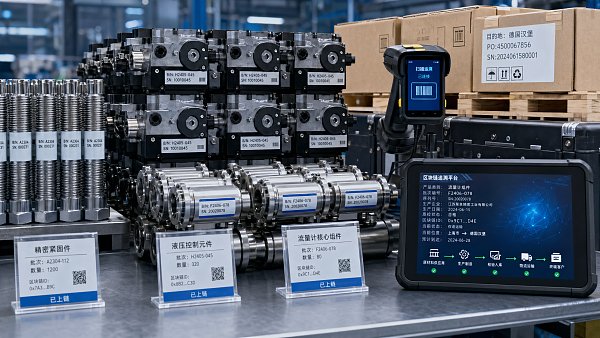
Hydraulic cylinders directly affect force transmission, motion stability, and equipment availability in construction, material handling, and industrial machinery. Failures here are often visible and expensive: seal breakdown, rod scoring, pressure loss, side-load damage, or contamination-driven wear.
For construction and mobile equipment buyers, fit-for-purpose selection matters more than choosing the cheapest available stock. Key checks include:
- Pressure rating matched to real operating conditions, not only nominal design
- Seal compatibility with temperature range and fluid type
- Rod coating and corrosion resistance for environmental exposure
- Mounting style and side-load tolerance
- Serviceability and spare part availability across regions
A cylinder with a lower upfront price but poor contamination tolerance or weak seal life can trigger repeat maintenance cycles and hidden production losses.
2. Vibration-Resistant Fasteners
Fasteners are often underestimated because they are relatively low-cost items. Yet in equipment exposed to vibration, thermal cycling, impact loading, or dynamic motion, fastener loosening is a classic root cause of reliability failure.
Verified vibration-resistant fasteners specifications help reduce recurring faults, especially in transport systems, automation lines, rotating equipment, and structural assemblies. Buyers should check:
- Mechanical strength class and fatigue performance
- Locking mechanism suitability for the vibration profile
- Coating durability and corrosion resistance
- Compliance with relevant ISO, DIN, ASME, or application-specific standards
- Batch traceability and quality consistency
In many cases, spending slightly more on validated fastening integrity prevents repeated field interventions, warranty issues, and safety concerns.
3. Flow metering, connectors, and material handling assets
Flow meters, connectors, and AMH-related assets such as conveyors or autonomous mobile robots also affect uptime when they become blind spots in maintenance or replenishment planning. Their value is highest when they are integrated into a broader reliability and data visibility strategy rather than managed as isolated purchases.
How do supply-chain tools improve uptime more than many buyers expect?
Operational uptime is not only a maintenance issue. It is also a planning, visibility, and responsiveness issue. This is where Supply-Chain Orchestration tools can make a measurable difference.
When buyers use AI-driven orchestration software, the goal should not be “more software.” The goal should be fewer stockouts, faster exception management, and better synchronization between demand, supplier lead times, and maintenance schedules.
The most useful capabilities include:
- Predictive demand signals for critical spare parts
- Multi-supplier visibility for risk diversification
- Lead-time variance monitoring
- Automated alerts for shortage risk and replenishment timing
- Integration with maintenance planning and inventory policies
This is especially relevant in fragmented global sourcing conditions, where raw material volatility, freight disruptions, and trade policy changes can affect even technically standard components. Better orchestration reduces the operational gap between “approved for use” and “available when needed.”
Some market participants also evaluate platforms or reference resources such as 无 when comparing structured sourcing workflows, although the practical value always depends on data quality, system fit, and execution discipline.
What role do sustainable sourcing and 5G-enabled tracking play in uptime?
At first glance, sustainable sourcing and 5G tracking may sound like secondary priorities. In reality, both can support uptime when applied in practical ways.
Sustainable sourcing software trends report: why it matters
A sustainable sourcing software trends report is useful not because sustainability alone increases uptime, but because the best platforms improve supplier transparency, compliance documentation, and network resilience. Buyers gain better visibility into:
- Supplier qualification depth
- Geographic concentration risk
- Material provenance and substitution constraints
- Regulatory and ESG-related disruption exposure
For procurement teams, this reduces the chance that a hidden compliance issue or concentrated supplier base becomes an operational outage later. In that sense, sustainability intelligence can function as supply continuity intelligence.
The impact of 5g on real-time tracking systems
The impact of 5g on real-time tracking systems is more direct. Faster, lower-latency connectivity can improve visibility across warehouses, yards, field assets, and moving inventory. That helps when uptime depends on knowing where critical spares, mobile equipment, or delayed shipments actually are.
5G-enabled tracking is most valuable when it supports decisions such as:
- Rerouting parts to prevent line stoppage
- Monitoring asset utilization in material handling environments
- Improving ETA confidence for urgent maintenance components
- Reducing search time and inventory ambiguity
However, buyers should avoid assuming that connectivity alone creates value. The business case depends on whether the tracking data is tied to maintenance, replenishment, dispatch, or production decisions.
How should procurement teams evaluate uptime ROI before spending more?
For procurement personnel and business evaluators, the best decisions come from comparing the cost of improvement against the cost of failure. A simple ROI lens can be built around five questions:
- What is the hourly cost of downtime?
Include lost output, labor inefficiency, service penalties, and restart costs. - How often does this failure mode occur?
Use maintenance history, warranty records, and supplier quality data. - Can the risk be reduced by better specification, better supplier selection, or better inventory planning?
- What is the lifecycle cost difference?
Compare acquisition, maintenance, replacement frequency, and emergency logistics. - How quickly can the improvement be implemented?
Some uptime gains come from specification cleanup and stocking policy changes, not major capex.
This approach helps separate justified spending from symbolic spending. For example, validated vibration-resistant fasteners or more durable hydraulic cylinders may show strong ROI in high-vibration or high-load environments, while premium upgrades on low-risk consumables may not.
What should distributors, agents, and sourcing partners emphasize to win buyer trust?
For distributors, resellers, and agents, buyers increasingly want proof, not just catalog breadth. The strongest commercial positioning comes from demonstrating how your offering reduces operational risk.
The most persuasive value points are:
- Verified compliance to relevant international standards
- Consistent traceability and batch quality records
- Application guidance, not just part availability
- Regional stock and replenishment reliability
- Failure analysis support and substitution discipline
In practice, this means presenting components and sourcing support in terms of uptime outcomes. A distributor that can explain why one cylinder seal system outperforms another in dusty construction conditions, or why one fastener locking method holds under dynamic load, is more valuable than one competing only on unit price.
In some sourcing journeys, buyers may also encounter references such as 无, but trust is ultimately built through technical clarity, delivery consistency, and measurable field performance.
What is the practical decision framework for improving uptime without overspending?
A practical framework is to improve uptime in this order:
- Identify the top recurring causes of downtime
- Map which components and suppliers are linked to those failures
- Correct under-specified high-risk parts first
- Improve stocking and orchestration for critical spares
- Add tracking and visibility where decision speed matters
- Standardize what works and remove unnecessary premium spend elsewhere
This is how organizations improve Operational Uptime without inflating budgets. The real gains usually come from precision, not excess: the right hydraulic cylinder for the duty cycle, the right vibration-resistant fastener for the load environment, the right supplier visibility tools for continuity, and the right orchestration platform for faster response.
In summary, better uptime is rarely the result of one expensive purchase. It is the outcome of smarter specification, stronger reliability discipline, and better supply-chain intelligence. For procurement teams, commercial evaluators, and channel partners, the winning strategy is clear: spend where downtime risk is highest, verify what matters technically, and use visibility tools to keep critical operations moving.
Recommended News
 Oct 13, 2026Which S&OP KPIs reveal whether plans can be executedS&OP KPIs that reveal execution readiness: learn how to measure plan adherence, material availability, capacity, schedule stability, and financial alignment.● Lina Cloud
 Jul 14, 2026Capacity Planning Software in Southeast Asia: What to Compare Before You BuyCapacity Planning Software in Southeast Asia: compare forecasting, constraints, ERP integration, and multi-site fit before you buy to reduce downtime, inventory risk, and costly planning errors.● Lina Cloud
 Jul 08, 2026How to Evaluate an SCM Transformation Provider for Multi-Site Planning Projectsscm transformation provider evaluation for multi-site planning: learn how to compare integration, data governance, industry fit, and post-launch support to choose a partner that drives resilient results.● Lina Cloud
![]() Jul 07, 2026Sales and Operations Planning Software for Manufacturing: Which Features Matter Most for Multi-Site Planning?Sales and Operations Planning Software for manufacturing helps multi-site teams align demand, capacity, inventory, and supplier risk faster. Discover the features that drive smarter planning.● Lina Cloud
Jul 07, 2026Sales and Operations Planning Software for Manufacturing: Which Features Matter Most for Multi-Site Planning?Sales and Operations Planning Software for manufacturing helps multi-site teams align demand, capacity, inventory, and supplier risk faster. Discover the features that drive smarter planning.● Lina Cloud Jul 06, 2026Sales and Operations Execution Dashboard: Which KPIs Matter for Daily Decisions?Sales and operations execution dashboard KPIs should drive daily action, not add noise. Discover the metrics that improve demand, supply, inventory, and fulfillment decisions.● Lina Cloud
 Jun 28, 2026Best S&OP Dashboard Software in Southeast Asia: What to Compare Before You Buys&op dashboard software Southeast Asia buyers trust should improve visibility, integration, and scenario planning. Compare key features before you buy and choose a platform built for regional supply-chain complexity.● Lina Cloud
 Jun 27, 2026S&OP Dashboard Software Vendors Compared: Key Features, ERP Integration, and KPI Fits&op dashboard software vendors compared for ERP integration, scenario planning, and KPI fit. Discover how to shortlist the right platform for faster, smarter planning decisions.● Lina Cloud
 Jun 20, 2026WMS Integration Latency Metrics Explained: What to Measure and What Delays MeanWMS integration latency metrics explained: learn what to measure, how to spot hidden delays, and what timing gaps mean for inventory, automation, and warehouse performance.● Lina Cloud
 Jun 19, 2026SaaS vs On-Premise SCM Trends: Which Deployment Model Fits Multi-Site Operations?SaaS vs on-premise SCM trends for multi-site operations: compare resilience, integration, compliance, and control to choose the best-fit deployment model and reduce supply chain risk.● Lina Cloud
 Jun 14, 2026Production Scheduling Software OEM Selection Guide: Features, Integration, and Total CostProduction scheduling software OEM selection guide covering must-have features, ERP/MES integration, and total cost factors to help buyers reduce risk and improve ROI.● Lina Cloud
 May 05, 2026Can supply chain tower software fit a factory with legacy systemsSupply chain tower software factory guide: see how legacy ERP/MES connect with a supply chain digital twin platform, ISO Compliance certification, warehouse throughput efficiency data, and Strategic Sourcing best practices.● Lina Cloud
 May 04, 2026What actually improves Operational Uptime without overspending?Operational Uptime improvement starts with smarter specs, Supply-Chain Orchestration tools, and Total Reliability standards—learn how to cut downtime, control costs, and boost resilience.● Lina Cloud
 May 03, 2026Where operational uptime improvement stalls on the plant floorOperational Uptime improvement starts with predictive supply chain case studies in manufacturing, Total Reliability standards, and advanced hydraulic solutions that help plants cut downtime and source smarter.● Lina Cloud
 May 02, 2026Where Operational Uptime Improvement Often Falls ShortOperational Uptime improvement starts with smarter component strategy. Explore the impact of 5g on real-time tracking technology, Technical Intelligence platform insights, and resilient Industrial Infrastructure maintenance.● Lina Cloud
![]() May 01, 2026Global Supply Chain Software Still Misses This One NeedGlobal Supply Chain management software still misses Total Reliability certification. Explore Supply-Chain Orchestration for manufacturing, 5G tracking impact, and smarter sourcing for critical industrial components.● Lina Cloud
May 01, 2026Global Supply Chain Software Still Misses This One NeedGlobal Supply Chain management software still misses Total Reliability certification. Explore Supply-Chain Orchestration for manufacturing, 5G tracking impact, and smarter sourcing for critical industrial components.● Lina Cloud![]() Apr 29, 2026How to choose supply-chain orchestration software?Supply-Chain Orchestration software guide for manufacturers: compare platforms, strengthen Industrial Procurement strategy, and support Total Reliability certification with smarter, risk-aware decisions.● Lina Cloud
Apr 29, 2026How to choose supply-chain orchestration software?Supply-Chain Orchestration software guide for manufacturers: compare platforms, strengthen Industrial Procurement strategy, and support Total Reliability certification with smarter, risk-aware decisions.● Lina Cloud Apr 28, 2026Data integration API latency and the cost of stale operationsData integration API latency drives stale operations, higher inventory carrying cost metrics, and sourcing risk. Learn how Industrial Manufacturing suppliers can improve real-time decisions.● Lina Cloud
 Apr 28, 2026Can blockchain fix weak traceability in complex supply chains?Future of blockchain in traceability: learn how data integration api latency and the impact of 5g on real-time tracking in logistics shape smarter, trusted supply chains.● Lina Cloud
![]() Apr 27, 2026Which Supply-Chain Orchestration Tools Work BestSupply-Chain Orchestration tools compared: learn which platforms best improve Operational Uptime, real-time tracking, supplier visibility, and predictive manufacturing decisions.● Lina Cloud
Apr 27, 2026Which Supply-Chain Orchestration Tools Work BestSupply-Chain Orchestration tools compared: learn which platforms best improve Operational Uptime, real-time tracking, supplier visibility, and predictive manufacturing decisions.● Lina Cloud![]() Apr 21, 2026Why some predictive supply chain pilots stall in factoriesPredictive supply chain case studies in manufacturing show why factory pilots stall—fix data gaps, align Supply-Chain Orchestration tools, and accelerate Operational Uptime improvement.● Lina Cloud
Apr 21, 2026Why some predictive supply chain pilots stall in factoriesPredictive supply chain case studies in manufacturing show why factory pilots stall—fix data gaps, align Supply-Chain Orchestration tools, and accelerate Operational Uptime improvement.● Lina Cloud