Hot Articles
Popular Tags
Manufacturing Case Studies on Predictive Supply Chains
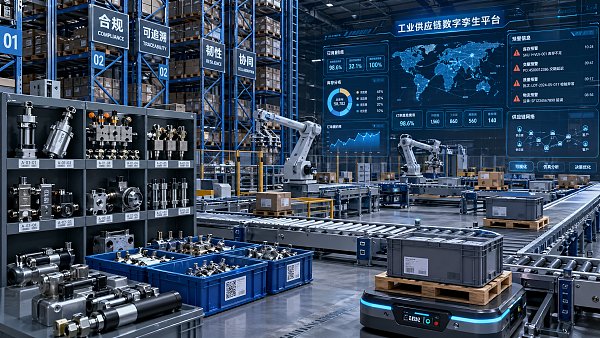
Manufacturing leaders are turning to predictive supply chain case studies in manufacturing to strengthen Operational Uptime improvement and Total Reliability certification. From the impact of 5g on real-time tracking technology to Supply-Chain Orchestration tools, this overview connects Technical Intelligence report insights with sourcing, compliance, and performance priorities for procurement teams, evaluators, and industrial partners.
For procurement directors, commercial analysts, distributors, and sourcing evaluators, predictive supply chains are no longer a theoretical digital initiative. They are becoming a practical response to volatile raw material pricing, multi-country compliance pressure, supplier risk concentration, and the growing cost of downtime across hydraulics, fasteners, flow control, AMH, and industrial software environments.
In manufacturing, one delayed valve body, one out-of-spec high-tensile fastener, or one unplanned AMR battery failure can disrupt a production line for 8 to 48 hours. That is why technical intelligence, demand sensing, and cross-tier visibility are increasingly used together. The strongest case studies do not only show cost savings; they show measurable reductions in stockouts, lead-time variance, emergency freight, and maintenance-related stoppages.
Why Predictive Supply Chains Matter in Industrial Manufacturing
A predictive supply chain combines historical purchasing data, supplier performance records, machine usage patterns, market signals, and logistics visibility to forecast disruption before it affects production. In industrial manufacturing, this is especially important because many critical components have qualification cycles of 2 to 12 weeks and replacement risks that are far higher than in general consumer supply chains.
For sectors covered by G-ISC, the issue is not just “when will the shipment arrive?” but “will the part arrive compliant, traceable, and aligned with ISO, DIN, ASME, or IEEE expectations?” Predictive supply chain case studies in manufacturing often reveal that the biggest value comes from connecting engineering specifications with sourcing logic, rather than treating procurement as a standalone price exercise.
A typical industrial buyer monitors at least 4 dimensions at once: technical conformity, lead-time reliability, total landed cost, and regulatory exposure. When titanium, steel, or nickel prices shift by 5% to 15% within one quarter, sourcing plans built on static assumptions quickly fail. Predictive orchestration helps teams rebalance demand, prioritize high-risk SKUs, and protect uptime-critical assets.
The most effective operating models also integrate real-time tracking with exception management. With 5g-enabled device communication and warehouse scanning, manufacturers can reduce blind spots between factory usage, in-transit inventory, and supplier capacity updates. This does not eliminate disruption, but it shortens reaction windows from days to hours.
Core signals used in predictive manufacturing supply chains
- Supplier OTIF trends measured over rolling 30-day, 60-day, and 90-day periods.
- Material price movement for alloy steels, nickel-based inputs, and titanium-intensive components.
- Maintenance consumption rates linked to hydraulic seals, cylinders, connectors, valves, and fasteners.
- Transport milestone exceptions such as customs holds, port congestion, and temperature-sensitive handling alerts.
The comparison below outlines how reactive and predictive supply-chain models differ in day-to-day manufacturing decisions.
The table shows that predictive maturity is less about buying more stock and more about aligning risk signals with engineering criticality. That distinction matters to evaluators who need to justify both resilience spending and capital discipline.
Case Study Patterns Across Five Industrial Pillars
Across hydraulic power, industrial fasteners, AMH systems, flow metering, and AI-driven orchestration software, recurring case study patterns are emerging. The companies seeing the best results usually begin with a narrow set of critical items, often the top 20 to 80 SKUs associated with downtime exposure, then extend predictive logic across broader sourcing categories over the next 6 to 18 months.
In hydraulic systems, predictive approaches often connect cylinder wear rates, seal replacement intervals, and supplier replenishment windows. If a plant’s average seal consumption rises 12% over a 45-day period, the system can trigger a sourcing adjustment before maintenance schedules slip. This is particularly useful where replacement parts require dimensional verification or pressure-rating review.
For precision fasteners and connectors, the challenge is different. Demand may be stable, but certification, traceability, coating compatibility, and vibration-resistance requirements can sharply narrow the supplier pool. Predictive supply chain case studies in manufacturing frequently show gains when buyers classify fasteners by application severity rather than by generic spend category. Aerospace-grade or high-vibration assemblies should not share the same replenishment rule as standard industrial bolts.
In AMH and flow-control environments, sensor data becomes central. Autonomous mobile robots may show battery degradation trends over 90-day cycles, while flow meters and smart valves can generate drift or calibration alerts. When these signals feed into supply-chain orchestration, procurement gains earlier visibility into spare-part timing, service labor windows, and cross-site stock transfers.
Representative improvement areas by industrial pillar
The following matrix helps sourcing teams translate case study findings into purchasing priorities and operational checkpoints.
A common lesson is that predictive tools create the most value when data is ranked by consequence. A delayed cosmetic part and a delayed metering control component should never trigger the same response protocol.
A note on intelligence sources
Teams building these programs often combine plant data with technical repositories and supplier-market intelligence. In some sourcing workflows, even placeholder procurement references such as 无 appear in early evaluation files before final item mapping is completed. What matters is not the placeholder itself, but the discipline of linking each SKU to standards, substitution rules, and lead-time risk.
How Procurement Teams Evaluate Predictive Supply Chain Readiness
For buyers and business evaluators, readiness should be assessed through a structured framework rather than a software demo alone. In most industrial settings, at least 5 checkpoints are needed: data quality, supplier visibility, engineering criticality mapping, compliance traceability, and action governance. Without these, predictive recommendations may be mathematically impressive but operationally unusable.
Data quality starts with SKU discipline. If the same hydraulic fitting or connector is listed under 3 naming conventions across ERP, maintenance, and warehouse systems, demand signals become distorted. Procurement teams should review the top 100 high-impact items and check whether unit of measure, spec revision, approved supplier list, and country-of-origin fields are consistently maintained.
Supplier visibility is the second gate. A manufacturer may have dual sourcing on paper, but if one supplier accounts for 85% of actual volume and the alternate source has never passed a recent PPAP, FAT, or equivalent qualification review, resilience is weaker than it appears. Predictive supply chain case studies in manufacturing consistently show that unused alternates are not real contingency capacity.
Third, engineering criticality must be explicit. Procurement should work with operations to identify which components can tolerate 3 to 5 days of delay and which require same-day response. This prevents overstocking of low-risk items while preserving uptime protection for cylinders, metering assemblies, safety-relevant connectors, or robotic control components.
Practical readiness checklist
- Clean master data for top critical SKUs within a 30-day correction window.
- Map supplier lead-time variance over the last 6 to 12 months, not just quoted lead time.
- Define 3 risk tiers: uptime-critical, quality-critical, and commercially sensitive items.
- Establish alert thresholds, such as price movement above 8%, OTIF drop below 92%, or inventory cover below 14 days.
- Assign action owners across procurement, engineering, quality, and logistics.
The following decision table can help evaluators compare vendors, platforms, or internal programs without reducing the process to cost alone.
This evaluation structure helps distributors and sourcing managers separate useful intelligence from dashboard noise. The goal is not more data; it is faster, safer action tied to measurable factory outcomes.
Implementation Risks, Common Mistakes, and Control Measures
Many predictive supply chain programs fail because organizations digitize existing confusion instead of redesigning decision rules. If item masters are weak, supplier approvals are outdated, or maintenance forecasts are disconnected from procurement, adding analytics can amplify error at scale. In manufacturing, this usually shows up as false alerts, duplicate stocking, or confidence loss after the first 60 to 90 days.
One frequent mistake is treating all volatility as a sourcing problem. In reality, demand spikes may reflect poor preventive maintenance discipline, engineering change lag, or inconsistent consumption logging at the plant level. Before blaming suppliers, teams should verify whether usage data reflects actual installed-base conditions across shifts, sites, and machine families.
Another mistake is over-automation. Critical components often require human review because a forecast model cannot fully interpret specification equivalence, revision compatibility, or cross-border certification constraints. For example, a suggested substitute fastener may match dimensions but fail coating, torque, or vibration-resistance requirements. That is why approval workflows should include engineering and quality gates.
Control measures should be staged. Most manufacturers are better served by a 3-phase rollout: first 8 weeks for data cleanup and risk ranking, next 8 to 12 weeks for pilot alerts and supplier collaboration, and then a scale-up stage by category or plant. This phased approach reduces change fatigue and creates evidence for investment decisions.
Risk controls worth formalizing
- Set manual review thresholds for high-consequence parts, especially safety-relevant connectors, calibrated flow devices, and pressure-bearing assemblies.
- Review supplier recovery plans every quarter for single-source or long-lead items with replenishment cycles above 30 days.
- Use dual metrics: forecast performance and execution performance. A model may predict correctly while the organization still fails to respond.
- Audit substitution logic against current technical standards and approved documentation paths.
Distributor and channel implications
For distributors and agents, predictive supply chains can improve service levels, but only if channel partners share reliable stock, lead-time, and revision data. A distributor promising 7-day availability while depending on an upstream 5-week replenishment cycle creates risk for everyone downstream. Channel transparency is now part of commercial credibility.
In some internal databases, temporary references like 无 may be used during category mapping or tender pre-screening. That practice is acceptable only when it is followed by full technical validation, supplier qualification, and traceability review before any purchase decision is executed.
FAQ for Researchers, Buyers, and Commercial Evaluators
How do manufacturers choose which parts to include first?
Most begin with 20 to 50 items that combine high downtime impact with unstable lead time or difficult compliance requirements. Good candidates include hydraulic seal kits, high-grade fasteners, sensor-linked flow components, robot wear parts, and imported items with customs sensitivity. Starting small improves data quality and makes ROI easier to evaluate within one or two quarters.
What lead-time range usually benefits most from predictive planning?
Items with lead times between 3 and 12 weeks often show the clearest gains because they are long enough to create exposure but still flexible enough for planning action. Extremely short lead-time items may need simpler replenishment logic, while very long qualification items require broader strategic sourcing and engineering collaboration.
Can predictive supply chains support compliance and certification goals?
Yes, if traceability is built into the workflow. The system should connect forecasted demand with approved supplier lists, document revisions, material declarations, and applicable standards. Without this linkage, the organization may forecast demand accurately but still fail audits or introduce nonconforming parts into production.
What is a realistic implementation timeline?
A realistic pilot often takes 12 to 20 weeks. Data cleanup may require 4 to 8 weeks, supplier and engineering alignment another 4 to 6 weeks, and live alert tuning 4 to 6 weeks more. Enterprise-wide scaling can take 6 to 18 months depending on site count, category complexity, and system integration depth.
Predictive supply chain case studies in manufacturing show that resilience is achieved when technical intelligence, sourcing discipline, and operational data are treated as one system. Manufacturers that connect supplier signals, compliance requirements, maintenance patterns, and multi-tier logistics visibility are better positioned to reduce downtime exposure, control lead-time variance, and support Total Reliability objectives across critical component categories.
For information researchers, procurement teams, business evaluators, and industrial channel partners, the practical opportunity is clear: build decision frameworks around criticality, not just spend. Whether the focus is hydraulic uptime, fastener traceability, AMH continuity, flow-control accuracy, or orchestration software performance, the strongest results come from structured implementation and disciplined governance.
If you are assessing predictive supply-chain readiness or reviewing component sourcing risk across global manufacturing operations, now is the right time to compare technical requirements with commercial signals and execution workflows. Contact us to discuss your priorities, request a tailored evaluation framework, or explore more solutions for resilient industrial supply-chain decision-making.
Recommended News
 Oct 13, 2026Evaluating Cloud-Based Automated Demand Forecasting: Accuracy and ERP IntegrationEvaluate automated demand forecasting cloud platforms with practical accuracy benchmarks and ERP integration tests. Discover how to select a solution that improves planning and reduces inventory risk.● Lina Cloud
 Oct 06, 2026The Future of Agentic AI in Logistics: From Demand Signals to Autonomous ExecutionFuture of agentic AI in logistics: discover how governed autonomous agents turn demand signals into faster, compliant inventory, warehouse, and transport decisions.● Lina Cloud
 Oct 12, 2026When demand sensing is reliable enough to change a forecastDemand sensing becomes reliable when signals are credible, timely, material, and corroborated. Learn when to revise forecasts without reacting to noise.● Lina Cloud
 Sep 28, 2026Smart Metering System Case Studies: Reducing Utility Billing DisputesSmart metering system case studies show utilities how to reduce billing disputes with auditable data, tariff controls, and clearer customer communication.● Lina Cloud
 Aug 19, 2026What Is the Impact of Generative AI on Forecasting Accuracy and Planning Speed?Impact of generative AI forecasting on planning is growing fast. Discover how it improves forecast accuracy, speeds scenario planning, and helps teams respond to supply chain disruption.● Lina Cloud
 Aug 05, 2026How Real-Time Production Scheduling Software Reduces Delays on Fast-Changing Shop FloorsProduction scheduling software real time helps manufacturers cut shop-floor delays by improving visibility, sequencing, and recovery speed. See what to evaluate before rollout.● Lina Cloud
 Jul 13, 2026How Raw Material Prices Affect Automotive Sensor Costs and Sourcing DecisionsImpact of raw material on sensor costs automotive is reshaping pricing and sourcing. Learn key cost drivers, supplier signals, and smart procurement strategies to protect margins.● Lina Cloud
 Jul 11, 2026AI Model Training Cost Breakdown: GPUs, Data, Talent, and Hidden Budget DriversAI model training cost explained: uncover the true budget behind GPUs, data, talent, compliance, and hidden drivers to plan smarter AI investments and avoid costly surprises.● Lina Cloud
 Jul 10, 2026AI Model Training Time Optimization: Practical Ways to Reduce GPU BottlenecksAI model training time optimization made practical: learn how to reduce GPU bottlenecks, improve data pipelines, boost throughput, and scale AI training faster with lower cost.● Lina Cloud
![]() Jul 07, 2026How to Evaluate a Predictive Demand Analytics Vendor for Forecast Accuracy and ERP IntegrationPredictive Demand Analytics vendor evaluation guide: compare forecast accuracy, ERP integration, auditability, and rollout risk to choose a solution that improves planning with confidence.● Lina Cloud
Jul 07, 2026How to Evaluate a Predictive Demand Analytics Vendor for Forecast Accuracy and ERP IntegrationPredictive Demand Analytics vendor evaluation guide: compare forecast accuracy, ERP integration, auditability, and rollout risk to choose a solution that improves planning with confidence.● Lina Cloud Jun 30, 2026Demand Sensing AI Software Forecasting vs Traditional Planning: Which Fits Fast-Moving SKUs?Demand sensing AI software forecasting vs traditional planning: see which model better fits fast-moving SKUs, improves response speed, and reduces stockout risk.● Lina Cloud
 Jun 24, 2026The Impact of Raw Material on Sensor Costs: Key Price Drivers and Sourcing RisksImpact of raw material on sensor costs is reshaping industrial budgets. Discover key price drivers, sourcing risks, and smart strategies to protect supply, compliance, and project timelines.● Lina Cloud
 Jun 23, 2026Starting a Trampoline Park Business: Equipment, Space, and Cost FactorsTrampoline park business planning starts with the right equipment, space, and cost strategy. Explore key factors, safety insights, and smart sourcing tips for a stronger launch.● Lina Cloud
 Jun 20, 2026Playground Installation Guide: Site Prep, Safety Spacing, and Common Cost DriversPlayground installation starts with smart site prep, safe spacing, and realistic budgeting. Learn the key cost drivers, drainage risks, access limits, and planning steps for safer, longer-lasting projects.● Lina Cloud
 Jun 18, 2026Fitness Tracker Bands OEM Guide: Materials, Tooling Options, and Custom BrandingFitness tracker bands OEM guide covering material selection, tooling options, branding methods, and quality checks to help brands reduce risk, speed launches, and build durable wearable products.● Lina Cloud
 Jun 16, 2026How to Plan a Commercial Outdoor Playground for Schools, Parks, and Mixed-Age UseCommercial outdoor playground planning starts before equipment selection. Learn how schools, parks, and mixed-age spaces can improve safety, durability, and lifecycle value.● Lina Cloud
 Jun 13, 2026Custom Cardboard Mailers vs Standard Boxes: Which Packaging Option Fits Your Shipping Needs?Custom cardboard mailers or standard boxes? Compare protection, freight efficiency, packing speed, and sourcing flexibility to choose the best packaging for your shipping needs.● Lina Cloud
![]() Jun 09, 2026Commercial Induction Cookers vs Gas Ranges: Which Fits Your Kitchen Load and MenuCommercial induction cookers vs gas ranges: compare kitchen load, menu fit, energy efficiency, safety, and operating cost to choose the best setup for your commercial kitchen.● Lina Cloud
Jun 09, 2026Commercial Induction Cookers vs Gas Ranges: Which Fits Your Kitchen Load and MenuCommercial induction cookers vs gas ranges: compare kitchen load, menu fit, energy efficiency, safety, and operating cost to choose the best setup for your commercial kitchen.● Lina Cloud Jun 07, 2026Artificial Plants for Hotels: Where They Work Best and How to Match Lobby StylesArtificial plants for hotels work best when matched to lobby size, traffic, and style. Discover how to choose realistic, durable greenery that elevates guest experience.● Lina Cloud
 Jun 06, 2026The Future of Agentic AI in Logistics: Where It Fits in Planning, Inventory, and ExecutionFuture of agentic AI in logistics is reshaping planning, inventory, and execution. Discover how it boosts resilience, speeds decisions, and strengthens supply chain control.● Lina Cloud
![]() Jun 04, 2026Hot Dog Rollers Buying Guide: Capacity, Heating Zones, and Cleaning Features ComparedHot dog rollers buying guide comparing capacity, heating zones, and cleaning features. Discover how to choose the best setup for faster service, better food quality, and easier daily operation.● Lina Cloud
Jun 04, 2026Hot Dog Rollers Buying Guide: Capacity, Heating Zones, and Cleaning Features ComparedHot dog rollers buying guide comparing capacity, heating zones, and cleaning features. Discover how to choose the best setup for faster service, better food quality, and easier daily operation.● Lina Cloud Jun 01, 2026What Drives AI Model Training Time for SCM Projects?AI model training time for SCM shapes cost, speed, and risk. Learn key drivers from data quality to infrastructure and plan faster, reliable supply-chain AI.● Lina Cloud
 May 05, 2026When a supply chain digital twin platform pays offSupply chain digital twin platform insights: connect warehouse throughput efficiency data, ISO Compliance certification, and Strategic Sourcing best practices to improve resilience, cut downtime risk, and drive smarter sourcing decisions.● Lina Cloud
 Apr 27, 2026Manufacturing Case Studies on Predictive Supply ChainsPredictive supply chain case studies in manufacturing reveal how 5G tracking, orchestration tools, and Total Reliability certification drive uptime, sourcing resilience, and smarter industrial decisions.● Lina Cloud