Hot Articles
Popular Tags
Global Supply Chain Risk Looks Different in 2026
In 2026, Global Supply Chain risk in Industrial Manufacturing is no longer just about delays—it is about resilience across System Integration, Flow Control, and Strategic Sourcing. As Industrial Standards, ASME Standards, and IEEE Standards tighten, buyers and decision-makers must reassess critical components, from High-Tensile Bolts to Autonomous Mobile Robots, through a sharper lens of compliance, uptime, and global volatility.
Why global supply chain risk feels different in 2026

The risk profile has shifted from isolated disruption to multi-layer exposure. A procurement team may still secure nominal lead times, yet fail on regulatory alignment, raw material volatility, or interoperability between hardware and software. In practical terms, the 2026 supply chain is judged less by speed alone and more by whether critical components can sustain 24/7 operations, support traceability, and meet cross-border compliance requirements without creating hidden downtime.
For industrial users, operators, sourcing managers, and executive teams, the challenge is no longer limited to “Can we get the part?” The better question is “Can we get the right part, from the right source, with stable documentation, predictable replacement cycles, and acceptable lifecycle risk?” This matters across hydraulic systems, industrial fasteners, AMH platforms, metering devices, and orchestration software, where one weak link can interrupt an entire production cell within a single shift.
Three pressures are converging. First, standards scrutiny has intensified, especially where ASME, IEEE, ISO, and DIN touch safety, connectivity, performance tolerance, and inspection records. Second, material sensitivity remains high in categories tied to steel, nickel, and titanium cost movement. Third, system integration has become denser; a valve, connector, sensor, AMR, and planning engine increasingly operate as one chain rather than five separate purchases.
This is where G-ISC creates decision value. Instead of treating industrial procurement as a price comparison exercise, G-ISC connects engineering validation, supplier intelligence, trade policy shifts, and critical component benchmarking. That allows teams to evaluate risk within 3 layers: technical fit, commercial continuity, and compliance defensibility. In 2026, those 3 layers often determine whether a sourcing decision protects uptime or merely postpones a failure.
What has changed compared with earlier risk cycles?
Earlier supply chain stress was often measured in transport delays of 2–6 weeks, factory shutdowns, or spot shortages in commodity parts. Today, many industrial organizations can still source a substitute, but the substitute may fail on fatigue resistance, dimensional tolerance, firmware compatibility, pressure stability, or documentation completeness. In other words, availability without equivalence is no longer acceptable in high-value manufacturing.
A fastener that appears interchangeable may not deliver the same tensile class under vibration. A flow meter may fit mechanically but miss calibration expectations. An AMR fleet may arrive on schedule but require 4–8 additional weeks for software integration. These are not minor deviations. They alter commissioning windows, maintenance planning, and contract performance obligations.
- Risk now includes component traceability, not just shipment arrival.
- The cost of mismatch often exceeds the quoted price difference by a wide margin.
- Buyers must compare operational equivalence across mechanical, electrical, and data layers.
Which risk areas should procurement and operations teams prioritize first?
Not every category carries the same exposure. In 2026, industrial supply chain risk is concentrated in components that sit at the intersection of uptime, compliance, and replacement difficulty. These are usually not the highest-volume items; they are the parts and subsystems whose failure forces a line stop, creates a safety review, or delays qualification. Procurement teams should start with categories where lead-time compression is difficult and technical substitution is risky.
Across G-ISC’s five industrial pillars, the most sensitive areas typically include high-pressure hydraulic assemblies, precision industrial fasteners, intelligent flow metering devices, AMR-related modules, and supply-chain orchestration software that feeds planning decisions. Each category creates different risk triggers. Hydraulic parts are sensitive to seal compatibility and pressure range. Fasteners depend on mechanical grade and coating. AMH systems require control integration. Software requires data fidelity and workflow stability.
For practical prioritization, teams can use a 4-factor screening method: consequence of failure, qualification burden, switching complexity, and replenishment predictability. If a component scores high in 3 of the 4 categories, it should move into a controlled sourcing list with expanded review, secondary supplier mapping, and tighter incoming inspection. This approach is especially useful where one faulty component can compromise a production run of several days.
The table below summarizes how key industrial component categories differ in 2026 risk exposure. It is designed for sourcing leaders, maintenance planners, and technical decision-makers who need a structured way to rank priorities instead of reacting to the latest disruption headline.
The pattern is clear: the most dangerous risk is not always long lead time. It is often low-visibility technical deviation. G-ISC helps organizations screen these categories through standard mapping, supplier intelligence, and engineering interpretation, which is especially important when internal teams must decide quickly but cannot afford a weak substitution.
A practical 4-step prioritization method
- List components with failure consequences greater than 8 hours of downtime or safety-related review.
- Separate standard catalog items from engineered or validated items.
- Check where substitution requires drawing review, recalibration, or software modification.
- Assign secondary sourcing and inspection controls to the top-risk group within the next quarterly cycle.
This method is simple enough for plant teams yet detailed enough for group procurement. It creates a common language between operators who feel the downtime directly and executives who own resilience targets across multiple sites.
How to evaluate suppliers and components under tighter standards
In 2026, supplier evaluation must go beyond commercial quotations and generic quality claims. Buyers should test whether a supplier can support the exact technical environment in which the component will operate. That means pressure classes, temperature bands, thread specifications, coating systems, data interface requirements, and inspection records need to be reviewed as one package. A lower-cost source becomes expensive when the part fails to meet the actual operating envelope.
For operators and maintenance teams, a useful benchmark is whether the part can be installed, verified, and maintained without creating unplanned adaptation work. If installation requires extra shimming, wiring changes, firmware edits, or undocumented torque adjustments, the sourcing decision likely underestimated execution risk. In many plants, these “small” deviations consume 6–20 hours of technical labor before the asset can return to stable operation.
G-ISC’s advantage is the ability to combine engineering comparison with market intelligence. A supplier may appear stable based on lead time alone, yet raw material exposure, regional policy shifts, or documentation inconsistency can change the real sourcing picture. By aligning technical review with commodity movement and trade context, buyers gain a stronger basis for approvals, alternates, and negotiation strategy.
The following checklist is especially useful when teams are evaluating critical components for industrial manufacturing, system integration, and strategic sourcing programs that cannot tolerate weak documentation or uncertain interchangeability.
Five checks before approving a critical supplier
- Confirm the exact operating range, such as pressure, temperature, load, duty cycle, or signal standard, rather than relying on broad catalog equivalence.
- Review documentation depth: drawing control, material declarations, inspection records, calibration certificates, and lot traceability where relevant.
- Assess substitution risk in adjacent systems, including software, mechanical fit, torque procedures, fluid compatibility, and maintenance tools.
- Map realistic lead times for samples, pilot lots, and full production rather than using one headline delivery promise.
- Check responsiveness to nonconformance handling within 24–72 hours, because post-delivery support often determines actual resilience.
Standards and compliance questions worth asking
For pressure-related assemblies, ask how the supplier aligns with applicable ASME-related expectations and what test records are routinely supplied. For electrically connected or data-enabled equipment, ask how interface stability and documentation align with relevant IEEE or industrial communication requirements. For mechanical components, confirm ISO or DIN dimensional consistency and the exact basis for material and coating claims. These questions do not slow procurement; they reduce expensive ambiguity.
A mature sourcing review also distinguishes between 3 documentation levels: basic commercial documentation, technical qualification documentation, and audit-ready traceability documentation. Not every item requires the highest level. However, critical components tied to uptime, safety, or regulated export environments often do. That distinction helps teams avoid both under-control and over-control.
Comparison guide: low-price sourcing versus resilience-led sourcing
Many organizations still compare suppliers mainly on unit price and nominal lead time. That method may work for low-consequence consumables, but it is inadequate for critical components that influence uptime, compliance, and integration. A resilience-led sourcing approach adds technical equivalence, lifecycle serviceability, and standards readiness to the evaluation process. The result is not automatically a higher purchase price; often it is a lower total disruption cost.
This distinction matters in industrial manufacturing because replacement is rarely isolated. A cheaper flow control device can trigger recalibration. A lower-cost fastener may require revised torque procedures. A faster AMR procurement may fail during warehouse software integration. In each case, the quote looks attractive, but the plant absorbs hidden cost through engineering hours, delayed ramp-up, and increased maintenance intervention.
The table below compares two sourcing mindsets using criteria that are visible to procurement teams and operational teams alike. It helps align internal discussion when one department prioritizes cost and another prioritizes reliability.
The comparison does not imply that the most expensive option is best. It shows that price without context is weak decision support. In 2026, better sourcing decisions come from understanding total operational exposure, especially for parts that affect pressure integrity, structural fastening, metering accuracy, autonomous handling, or planning system reliability.
Where cost alternatives still make sense
Alternative sourcing can still be effective when 3 conditions are met: the application is non-critical, the interchangeability basis is documented, and the validation burden remains low. For example, standard hardware, routine connectors, or non-safety accessories may allow broader supplier flexibility. But once the item influences calibration, pressure containment, fatigue life, or software workflow, alternatives should be screened more carefully.
A useful policy is to classify components into A, B, and C risk groups. A-items receive full technical and commercial review. B-items receive controlled alternate approval. C-items can use simplified sourcing rules. This 3-tier model helps organizations protect engineering resources while still improving resilience and procurement speed.
Implementation roadmap: how to build a more resilient sourcing program
Building resilience does not require a complete procurement overhaul in one quarter. Most industrial organizations can improve significantly through a staged program. The key is to connect operational pain points with sourcing controls that are practical, measurable, and shared across procurement, engineering, quality, and plant maintenance. A phased model usually works better than a one-time policy change because component categories have different validation burdens.
A practical roadmap often unfolds across 3 phases over 90–180 days. Phase 1 identifies critical parts and known single-source exposure. Phase 2 validates alternates, standards alignment, and document requirements. Phase 3 integrates monitoring into purchasing cadence, supplier reviews, and project planning. This approach reduces the chance that resilience becomes a strategic slogan without operational adoption.
G-ISC supports this roadmap by connecting engineering repositories, tender intelligence, raw material movement, and trade policy signals into one decision workflow. That matters when buyers must make fast calls on components affected by steel or nickel movement, or when a regional policy update changes sourcing feasibility. Resilience improves when teams see technical and commercial signals together rather than in separate dashboards.
For companies managing complex production lines, the most effective implementation plans include explicit review points. Without them, alternate qualification slips, documentation gaps remain unresolved, and strategic sourcing programs fall back into short-term buying behavior during the next disruption cycle.
A 6-point execution checklist
- Identify the top 20–50 components with the highest downtime consequence across each site or line.
- Create a documented equivalence matrix for approved alternates, including standards, dimensions, and interface requirements.
- Separate supplier lead time into sample, pilot, and production stages to avoid unrealistic planning assumptions.
- Add incoming inspection rules for A-risk components, including lot traceability or calibration checks where needed.
- Review material-sensitive items every month or quarter if exposure to titanium, steel, or nickel is significant.
- Align procurement, quality, and maintenance teams on escalation rules within 24–72 hours for critical nonconformance.
Common mistakes that delay resilience programs
The first mistake is treating all components the same. The second is assuming documentation can be requested later, after purchase. The third is validating only the supplier and not the exact configuration. These mistakes are common because teams are under pressure to secure delivery quickly. Yet they often create more delay later, especially during installation, acceptance testing, or maintenance turnover.
Another common issue is excluding operators from sourcing reviews. Operators often notice fit, access, vibration, and handling problems before they appear in formal reports. Including operator feedback during qualification can reduce downstream rework and improve spare-part standardization across shifts and sites.
FAQ and next steps for buyers, engineers, and decision-makers
The most common questions in 2026 are practical: how much documentation is enough, when an alternate is acceptable, how long qualification usually takes, and what procurement should ask before requesting a quote. The answers depend on consequence, complexity, and standards exposure. Still, some baseline guidance can help teams move faster without making fragile decisions.
For information researchers, the priority is usually market clarity and terminology accuracy. For operators, it is installability and uptime. For procurement managers, it is supplier confidence and lead-time realism. For enterprise leaders, it is continuity across regions, plants, and strategic categories. G-ISC addresses these audiences together because supply chain resilience only works when the same facts support all four viewpoints.
If your team is comparing suppliers, validating alternates, or preparing a 2026 sourcing plan for critical components, the questions below can serve as a strong starting point for internal review or external consultation.
How long does critical component qualification usually take?
For standard mechanical items, qualification may take 1–3 weeks if documentation is complete and the application is stable. For pressure, metering, or integrated automation components, 2–8 weeks is more realistic because teams often need drawing review, calibration confirmation, software checks, or pilot installation. The real timeline depends less on the quote date and more on how complete the technical package is from the start.
What should buyers ask before requesting a quote?
At minimum, confirm 5 items: operating conditions, applicable standards, documentation required, installation constraints, and acceptable alternates. Buyers should also ask whether the item affects other systems, such as firmware, torque settings, fluid compatibility, or control logic. A detailed request shortens commercial negotiation because suppliers can quote against the real risk profile rather than a vague description.
When is a lower-cost alternative reasonable?
It is reasonable when the application is low consequence, the interchangeability basis is documented, and validation can be completed without disrupting the line. If any of those 3 conditions are missing, a low-price option should be treated cautiously. This is especially true for high-tensile fasteners, hydraulic assemblies, intelligent flow control devices, and AMR-related systems where small deviations create outsized operational effects.
Why work with G-ISC when building a 2026 sourcing strategy?
Because resilient sourcing now requires more than supplier lists. G-ISC combines technical benchmarking, standards-oriented interpretation, raw material awareness, trade-policy monitoring, and component-level market intelligence across five industrial pillars. That helps teams answer the questions that matter most: whether a part is truly equivalent, how risk shifts across regions, what documentation is needed, and where hidden disruption cost may sit.
If you need support with parameter confirmation, product selection, alternate validation, delivery-cycle assessment, certification expectations, sample planning, or quotation alignment, G-ISC can help structure the decision before your next purchase becomes a downtime issue. Share your application range, standards context, target lead time, and current sourcing challenge, and the discussion can start with the technical facts that matter most.
Recommended News
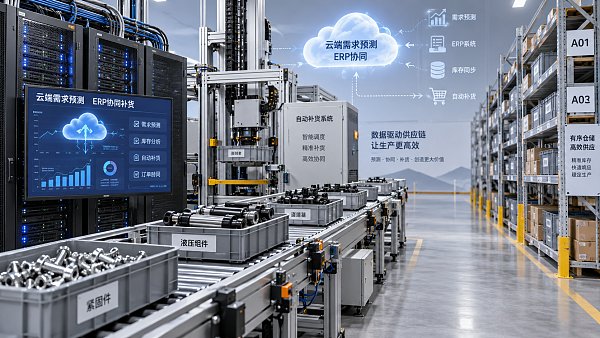
 Oct 13, 2026Evaluating Cloud-Based Automated Demand Forecasting: Accuracy and ERP IntegrationEvaluate automated demand forecasting cloud platforms with practical accuracy benchmarks and ERP integration tests. Discover how to select a solution that improves planning and reduces inventory risk.● Lina Cloud
 Oct 06, 2026The Future of Agentic AI in Logistics: From Demand Signals to Autonomous ExecutionFuture of agentic AI in logistics: discover how governed autonomous agents turn demand signals into faster, compliant inventory, warehouse, and transport decisions.● Lina Cloud
 Oct 12, 2026When demand sensing is reliable enough to change a forecastDemand sensing becomes reliable when signals are credible, timely, material, and corroborated. Learn when to revise forecasts without reacting to noise.● Lina Cloud
 Sep 28, 2026Smart Metering System Case Studies: Reducing Utility Billing DisputesSmart metering system case studies show utilities how to reduce billing disputes with auditable data, tariff controls, and clearer customer communication.● Lina Cloud
 Aug 19, 2026What Is the Impact of Generative AI on Forecasting Accuracy and Planning Speed?Impact of generative AI forecasting on planning is growing fast. Discover how it improves forecast accuracy, speeds scenario planning, and helps teams respond to supply chain disruption.● Lina Cloud
 Aug 05, 2026How Real-Time Production Scheduling Software Reduces Delays on Fast-Changing Shop FloorsProduction scheduling software real time helps manufacturers cut shop-floor delays by improving visibility, sequencing, and recovery speed. See what to evaluate before rollout.● Lina Cloud
 Jul 13, 2026How Raw Material Prices Affect Automotive Sensor Costs and Sourcing DecisionsImpact of raw material on sensor costs automotive is reshaping pricing and sourcing. Learn key cost drivers, supplier signals, and smart procurement strategies to protect margins.● Lina Cloud
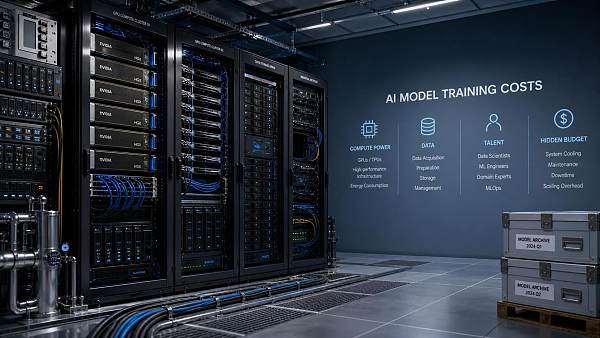
 Jul 11, 2026AI Model Training Cost Breakdown: GPUs, Data, Talent, and Hidden Budget DriversAI model training cost explained: uncover the true budget behind GPUs, data, talent, compliance, and hidden drivers to plan smarter AI investments and avoid costly surprises.● Lina Cloud
 Jul 10, 2026AI Model Training Time Optimization: Practical Ways to Reduce GPU BottlenecksAI model training time optimization made practical: learn how to reduce GPU bottlenecks, improve data pipelines, boost throughput, and scale AI training faster with lower cost.● Lina Cloud
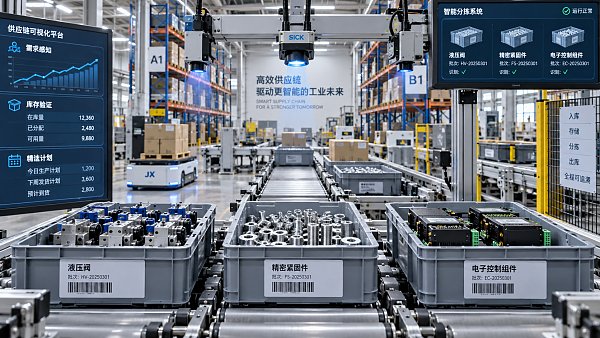
![]() Jul 07, 2026How to Evaluate a Predictive Demand Analytics Vendor for Forecast Accuracy and ERP IntegrationPredictive Demand Analytics vendor evaluation guide: compare forecast accuracy, ERP integration, auditability, and rollout risk to choose a solution that improves planning with confidence.● Lina Cloud
Jul 07, 2026How to Evaluate a Predictive Demand Analytics Vendor for Forecast Accuracy and ERP IntegrationPredictive Demand Analytics vendor evaluation guide: compare forecast accuracy, ERP integration, auditability, and rollout risk to choose a solution that improves planning with confidence.● Lina Cloud Jun 30, 2026Demand Sensing AI Software Forecasting vs Traditional Planning: Which Fits Fast-Moving SKUs?Demand sensing AI software forecasting vs traditional planning: see which model better fits fast-moving SKUs, improves response speed, and reduces stockout risk.● Lina Cloud
 Jun 24, 2026The Impact of Raw Material on Sensor Costs: Key Price Drivers and Sourcing RisksImpact of raw material on sensor costs is reshaping industrial budgets. Discover key price drivers, sourcing risks, and smart strategies to protect supply, compliance, and project timelines.● Lina Cloud
 Jun 23, 2026Starting a Trampoline Park Business: Equipment, Space, and Cost FactorsTrampoline park business planning starts with the right equipment, space, and cost strategy. Explore key factors, safety insights, and smart sourcing tips for a stronger launch.● Lina Cloud
 Jun 20, 2026Playground Installation Guide: Site Prep, Safety Spacing, and Common Cost DriversPlayground installation starts with smart site prep, safe spacing, and realistic budgeting. Learn the key cost drivers, drainage risks, access limits, and planning steps for safer, longer-lasting projects.● Lina Cloud
 Jun 18, 2026Fitness Tracker Bands OEM Guide: Materials, Tooling Options, and Custom BrandingFitness tracker bands OEM guide covering material selection, tooling options, branding methods, and quality checks to help brands reduce risk, speed launches, and build durable wearable products.● Lina Cloud
 Jun 16, 2026How to Plan a Commercial Outdoor Playground for Schools, Parks, and Mixed-Age UseCommercial outdoor playground planning starts before equipment selection. Learn how schools, parks, and mixed-age spaces can improve safety, durability, and lifecycle value.● Lina Cloud
 Jun 13, 2026Custom Cardboard Mailers vs Standard Boxes: Which Packaging Option Fits Your Shipping Needs?Custom cardboard mailers or standard boxes? Compare protection, freight efficiency, packing speed, and sourcing flexibility to choose the best packaging for your shipping needs.● Lina Cloud
![]() Jun 09, 2026Commercial Induction Cookers vs Gas Ranges: Which Fits Your Kitchen Load and MenuCommercial induction cookers vs gas ranges: compare kitchen load, menu fit, energy efficiency, safety, and operating cost to choose the best setup for your commercial kitchen.● Lina Cloud
Jun 09, 2026Commercial Induction Cookers vs Gas Ranges: Which Fits Your Kitchen Load and MenuCommercial induction cookers vs gas ranges: compare kitchen load, menu fit, energy efficiency, safety, and operating cost to choose the best setup for your commercial kitchen.● Lina Cloud Jun 07, 2026Artificial Plants for Hotels: Where They Work Best and How to Match Lobby StylesArtificial plants for hotels work best when matched to lobby size, traffic, and style. Discover how to choose realistic, durable greenery that elevates guest experience.● Lina Cloud
 Jun 06, 2026The Future of Agentic AI in Logistics: Where It Fits in Planning, Inventory, and ExecutionFuture of agentic AI in logistics is reshaping planning, inventory, and execution. Discover how it boosts resilience, speeds decisions, and strengthens supply chain control.● Lina Cloud
![]() Jun 04, 2026Hot Dog Rollers Buying Guide: Capacity, Heating Zones, and Cleaning Features ComparedHot dog rollers buying guide comparing capacity, heating zones, and cleaning features. Discover how to choose the best setup for faster service, better food quality, and easier daily operation.● Lina Cloud
Jun 04, 2026Hot Dog Rollers Buying Guide: Capacity, Heating Zones, and Cleaning Features ComparedHot dog rollers buying guide comparing capacity, heating zones, and cleaning features. Discover how to choose the best setup for faster service, better food quality, and easier daily operation.● Lina Cloud Jun 01, 2026What Drives AI Model Training Time for SCM Projects?AI model training time for SCM shapes cost, speed, and risk. Learn key drivers from data quality to infrastructure and plan faster, reliable supply-chain AI.● Lina Cloud
 May 05, 2026When a supply chain digital twin platform pays offSupply chain digital twin platform insights: connect warehouse throughput efficiency data, ISO Compliance certification, and Strategic Sourcing best practices to improve resilience, cut downtime risk, and drive smarter sourcing decisions.● Lina Cloud
 Apr 27, 2026Manufacturing Case Studies on Predictive Supply ChainsPredictive supply chain case studies in manufacturing reveal how 5G tracking, orchestration tools, and Total Reliability certification drive uptime, sourcing resilience, and smarter industrial decisions.● Lina Cloud