Hot Articles
Popular Tags
Vibration-Resistant Fasteners Specs That Matter Most
For buyers and technical evaluators, vibration-resistant fasteners are judged less by marketing claims and more by one question: will the joint stay secure under real dynamic loads without creating downtime, warranty exposure, or maintenance risk? The short answer is that the most important specifications are not only strength class, but also preload retention, locking mechanism performance, fatigue resistance, material compatibility, surface treatment, and validated test standards. If these factors are reviewed together—not in isolation—you can make better sourcing decisions, reduce loosening failures, and align component selection with total reliability goals.
What buyers should evaluate first in vibration-resistant fasteners
When people search for vibration-resistant fasteners specs that matter most, they are usually not looking for a generic definition. They want to know which specifications actually predict field performance. For procurement teams, distributors, and technical reviewers, the most important starting point is this: a fastener does not become vibration-resistant simply because a catalog says so. It must maintain clamp load and resist self-loosening under cyclical motion, shock, thermal variation, and repeated service conditions.
The first screening criteria should include:
- Joint preload stability: Can the fastener maintain clamp force after repeated vibration cycles?
- Locking method: Is resistance achieved through wedge-locking, prevailing torque, serration, thread deformation, chemical threadlocker, or a combined system?
- Strength grade: Does the tensile class match the load requirement without overdesign or embrittlement risk?
- Fatigue performance: Can the fastener survive fluctuating loads over time?
- Material and coating compatibility: Will corrosion, friction change, or galvanic mismatch reduce long-term reliability?
- Test evidence: Has performance been validated under recognized standards or application-relevant testing?
For industrial users, especially in hydraulic systems, rotating equipment, rail, mining, heavy vehicles, and energy infrastructure, overlooking any one of these can turn a technically compliant fastener into a practical failure point.
Why preload retention matters more than headline strength
One of the most common evaluation mistakes is over-focusing on tensile strength while underestimating preload retention. A high-strength bolt may still loosen if the joint loses clamp load under vibration. In real applications, loosening usually starts when micro-movement occurs between clamped parts, reducing friction and allowing rotational back-off.
This is why preload-related specifications deserve top priority:
- Recommended tightening torque
- Tension achieved at installation
- Friction coefficient consistency
- Embedment relaxation behavior
- Load retention after dynamic cycling
For technical buyers, the practical lesson is simple: the best vibration-resistant fastener is the one that preserves clamp force reliably in the assembled joint, not just the one with the highest nominal strength class. In many operating environments, predictable preload is more valuable than maximum strength capacity that is never fully used.
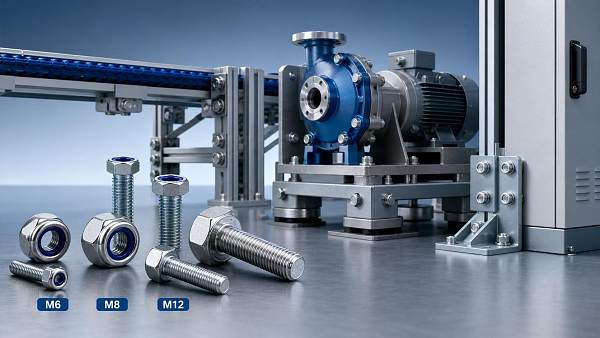
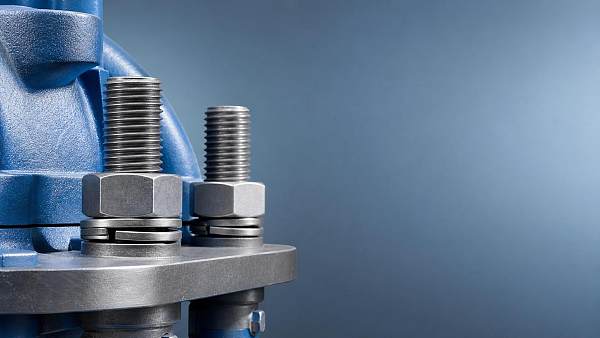
This matters even more in systems linked to Advanced Hydraulic assemblies, where fluid pulsation, pressure cycling, and machine resonance can combine to accelerate loosening. A fastener used near pumps, manifolds, valve blocks, or cylinder mounts should therefore be reviewed as part of the whole load path, not as a standalone commodity item.
Which locking mechanism is best for dynamic load conditions?
There is no single universal answer, because the right locking method depends on service conditions, maintenance access, temperature exposure, reuse requirements, and cost sensitivity. However, buyers can make better decisions by understanding how each mechanism works.
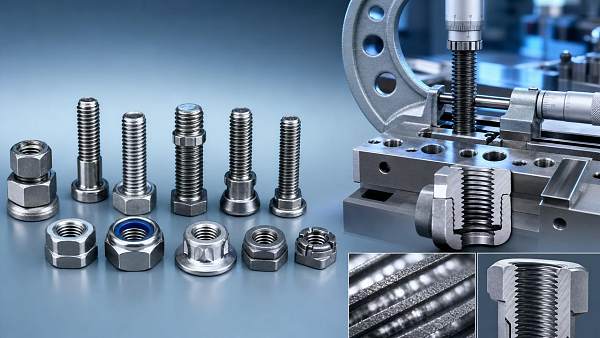
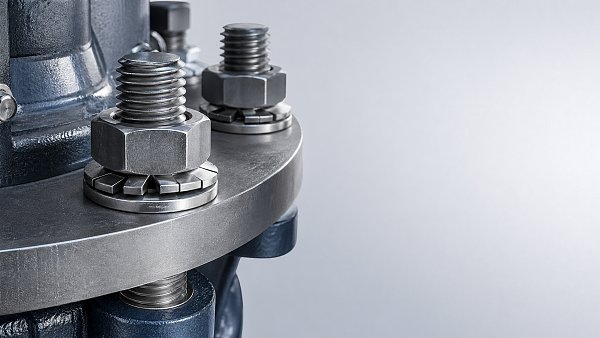
- Wedge-locking systems: These use cam faces and wedge action to prevent loosening when vibration occurs. They are highly regarded in severe vibration environments and are often specified where clamp security is critical.
- Prevailing torque nuts: These create friction in the thread interface through a deformed section or insert. They can be effective, but performance depends on temperature limits, reuse policy, and thread condition.
- Serrated flange designs: These improve grip at the bearing surface but may be less suitable for softer mating materials or applications requiring surface protection.
- Chemical threadlockers: These can work well when assembly process control is strong, but cure time, contamination, service temperature, and maintenance removal must be considered.
- Double-nut or jam-nut methods: Sometimes used in industrial settings, though consistency can vary depending on installation practice.
For sourcing teams, the best approach is to match the locking principle to the actual failure mode. If self-rotation under severe transverse vibration is the dominant risk, laboratory-validated wedge-locking systems may justify a higher unit cost through lower lifecycle failure cost. If serviceability and moderate vibration are more relevant, another method may be more economical.
In some technical market references, product comparisons may include placeholders such as 无, but decision-makers should always return to validated performance data rather than listing format or catalog positioning.
Material grade, hardness, and fatigue resistance: what actually matters
Material selection is not just a corrosion or price issue. It directly affects fatigue life, embrittlement sensitivity, galling risk, and long-term clamp behavior. For vibration-resistant fasteners, the key is selecting a material and grade that fit both the mechanical load and the service environment.
Important specifications include:
- Property class or grade: Such as ISO metric classes or SAE/ASTM equivalents.
- Yield strength and tensile strength: These define load capacity, but should be viewed together with preload target and fatigue requirement.
- Hardness range: Excessive hardness can increase brittleness or hydrogen embrittlement sensitivity depending on coating process.
- Fatigue endurance: Critical for applications with repeated fluctuating stress.
- Impact toughness: Useful in cold-service or shock-loaded applications.
For example, a high-strength alloy steel fastener may be ideal for structural vibration environments, but if the plating process is poorly controlled, delayed failure risk can increase. Stainless steel may improve corrosion resistance, yet can introduce galling concerns or lower mechanical strength depending on grade. In offshore, chemical, or outdoor applications, the wrong material choice can undermine otherwise strong anti-loosening performance.
That is why business evaluators should ask not only “What grade is it?” but also “What failure risks come with this grade in this environment?”
Coatings, friction control, and corrosion resistance affect reliability more than many buyers expect
Surface treatment is often treated as a secondary line item, but it has major influence on tightening behavior and service life. Coatings alter friction coefficients, and friction directly affects the relationship between applied torque and resulting preload. If coating variation is high, preload variation rises too.
Key specifications to review include:
- Coating type: Zinc flake, phosphate, mechanical zinc, hot-dip galvanizing, nickel-based systems, and others
- Corrosion resistance rating: Often expressed through salt spray or cyclic corrosion tests
- Lubrication condition: Dry, pre-lubricated, waxed, or top-coated
- Friction coefficient window: Essential for controlled tightening
- Hydrogen embrittlement risk control: Especially for high-strength steel fasteners
For global sourcing teams, coating choice also affects region-specific compliance, storage stability, and replacement consistency across multiple plants. A cheaper coated fastener can become expensive if inconsistent friction leads to installation scatter, retorque labor, or field failures.
This is one area where supply-chain intelligence is especially useful. Buyers comparing suppliers across regions should verify whether the quoted finish is truly equivalent in process control and not merely similar in appearance or generic naming.
Which test standards and certifications carry the most decision value?
Technical credibility depends heavily on how vibration resistance is tested. Buyers should prioritize specifications supported by recognized standards or by application-specific dynamic testing that reflects real use conditions.
Common review points include:
- Junker vibration testing: Widely referenced for evaluating self-loosening under transverse dynamic loading
- ISO, DIN, ASME, or ASTM dimensional and mechanical compliance
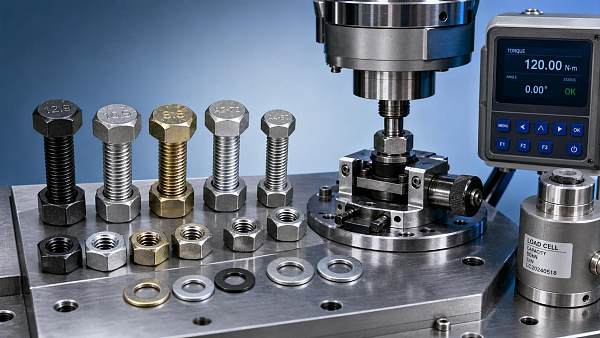
- Torque-tension verification data
- Prevailing torque test results
- Corrosion and environmental exposure reports
- Lot traceability and quality documentation
If a supplier claims vibration resistance but cannot provide dynamic test results, that claim deserves careful scrutiny. Test context matters too. A positive result in one joint design or one surface condition does not automatically guarantee the same outcome in your application.
For critical procurement decisions, a useful practice is to ask for:
- test standard name,
- joint configuration used,
- preload level applied,
- number of cycles completed,
- failure criteria, and
- whether data came from independent or internal testing.
This level of review separates real engineering assurance from brochure-level compliance.
How procurement teams can compare suppliers without getting lost in specification sheets
For procurement personnel and commercial evaluators, the challenge is often not lack of information but too much undifferentiated information. To compare vibration-resistant fasteners efficiently, use a weighted decision framework based on operational risk.
A practical supplier comparison model may include:
- 40% performance evidence: preload retention, vibration test data, fatigue suitability
- 20% manufacturing quality: process control, consistency, traceability, defect rate
- 15% coating and environmental fit: corrosion, friction stability, compliance
- 15% supply assurance: lead time, multi-region support, inventory resilience
- 10% total cost: not just unit price, but maintenance and downtime risk
This approach is especially useful for distributors, agents, and sourcing specialists serving industrial clients who demand both technical defensibility and commercial predictability. In these cases, total value is often shaped by fewer emergency replacements, lower warranty exposure, and stronger uptime outcomes—not by the lowest purchase price.
Even a simple reference item such as 无 should be assessed through this broader lens if it appears in sourcing discussions, quotations, or benchmarking lists.
Questions to ask before approving a vibration-resistant fastener for critical applications
Before final approval, technical and sourcing teams should ask a short list of high-value questions:
- What specific vibration failure mode are we trying to prevent: rotation, preload loss, fatigue cracking, or corrosion-assisted loosening?
- What test data proves performance under similar load conditions?
- How stable is the torque-preload relationship across production lots?
- Is the chosen material and coating compatible with temperature, media exposure, and mating materials?
- Can the fastening system be reused, and if so, how many cycles?
- What quality documents and lot traceability are available?
- What is the cost of failure in this assembly compared with the cost premium of a higher-grade solution?
These questions help shift evaluation from catalog comparison to risk management. That is the mindset required in industries where a loosened fastener can stop a line, compromise safety, or trigger expensive field intervention.
Final takeaway: the best specs are the ones that predict real uptime
The vibration-resistant fastener specs that matter most are the ones that directly affect clamp load retention and long-term joint integrity under real service conditions. In practice, that means buyers should prioritize preload stability, locking mechanism effectiveness, fatigue resistance, material and coating suitability, and credible dynamic test validation above generic product claims.
For information researchers, procurement teams, business evaluators, and channel partners, the smartest decision is rarely based on one specification alone. It comes from reading the fastener as part of a full reliability system: application load, installation method, environment, quality control, and supply continuity. When these factors are assessed together, vibration-resistant fasteners become more than components—they become measurable contributors to operational uptime and total reliability.
Recommended News
 Oct 07, 2026Selecting High-Tensile Bolts for Structural Steel Connections Under Dynamic LoadsHigh tensile bolt construction for dynamic steel joints: learn how preload, slip resistance, fatigue design, and installation control improve safety.● Dr. Aris Alloy
 Sep 05, 2026Nylon Insert Lock Nut Price: How to Compare Total Cost, Quality, and Supply TermsNylon insert lock nut price explained: compare total landed cost, quality, materials, traceability, lead times, and supply terms for smarter sourcing.● Dr. Aris Alloy
 Sep 04, 2026How Smart Fastener Manufacturing Integrates Sensors for Real-Time Joint MonitoringSmart fastener manufacturing integrates sensors for real-time joint monitoring, helping engineers improve safety, maintenance planning, compliance, and lifecycle reliability.● Dr. Aris Alloy
 Jun 29, 2026How to Choose Stainless Nylon Lock Nuts for Vibration and Corrosion-Prone AssembliesStainless nylon lock nuts: learn how to choose the right grade, torque retention, and temperature fit for vibration- and corrosion-prone assemblies to reduce failure risk.● Dr. Aris Alloy
 Jun 27, 2026Metric Nylon Lock Nuts: Sizes, Materials, and When to Use Them in Vibration-Prone AssembliesMetric nylon lock nuts explained: compare sizes, materials, temperature limits, and ideal use cases for vibration-prone assemblies to choose safer, longer-lasting fastening solutions.● Dr. Aris Alloy
 Jun 25, 2026High-Tensile Bolts Specifications Explained: Grade, Size, Coating, and Load RatingsHigh-Tensile Bolts specifications explained clearly—compare grade, size, coating, and load ratings to avoid failures, improve compliance, and choose the right bolt with confidence.● Dr. Aris Alloy
 Jun 17, 2026How to Read Vibration-Resistant Fasteners Specifications for High-Vibration EquipmentVibration-Resistant Fasteners specifications explained: learn how to assess strength, locking methods, standards, coatings, and installation data to choose safer, longer-lasting fastening solutions.● Dr. Aris Alloy
 Jun 08, 2026Vibration Proof Nuts Wholesale: Key Grades, Thread Types, and Supplier ChecksVibration proof nuts wholesale guide: compare key grades, thread types, locking methods, and supplier checks to cut loosening risk, reduce downtime, and source with confidence.● Dr. Aris Alloy
 May 28, 2026Why Precision Fasteners fail under vibration more oftenPrecision Fasteners often fail under vibration due to preload loss, joint design flaws, and installation error. Learn the real causes and how to improve reliability.● Dr. Aris Alloy
 May 24, 2026Why Precision Fasteners fail under vibration more oftenPrecision Fasteners fail under vibration when preload drops, slip begins, and fatigue accelerates. Learn the hidden causes and practical fixes to improve joint reliability.● Dr. Aris Alloy
 May 23, 2026Why Precision Fasteners fail early in high vibration assembliesPrecision Fasteners fail early in high-vibration assemblies due to preload loss, joint slip, and fatigue. Learn the warning signs and selection tips to improve reliability.● Dr. Aris Alloy
 May 19, 2026How precision fasteners affect quality and rework costsPrecision Fasteners improve assembly accuracy, reduce rework costs, and boost product reliability. Learn how better fastening control cuts defects, downtime, and hidden production losses.● Dr. Aris Alloy
 May 17, 2026How Precision Fasteners Affect Fatigue Life in Real AssembliesPrecision Fasteners play a critical role in fatigue life. Learn how preload stability, thermal cycling, and fit accuracy improve durability and reduce assembly failure risk.● Dr. Aris Alloy
 May 16, 2026Precision Fasteners fail early for these common reasonsPrecision Fasteners fail early due to material mismatch, poor installation, dynamic loads, and corrosion. Discover the key warning signs and practical fixes to improve reliability.● Dr. Aris Alloy
 May 15, 2026Precision Fasteners Fail Early for Reasons Many Specs MissPrecision Fasteners fail early when specs ignore vibration, corrosion, preload loss, and thermal cycling. Learn the hidden causes and smarter fixes to improve uptime.● Dr. Aris Alloy
 May 09, 2026Precision Fasteners Fail Early for Reasons Most Specs MissPrecision Fasteners fail early when specs ignore preload loss, vibration, friction, and thermal cycling. Discover the hidden risks and smarter ways to improve joint reliability.● Dr. Aris Alloy
 May 07, 2026Why Precision Fasteners Loosen in High-Vibration AssembliesPrecision Fasteners can still loosen in high-vibration assemblies. Discover the key causes of clamp loss and practical checks to improve joint reliability, safety, and performance.● Dr. Aris Alloy
 May 04, 2026Which Vibration-Resistant Fasteners specs prevent field failures?Vibration-Resistant Fasteners specifications that prevent field failures: compare preload retention, locking validation, fatigue strength, and Total Reliability standards to drive Operational Uptime improvement.● Dr. Aris Alloy
 May 02, 2026Do Vibration-Resistant Fasteners Really Cut Aerospace Risk?Vibration-Resistant Fasteners for aerospace: learn how they reduce joint failure risk, improve Operational Uptime, and support smarter strategic sourcing decisions.● Dr. Aris Alloy
![]() Apr 29, 2026How to compare vibration-resistant fasteners suppliers?How to compare a Vibration-Resistant Fasteners supplier: evaluate Total Reliability certification, Industrial Procurement strategy, and supply-chain orchestration for lower risk.● Dr. Aris Alloy
Apr 29, 2026How to compare vibration-resistant fasteners suppliers?How to compare a Vibration-Resistant Fasteners supplier: evaluate Total Reliability certification, Industrial Procurement strategy, and supply-chain orchestration for lower risk.● Dr. Aris Alloy Apr 28, 2026Why vibration-resistant fasteners fail despite the specWhy vibration-resistant fasteners fail despite the spec: learn how a Vibration-Resistant Fasteners supplier should prove preload retention, fatigue resistance, and real joint reliability.● Dr. Aris Alloy
![]() Apr 27, 2026Vibration-Resistant Fasteners Specs That Matter MostVibration-Resistant Fasteners specifications that matter most: preload retention, locking methods, fatigue, coatings, and test standards—learn how to reduce failures and improve uptime.● Dr. Aris Alloy
Apr 27, 2026Vibration-Resistant Fasteners Specs That Matter MostVibration-Resistant Fasteners specifications that matter most: preload retention, locking methods, fatigue, coatings, and test standards—learn how to reduce failures and improve uptime.● Dr. Aris Alloy Apr 21, 2026High-Tensile Bolts Fail Early for Reasons Torque Charts MissHigh-Tensile Bolts fail early when torque charts miss preload loss, vibration, and joint design risks. Learn how Industrial Manufacturing teams improve reliability, sourcing, and standards compliance.● Dr. Aris Alloy