Hot Articles
Popular Tags
Where Supply-Chain Orchestration Delivers Value First
Where does Supply-Chain Orchestration create value first? It begins where complexity, volatility, and downtime risk are highest—across critical components, supplier coordination, and demand-response decisions. For industrial researchers and sourcing professionals, understanding these early-impact areas reveals how orchestration improves visibility, resilience, and execution before broader transformation takes hold.
What does Supply-Chain Orchestration actually improve first?
In complex industrial environments, Supply-Chain Orchestration is not just a software layer for moving data between systems. It is a decision framework that aligns procurement, planning, supplier performance, logistics timing, inventory exposure, and operational risk. Its earliest value usually appears where a business is already losing money through fragmented signals, delayed coordination, and incomplete control over critical components.
For information researchers, the key question is not whether orchestration matters, but where it produces measurable impact before enterprise-wide transformation is complete. In heavy industry, precision manufacturing, AMH environments, fluid power systems, and mission-critical component sourcing, early gains often come from faster exception handling, better supplier prioritization, tighter demand-response logic, and clearer visibility into single-point failures.
This is why Supply-Chain Orchestration has become increasingly relevant across G-ISC’s five industrial pillars. When hydraulic assemblies, fasteners, flow-control devices, AMR fleets, and specialized electronic components are tied to uptime commitments, decision quality matters as much as inventory quantity. Orchestration creates first value where technical dependencies and commercial variables collide.
- It connects procurement decisions with production risk rather than treating purchasing as an isolated cost center.
- It highlights which suppliers, SKUs, or logistics paths have the greatest impact on uptime and compliance.
- It allows sourcing teams to act on real-time constraints such as raw material price changes, lead-time shifts, or trade-policy disruptions.
Early-value zones usually share the same characteristics
The first return on Supply-Chain Orchestration rarely starts with low-risk, high-volume commodity items. It begins with technically sensitive, approval-heavy, lead-time-variable, or failure-critical categories. In those areas, the cost of delay is not only procurement inflation. It may include line stoppage, missed maintenance windows, quality escapes, contractual penalties, or delayed project commissioning.
Which industrial scenarios show value earliest?
The earliest wins from Supply-Chain Orchestration usually come from scenarios where conventional ERP visibility is too slow or too generic. Researchers evaluating orchestration should focus on environments with multi-tier suppliers, constrained components, engineering approval loops, and variable replenishment patterns.
The table below shows where Supply-Chain Orchestration often creates first value in industrial operations and why those areas matter to sourcing and continuity teams.
The common thread is operational consequence. Supply-Chain Orchestration delivers value first where disruptions are expensive, technical decisions are constrained, and response speed directly affects uptime or revenue.
Why critical components matter more than average inventory
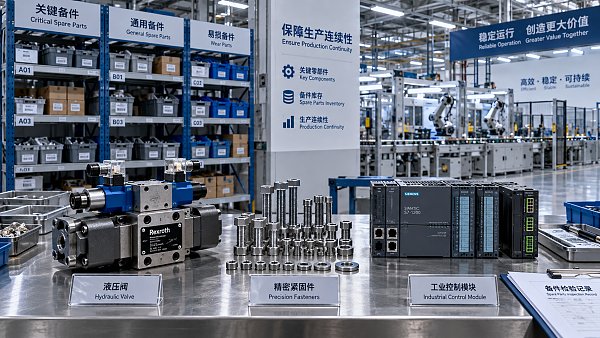
In industrial procurement, not every part deserves the same level of coordination. A standard consumable can often be buffered. A specialized hydraulic cylinder seal set, aerospace-grade fastener, calibrated meter, or AMR subsystem cannot always be replaced quickly. G-ISC’s technical intelligence model is valuable here because orchestration becomes more effective when component criticality is grounded in engineering reality, not just spend classification.
That distinction changes how researchers should evaluate orchestration platforms. The best early use case is not “all supply chain data in one place.” It is “the right control logic around the parts, suppliers, and standards that carry the highest consequence.”
How Supply-Chain Orchestration changes procurement judgment
Many sourcing teams already collect supplier quotations, lead times, and compliance documents. Yet decisions still stall because the data is not organized around action. Supply-Chain Orchestration changes this by linking three layers that are often separated: technical requirements, commercial conditions, and timing risk.
Instead of isolated purchasing signals, researchers can evaluate:
- Whether a quoted supplier can meet required standards such as ISO, DIN, ASME, or IEEE-related compatibility expectations.
- Whether a lower price increases qualification workload, logistics uncertainty, or maintenance risk later.
- Whether demand variation should trigger alternate sourcing, safety stock adjustment, or phased replenishment.
- Whether supplier concentration around a single region or raw material exposure creates hidden continuity risk.
This matters especially in integrated projects. A bolt is not just a bolt if vibration resistance, tensile class, traceability, and environmental conditions affect system integrity. A flow meter is not interchangeable if calibration, communication protocol, and process media compatibility differ. Supply-Chain Orchestration helps surface these constraints earlier in the buying cycle.
A note on fragmented research workflows
Information researchers often work across engineering teams, sourcing managers, maintenance leaders, and compliance stakeholders. That creates an evaluation problem: each function measures risk differently. G-ISC’s cross-pillar approach is useful because orchestration decisions can be informed by benchmarked component logic, material cost signals, and trade-policy changes rather than by spreadsheet snapshots alone. In some research workflows, reference touchpoints may even include placeholder asset paths such as 无, but the real value lies in technical-commercial alignment, not link volume.
What should researchers compare when evaluating orchestration readiness?
Not every organization is ready for the same orchestration scope. Some need better exception handling around urgent parts. Others need network-wide visibility across contract manufacturers, logistics providers, and approved vendor lists. A structured comparison helps determine where value can appear fastest.
The table below compares typical maturity stages relevant to Supply-Chain Orchestration in industrial settings.
This comparison shows why the first orchestration investment should be selective. A targeted, high-consequence workflow often outperforms a broad rollout that lacks technical prioritization.
Which data inputs drive the fastest return?
Supply-Chain Orchestration is only as useful as the signals it can act on. In industrial supply networks, the fastest return usually comes from operationally meaningful inputs rather than generic dashboards.
High-impact inputs include:
- Supplier lead-time reliability by category, not just average lead time.
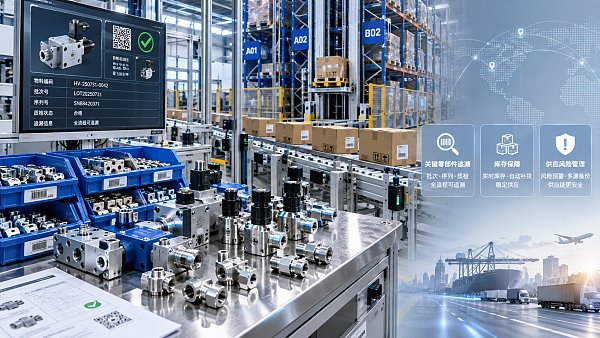
- Critical component mapping tied to failure consequence, replacement complexity, and approval constraints.
- Raw material exposure for metals such as steel, nickel, or titanium where pricing volatility affects sourcing windows.
- Trade-policy or border-flow changes that alter route feasibility, cost, or document burden.
- Demand-signal variability from production schedules, project milestones, or maintenance shutdown plans.
G-ISC’s positioning is particularly relevant because these inputs are rarely neutral. A sourcing event for industrial fasteners may look simple until coating compliance, fatigue resistance, and country-of-origin implications are added. A fluid-power part may appear available until seal material compatibility or pressure-class validation narrows the approved list. Orchestration gains speed when the intelligence layer understands those constraints.
Common mistakes when companies expect instant results
Supply-Chain Orchestration can fail to show early value when organizations implement it as a visibility project rather than a decision project. Visibility matters, but first value comes from changed actions, not prettier reporting.
- Mistake one: treating all SKUs the same. High-volume parts and critical low-volume parts require different orchestration rules.
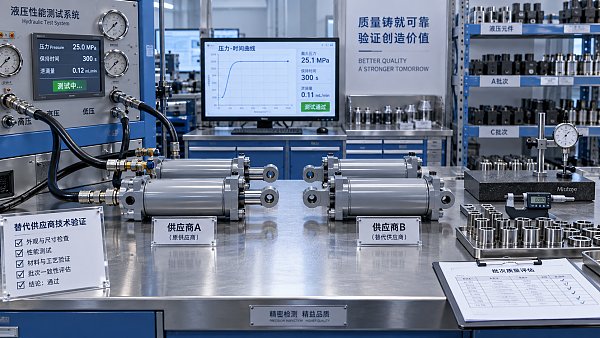
- Mistake two: ignoring engineering approval steps. If substitutions or supplier changes stall in technical review, orchestration must include those gates.
- Mistake three: focusing only on price variance. Early value often comes from avoiding expediting, downtime, retesting, or requalification costs.
- Mistake four: launching too wide. Start with one constrained category, one plant family, or one supplier-risk cluster.
Researchers comparing vendors or methodologies should ask whether the proposed orchestration model can support exception ownership, standards-based filtering, alternate-source logic, and timeline-sensitive procurement decisions. If not, the expected benefits may remain theoretical.
FAQ: what information researchers usually ask first
How is Supply-Chain Orchestration different from ordinary supply chain visibility?
Visibility shows what is happening. Supply-Chain Orchestration helps determine what should happen next, who should act, and which constraints matter most. In industrial settings, that often means linking component criticality, supplier readiness, compliance needs, and delivery timing into a coordinated response rather than a passive alert.
Which categories should be prioritized first?
Start with categories that combine technical specificity and operational consequence. Examples include hydraulic assemblies, specialized fasteners, flow-control devices, automation spares, and items with long requalification cycles. If a part shortage can halt a line or delay commissioning, it is a strong candidate for early orchestration.
What procurement signals should be checked before implementation?
Review supplier concentration, historical expedite frequency, substitution approval time, standards or certification dependencies, and demand volatility. These signals reveal where Supply-Chain Orchestration can reduce response time and improve sourcing judgment most quickly.
Does orchestration only matter for large enterprises?
No. Smaller manufacturers and integrators may see fast value if they depend on a limited number of approved suppliers or operate in project-based environments with narrow installation windows. The scale of the business matters less than the concentration of risk and the cost of misalignment.
Why informed buyers turn to technical-commercial intelligence
For serious industrial research, Supply-Chain Orchestration should not be reviewed as a generic software topic. It should be evaluated against real categories, standards, sourcing risks, and uptime consequences. That is where G-ISC offers practical value: it connects critical component knowledge, benchmark logic, market intelligence, and cross-border sourcing awareness in a way that supports better procurement decisions early, not only after full digital transformation.
If you are assessing where orchestration can create value first, the most useful next step is to define a narrow but high-impact scope. That may include parameter confirmation for critical parts, sourcing-path comparison, lead-time risk review, standards alignment, or alternative-supplier evaluation. In some research pathways, reference entries such as 无 may appear, but the real decision advantage comes from verifying component fit, delivery exposure, and compliance logic before disruption becomes downtime.
Why choose us for deeper evaluation
- We help clarify which component families and supplier nodes should be orchestrated first based on technical criticality and business risk.
- We support parameter confirmation, category-level sourcing analysis, and standards-aware selection logic across hydraulics, fasteners, AMH, flow control, and orchestration software contexts.
- We can assist with delivery-cycle assessment, alternative-path evaluation, certification requirement review, and quotation comparison for industrial research and sourcing teams.
- We provide a decision-oriented perspective that links raw material volatility, project timing, supplier coordination, and operational continuity.
If your team is investigating Supply-Chain Orchestration for a specific plant, category, or project, you can move faster by bringing a focused question set: required parameters, approved standards, target delivery window, alternate-source tolerance, sample support expectations, and budget or quotation constraints. That makes the evaluation concrete and easier to convert into a reliable sourcing plan.
Recommended News
 Oct 16, 2026How to Use Supply Chain Risk Scores to Screen Suppliers in EuropeNeed a supply chain risk score Europe procurement teams can trust? Learn how to verify suppliers, uncover hidden risks, and build a defensible shortlist before you buy.● Lina Cloud
 Oct 15, 2026Cloud SCM Pricing: How to Compare Uptime SLAs and Downtime CostsCompare SCM cloud uptime pricing, SLA exclusions, downtime costs, and recovery options. Learn how to assess true value, reduce disruption risk, and choose the right cloud SCM plan.● Lina Cloud
 Oct 14, 2026How Do You Identify Supply Chain Risks for Critical Components?How can I identify supply chain risks for critical components? Discover how to map hidden dependencies, compare inventory with recovery time, and prioritize actions that protect uptime.● Lina Cloud
 Oct 14, 2026When Should You Approve a Second-Source Supplier?When should I approve a second source supplier? Discover key checks for quality, capacity, compliance, and supply risk to make confident approvals and protect production.● Lina Cloud
 Oct 11, 2026Predictive Supply Chain Case Studies: Reducing Global Sourcing Disruption RiskPredictive supply chain case studies for global sourcing: uncover disruption risks, protect critical components, and build resilient project delivery.● Lina Cloud
 Oct 03, 2026How to Evaluate Supply Chain Orchestration Software for Multi-Site OperationsSupply chain orchestration software: learn how to evaluate data, workflows, integrations, and governance for resilient multi-site operations.● Lina Cloud
 Oct 01, 2026How Procurement Teams Can Evaluate Supply Chain Risk Management Tools Before BuyingSupply chain risk management tool for procurement: learn how to evaluate data accuracy, part-level impact, alerts, workflows, integrations, and auditability before you buy.● Lina Cloud
 Oct 10, 2026Can Oracle supply planning reduce shortages without raising inventory?Oracle supply planning helps reduce shortages without inflating inventory through smarter allocation, scenario planning, and constraint-based decisions. Discover practical strategies.● Lina Cloud
 Oct 07, 2026What Happens When a Supplier Fails an Industrial Standards Audit?What happens if a supplier fails an industrial standards audit? Learn how to contain risk, protect traceability, manage corrective actions, and maintain supply continuity.● Lina Cloud
 Oct 06, 2026How Do You Document Standards Compliance for a Supplier Tender?How do I document standards compliance for a supplier tender? Use a compliance matrix, traceable test evidence, and clear deviations to strengthen bids and speed evaluation.● Lina Cloud
 Oct 02, 2026Which Supplier Records Should Be Checked Before an Urgent Purchase?Which supplier records should be checked before an urgent industrial purchase? Discover essential checks for quality, traceability, compliance, delivery, and risk control.● Lina Cloud
 Oct 01, 2026How Should Buyers Compare Suppliers Across Industrial Categories?How do I compare suppliers across different industrial categories? Use a practical framework for risk, quality, cost, resilience, and technical fit.● Lina Cloud
 Sep 30, 2026What Should Be Included in a Strategic Sourcing Plan?What should be included in a strategic sourcing plan? Explore essential steps for supplier strategy, total cost, risk control, compliance, and resilient industrial procurement.● Lina Cloud
 Sep 29, 2026How Do Raw Material Prices Affect Industrial Component Lead Times?How do raw material prices affect component lead times? Learn how availability, supplier inventory, and qualification risks shape delivery planning.● Lina Cloud
 Sep 19, 2026How to Evaluate an OEM Supplier for Real-Time Shipment Tracking IntegrationReal time shipment tracking OEM supplier evaluation: compare integration, data accuracy, security, costs, and pilot accountability to protect critical deliveries.● Lina Cloud
 Sep 12, 2026OEM Cooperation Process: Key Milestones for Managing Quality, Costs, and DeliveryOEM cooperation process guide: discover key milestones to control quality, total costs, and delivery risk for stronger, more reliable supplier partnerships.● Lina Cloud
 Aug 25, 2026How to Evaluate a Cloud OMS for OEM Operations with Complex Order WorkflowsEvaluate an order management system OMS OEM cloud platform for complex workflows. Learn what matters most in integration, traceability, scalability, and risk control.● Lina Cloud
 Aug 23, 2026What to Check Before Buying Bridal Tiaras Wholesale for a Retail CollectionBridal tiaras wholesale buying starts with quality, materials, MOQ, and supplier checks. Learn how to reduce risk, protect margins, and build a retail collection that sells.● Lina Cloud
 Aug 22, 2026How to Evaluate Poker Tables Wholesale Suppliers for Quality, MOQ, and CustomizationPoker tables wholesale buying guide: learn how to evaluate suppliers for quality, MOQ, customization, packaging, and lead times to reduce risk and choose scalable partners.● Lina Cloud
 Aug 18, 2026How Can a Supply Chain Digital Twin Improve Procurement Decisions and Supplier Risk?Supply chain digital twin procurement helps buyers compare suppliers, model disruption risk, and improve sourcing decisions with stronger cost, resilience, and performance insight.● Lina Cloud
 Aug 14, 2026What Is Procurement Planning? A Practical Guide for Reducing Buying RiskProcurement Planning helps reduce buying risk by aligning demand, specs, budget, and sourcing strategy. Learn how to buy smarter, avoid delays, and control costs.● Lina Cloud
 Aug 02, 2026How Polymer Raw Materials Affect Sensor Cost, Durability, and Design Trade-OffsImpact of raw material on sensor costs polymers goes far beyond resin price. Learn how polymer choice shapes durability, yield, sealing, and smarter sensor design decisions.● Lina Cloud
 Jul 29, 2026How to Evaluate a Supply Chain Sustainability Tracker Vendor for Reporting NeedsSupply chain sustainability tracker vendor evaluation starts with data integrity, framework mapping, and supplier workflows. Learn how to choose a platform that supports credible reporting and faster procurement decisions.● Lina Cloud
 Jul 28, 2026How Shippers Can Evaluate a Transportation Management System for Cost and Carrier ControlTransportation management system shippers can rely on to cut freight costs, improve carrier control, and boost visibility. Learn what to test before choosing a TMS.● Lina Cloud