Hot Articles
Popular Tags
Where Supply-Chain Orchestration Breaks in Manufacturing
In manufacturing, Supply-Chain Orchestration for manufacturing often breaks where visibility, timing, and Critical Components for industrial applications fail to align. From Fluid Power system components and Precision Fasteners supplier risks to the impact of 5g on real-time tracking in logistics, every weak link threatens uptime and Total Reliability certification. This article examines where coordination gaps emerge and how buyers can respond with stronger sourcing, data, and resilience strategies.
Why does supply-chain orchestration fail at the factory level?
Many manufacturing leaders assume orchestration fails because software dashboards are incomplete. In practice, breakdown usually starts earlier, at the interface between planning assumptions and physical execution. A plant may have monthly demand forecasts, weekly purchase orders, and daily production schedules, yet still lose control when critical components arrive late, arrive unverified, or fail to match engineering specifications.
For procurement teams, the problem is rarely a single missing part. It is the accumulation of small mismatches across 3 layers: data quality, supplier capability, and operational timing. A hydraulic seal kit delayed by 7–15 days can interrupt an AMH subsystem. A fastener batch without proper lot traceability can block final assembly. A flow metering component with inconsistent calibration can delay commissioning for 2–4 weeks.
This is why Supply-Chain Orchestration for manufacturing must be evaluated as a cross-functional control system rather than a logistics add-on. Information researchers, buyers, and business evaluators need to understand where the planning signal becomes unreliable. Distributors and agents also need to know which supply-chain nodes are structurally fragile, especially when they support multi-country replenishment or project-based delivery.
G-ISC’s advantage in this environment is not limited to component intelligence. Its value comes from linking technical specifications, standards alignment, raw material volatility, and cross-border trade updates across five industrial pillars. That integrated view helps decision-makers detect whether the orchestration issue is caused by a forecasting gap, a compliance bottleneck, or a hidden supplier concentration risk.
The most common breakpoints in manufacturing coordination
- Forecast-to-order mismatch: forecast windows may be set at 30, 60, or 90 days, but suppliers of critical components often require longer material commitment periods for alloy-based or precision-machined items.
- Engineering-to-procurement translation loss: specifications defined under ISO, DIN, ASME, or IEEE language are not always converted into purchasing terms, inspection checkpoints, or approved equivalents.
- Inbound timing distortion: even when shipment ETAs are visible, dock congestion, customs clearance, and staged internal receiving can add 3–10 days before material becomes production-available.
- Supplier risk opacity: buyers may know the Tier 1 vendor but not the Tier 2 source of steel, nickel, seals, connectors, or specialty coatings.
Where visibility looks strong on screen but weak on the shop floor
Digital visibility has improved, but many manufacturers still confuse shipment visibility with execution visibility. A transport milestone may confirm that parts are in transit, yet it does not prove receiving readiness, inspection completion, material release, or fit-for-use status. This is where orchestration often breaks in manufacturing environments with high mix and strict uptime targets.
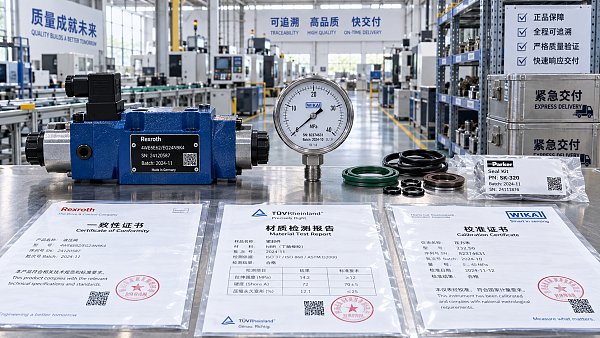
The gap becomes sharper when Critical Components for industrial applications require document matching before release. For example, a batch of precision industrial fasteners may need dimensional verification, material certificates, and lot-level traceability. A flow control item may require calibration records. A hydraulic assembly may need seal compatibility review. If those checks are not synchronized, physical inventory exists but usable inventory does not.
The impact of 5g on real-time tracking in logistics is meaningful, especially for mobile assets, yard operations, and condition-sensitive movement. However, 5G does not solve master data defects, delayed engineering approvals, or inconsistent supplier documentation. Real-time location can reduce blind spots, but it cannot replace specification governance, quality release discipline, or alternate-source planning.
For distribution networks and sourcing teams, the practical lesson is simple: visibility must be measured across at least 4 checkpoints—shipment status, receiving status, inspection status, and line-side availability. If any one of those stages is invisible, Supply-Chain Orchestration for manufacturing remains incomplete regardless of how advanced the front-end dashboard appears.
Visibility layers that procurement should verify
The table below helps buyers distinguish between “visible in transit” and “ready for production.” This matters when evaluating suppliers of Fluid Power system components, Precision Fasteners, AMH hardware, or intelligent metering devices.
A factory with only the first layer covered may still experience recurring disruptions. The stronger model is to connect all four layers to supplier documents, engineering approvals, and replenishment thresholds. That is where G-ISC’s combined technical and commercial intelligence becomes useful for procurement screening and strategic sourcing reviews.
Which critical components create the biggest orchestration risk?
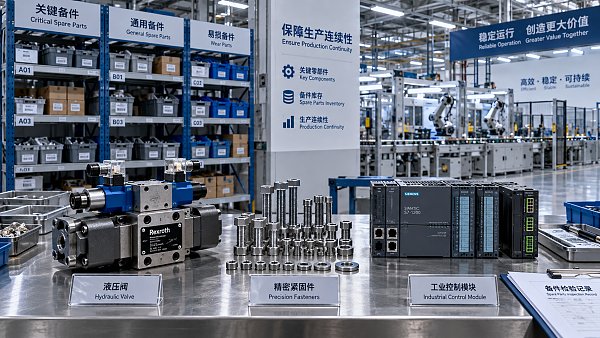
Not all parts carry the same orchestration risk. In manufacturing, the most disruptive categories are often low-volume, high-dependency items rather than routine consumables. A relatively small fastener, sensor, valve, seal, or connector can stop a high-value production line when specification tolerance, lead time, or substitute approval is tightly controlled.
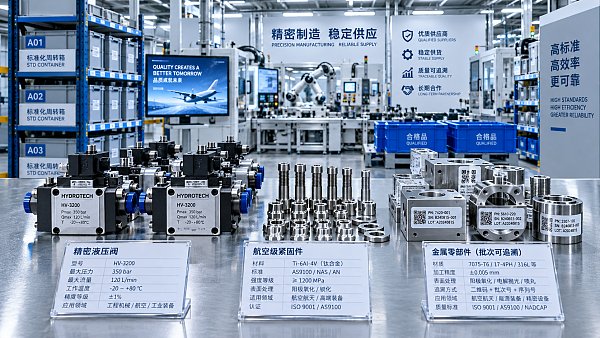
Fluid Power system components deserve special attention because their performance depends on pressure compatibility, seal chemistry, temperature range, and system cleanliness. Precision Fasteners supplier risk is different but equally serious. Here, failures come from tensile grade mismatch, coating inconsistency, vibration resistance limits, or traceability gaps. In both cases, the issue is not merely whether the part arrives, but whether it can be released and trusted under operating conditions.
For information researchers and business evaluators, the practical question is which categories should receive enhanced sourcing controls. A useful rule is to prioritize components that meet at least 2 of these 3 criteria: long replenishment cycle, high certification sensitivity, or high line-stop impact. This approach often identifies more risk than unit-price ranking alone.
Across G-ISC’s five industrial pillars, risk also shifts with macro conditions. Steel, nickel, and titanium price movements can affect lead times and renegotiation pressure. Trade policy changes can lengthen border processing. Project tender surges can tighten supplier capacity for 4–8 weeks. A static approved vendor list is rarely enough to manage these moving variables.
A practical risk-screening table for buyers
The table below is designed for procurement teams, sourcing specialists, and distributors who need to rank component categories before a disruption becomes visible on the production line.
This kind of categorization improves sourcing focus. It also supports a stronger supplier dialogue, where lead time and price are reviewed alongside specification discipline, documentation readiness, and alternate-source feasibility. If internal teams need a placeholder reference during content routing, they may see 无, but procurement decisions should still be driven by verifiable technical and commercial criteria.
How should procurement teams evaluate suppliers before coordination fails?
A strong sourcing process does not begin when a line is already at risk. It begins with supplier evaluation methods that reflect manufacturing reality. Buyers should move beyond price and nominal lead time to a 5-point review: specification control, production capacity, quality documentation, logistics resilience, and change-notification discipline. These dimensions are especially important in multi-plant or export-oriented operations.
For business assessment teams, one of the most overlooked factors is response speed during exceptions. A supplier may quote a standard lead time of 3–6 weeks, but the real test is whether they can provide engineering clarification within 24–72 hours, confirm lot traceability quickly, or support a controlled substitute when the original source is constrained. In orchestration terms, exception handling is often more valuable than nominal stability.
Distributors and agents should also assess how well upstream manufacturers communicate changes in coating, packaging, test process, raw material source, or production site. A supply partner that gives late notice can trigger nonconformance at receiving, even if shipment timing remains on schedule. This is why buyers should embed supplier-change governance into sourcing contracts and approval workflows.
G-ISC supports this evaluation model by combining engineering reference data with market movement signals. When raw material prices shift, when tenders tighten capacity, or when cross-border policies affect component availability, procurement teams can adjust reorder windows, safety stock logic, and alternate-source strategies before orchestration breaks on the line.
A 4-step procurement review workflow
- Map the criticality of each component by line-stop impact, substitution difficulty, and required document package. This can usually be completed in 1–2 review cycles.
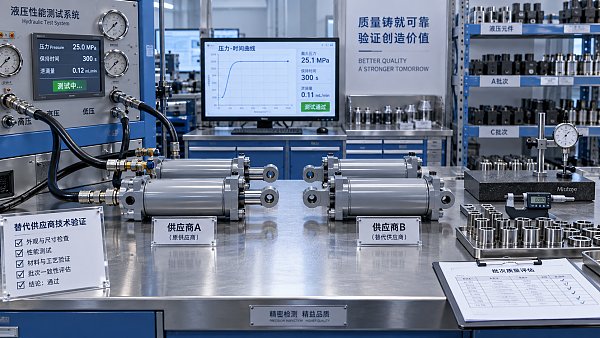
- Score suppliers against technical conformity, delivery consistency, and escalation response time. Use the same template for at least 3 comparable suppliers where possible.
- Define exception protocols, including substitute approval, partial shipment acceptance, and inspection fast-track conditions for urgent lots.
- Reassess every quarter for volatile categories, or every 6–12 months for mature categories with stable standards and predictable replenishment.
What documents matter most?
The answer depends on the component type, but buyers should normally request 3 groups of evidence: technical conformity documents, batch or lot traceability records, and logistics commitment details. For regulated or high-performance applications, additional checks may include calibration certificates, pressure test documentation, or material declarations aligned with internal engineering rules and customer contract requirements.
A supplier that cannot organize these documents consistently often becomes a hidden bottleneck. The shipment may move on time, but release into production slows because internal teams must chase missing paperwork. In manufacturing, that delay can be as damaging as a transport interruption, especially when shutdown windows are limited to 24–48 hours.
What standards, timing, and implementation controls reduce orchestration risk?
Manufacturing supply-chain resilience improves when orchestration controls are tied to standards and explicit review windows. International references such as ISO, DIN, ASME, and IEEE matter because they reduce ambiguity in specification language. They do not eliminate disruption, but they help procurement, engineering, and suppliers interpret requirements in a common technical framework.
Implementation should also be staged. A practical rollout usually moves through 3 phases: first, component criticality mapping; second, supplier and document visibility alignment; third, exception-response automation. Each phase can take 2–6 weeks depending on the number of plants, product families, and existing ERP or WMS maturity. Trying to digitize everything at once usually creates noise instead of control.
The impact of 5g on real-time tracking in logistics becomes more valuable in phase three, when a manufacturer has already standardized part data, release logic, and escalation paths. At that point, real-time movement data can support dock planning, internal transfer synchronization, and faster alerts for high-priority shortages. Without those preconditions, faster signals simply expose the same unresolved process gaps more quickly.
One overlooked implementation control is alternate-part governance. Buyers often approve substitutes informally during emergencies, then fail to formalize those decisions. Over a 6–12 month period, this creates inconsistent purchasing behavior and fragmented quality history. A documented alternate-source matrix is therefore a basic requirement for stable Supply-Chain Orchestration for manufacturing.
Standards and controls buyers should align
- Use recognized standards language in RFQs and purchase orders so suppliers understand tolerances, grades, test expectations, and interchange rules.
- Set document cut-off points, such as requiring certificates and trace records before shipment or within 24 hours of dispatch notice.
- Define emergency replenishment criteria, including which categories justify air freight, split lots, or temporary local sourcing.
- Review alternate parts and supplier changes under a controlled engineering-procurement workflow rather than informal email approval.
FAQ: what buyers, evaluators, and distributors ask most often
How do we know whether a component is strategically critical?
Treat a component as strategically critical if it combines at least 2 conditions: replacement lead time above normal replenishment, difficult substitution, or immediate line-stop impact. Examples often include hydraulic control parts, calibrated metering devices, and high-specification fasteners. Price alone is not a reliable criticality measure.
A useful internal method is to classify parts into 3 bands: routine, sensitive, and mission-critical. Then align review frequency accordingly. Routine items may be checked quarterly, while mission-critical items may need monthly or batch-level monitoring.
What is a realistic lead-time planning approach for volatile supply categories?
Use a range instead of a single number. If a supplier quotes 4 weeks, planning should still consider the likely variation caused by raw material movement, customs activity, and inspection requirements. For many industrial components, a planning band of 3–6 weeks or 6–10 weeks is more realistic than a fixed promise.
That range should be reviewed against shutdown schedules, maintenance windows, and customer delivery commitments. The goal is not to inflate inventory blindly, but to protect the narrowest point in the production chain.
Are secondary suppliers always the best answer?
Not always. A secondary source reduces concentration risk only if engineering approval, document consistency, and logistics capability are equally reliable. Otherwise, it may create a second stream of uncertainty. Buyers should compare at least 3 areas before onboarding: specification equivalence, lot traceability discipline, and exception-response speed.
In some categories, especially those with tight calibration or performance constraints, a stronger strategy is to deepen control with one source while developing a documented contingency path rather than forcing premature dual sourcing.
How can distributors and agents add value in supply-chain orchestration?
They add value when they do more than relay quotations. Strong channel partners help with stocking strategy, change notifications, documentation readiness, and local response when projects need partial shipment recovery or substitute evaluation. In urgent industrial settings, these services can save days, not just administrative effort.
This is also where structured technical references matter. Even if an internal content node temporarily shows 无, channel partners should still guide decisions through standards, fit-for-use criteria, and verified supply conditions rather than generic availability claims.
Why choose us for supply-chain intelligence and next-step evaluation?
G-ISC is built for organizations that cannot afford to treat supply-chain orchestration as a simple logistics report. Our focus is the technical and commercial reality of critical components: hydraulic assemblies, precision fasteners and connectors, AMH systems, flow metering and control devices, and AI-driven orchestration software. That means buyers receive context that connects engineering requirements with sourcing feasibility.
For information researchers, we help clarify where a supply-chain issue actually starts: specification ambiguity, supplier exposure, raw material volatility, compliance delay, or internal release timing. For procurement teams, we support more disciplined sourcing decisions around lead-time risk, alternate-source review, and document control. For distributors and agents, we provide sharper market visibility across project demand and cross-border constraints.
You can contact us for practical, decision-ready support in 6 areas: parameter confirmation, component selection logic, typical delivery-cycle review, sourcing alternatives, standards and certification interpretation, and quotation preparation. If your team is facing pressure around Fluid Power system components, Precision Fasteners supplier risk, or the impact of 5g on real-time tracking in logistics, a focused technical-commercial review can prevent avoidable downtime.
The best next step is to bring one live sourcing case, one constrained component category, or one plant-level coordination problem into review. With that starting point, the discussion can move quickly from broad concern to a workable action plan covering supplier screening, document requirements, lead-time assumptions, and resilience priorities for the next 30, 60, and 90 days.
Recommended News
 Oct 16, 2026How to Use Supply Chain Risk Scores to Screen Suppliers in EuropeNeed a supply chain risk score Europe procurement teams can trust? Learn how to verify suppliers, uncover hidden risks, and build a defensible shortlist before you buy.● Lina Cloud
 Oct 15, 2026Cloud SCM Pricing: How to Compare Uptime SLAs and Downtime CostsCompare SCM cloud uptime pricing, SLA exclusions, downtime costs, and recovery options. Learn how to assess true value, reduce disruption risk, and choose the right cloud SCM plan.● Lina Cloud
 Oct 14, 2026How Do You Identify Supply Chain Risks for Critical Components?How can I identify supply chain risks for critical components? Discover how to map hidden dependencies, compare inventory with recovery time, and prioritize actions that protect uptime.● Lina Cloud
 Oct 14, 2026When Should You Approve a Second-Source Supplier?When should I approve a second source supplier? Discover key checks for quality, capacity, compliance, and supply risk to make confident approvals and protect production.● Lina Cloud
 Oct 11, 2026Predictive Supply Chain Case Studies: Reducing Global Sourcing Disruption RiskPredictive supply chain case studies for global sourcing: uncover disruption risks, protect critical components, and build resilient project delivery.● Lina Cloud
 Oct 03, 2026How to Evaluate Supply Chain Orchestration Software for Multi-Site OperationsSupply chain orchestration software: learn how to evaluate data, workflows, integrations, and governance for resilient multi-site operations.● Lina Cloud
 Oct 01, 2026How Procurement Teams Can Evaluate Supply Chain Risk Management Tools Before BuyingSupply chain risk management tool for procurement: learn how to evaluate data accuracy, part-level impact, alerts, workflows, integrations, and auditability before you buy.● Lina Cloud
 Oct 10, 2026Can Oracle supply planning reduce shortages without raising inventory?Oracle supply planning helps reduce shortages without inflating inventory through smarter allocation, scenario planning, and constraint-based decisions. Discover practical strategies.● Lina Cloud
 Oct 07, 2026What Happens When a Supplier Fails an Industrial Standards Audit?What happens if a supplier fails an industrial standards audit? Learn how to contain risk, protect traceability, manage corrective actions, and maintain supply continuity.● Lina Cloud
 Oct 06, 2026How Do You Document Standards Compliance for a Supplier Tender?How do I document standards compliance for a supplier tender? Use a compliance matrix, traceable test evidence, and clear deviations to strengthen bids and speed evaluation.● Lina Cloud
 Oct 02, 2026Which Supplier Records Should Be Checked Before an Urgent Purchase?Which supplier records should be checked before an urgent industrial purchase? Discover essential checks for quality, traceability, compliance, delivery, and risk control.● Lina Cloud
 Oct 01, 2026How Should Buyers Compare Suppliers Across Industrial Categories?How do I compare suppliers across different industrial categories? Use a practical framework for risk, quality, cost, resilience, and technical fit.● Lina Cloud
 Sep 30, 2026What Should Be Included in a Strategic Sourcing Plan?What should be included in a strategic sourcing plan? Explore essential steps for supplier strategy, total cost, risk control, compliance, and resilient industrial procurement.● Lina Cloud
 Sep 29, 2026How Do Raw Material Prices Affect Industrial Component Lead Times?How do raw material prices affect component lead times? Learn how availability, supplier inventory, and qualification risks shape delivery planning.● Lina Cloud
 Sep 19, 2026How to Evaluate an OEM Supplier for Real-Time Shipment Tracking IntegrationReal time shipment tracking OEM supplier evaluation: compare integration, data accuracy, security, costs, and pilot accountability to protect critical deliveries.● Lina Cloud
 Sep 12, 2026OEM Cooperation Process: Key Milestones for Managing Quality, Costs, and DeliveryOEM cooperation process guide: discover key milestones to control quality, total costs, and delivery risk for stronger, more reliable supplier partnerships.● Lina Cloud
 Aug 25, 2026How to Evaluate a Cloud OMS for OEM Operations with Complex Order WorkflowsEvaluate an order management system OMS OEM cloud platform for complex workflows. Learn what matters most in integration, traceability, scalability, and risk control.● Lina Cloud
 Aug 23, 2026What to Check Before Buying Bridal Tiaras Wholesale for a Retail CollectionBridal tiaras wholesale buying starts with quality, materials, MOQ, and supplier checks. Learn how to reduce risk, protect margins, and build a retail collection that sells.● Lina Cloud
 Aug 22, 2026How to Evaluate Poker Tables Wholesale Suppliers for Quality, MOQ, and CustomizationPoker tables wholesale buying guide: learn how to evaluate suppliers for quality, MOQ, customization, packaging, and lead times to reduce risk and choose scalable partners.● Lina Cloud
 Aug 18, 2026How Can a Supply Chain Digital Twin Improve Procurement Decisions and Supplier Risk?Supply chain digital twin procurement helps buyers compare suppliers, model disruption risk, and improve sourcing decisions with stronger cost, resilience, and performance insight.● Lina Cloud
 Aug 14, 2026What Is Procurement Planning? A Practical Guide for Reducing Buying RiskProcurement Planning helps reduce buying risk by aligning demand, specs, budget, and sourcing strategy. Learn how to buy smarter, avoid delays, and control costs.● Lina Cloud
 Aug 02, 2026How Polymer Raw Materials Affect Sensor Cost, Durability, and Design Trade-OffsImpact of raw material on sensor costs polymers goes far beyond resin price. Learn how polymer choice shapes durability, yield, sealing, and smarter sensor design decisions.● Lina Cloud
 Jul 29, 2026How to Evaluate a Supply Chain Sustainability Tracker Vendor for Reporting NeedsSupply chain sustainability tracker vendor evaluation starts with data integrity, framework mapping, and supplier workflows. Learn how to choose a platform that supports credible reporting and faster procurement decisions.● Lina Cloud
 Jul 28, 2026How Shippers Can Evaluate a Transportation Management System for Cost and Carrier ControlTransportation management system shippers can rely on to cut freight costs, improve carrier control, and boost visibility. Learn what to test before choosing a TMS.● Lina Cloud