Hot Articles
Popular Tags
Which Industrial Infrastructure Components Fail First?
From High-Pressure Hydraulic Cylinders for construction to Vibration-Resistant Fasteners for aerospace, Industrial Infrastructure components often fail first at points of stress, vibration, and maintenance neglect. This overview helps procurement and research teams use a Technical Intelligence platform, Strategic Sourcing software solutions, and Industrial Infrastructure maintenance insights to support Operational Uptime improvement across complex supply chains.
Where do industrial infrastructure components usually fail first?
In most industrial environments, first-failure points are rarely random. They usually appear where mechanical load, thermal cycling, pressure fluctuation, contamination, or vibration are concentrated. For procurement teams and business evaluators, this matters because the first failed component is often not the largest asset, but the smallest critical interface inside the system: a seal, connector, bolt, valve seat, sensor, bearing path, or hose coupling.
Across hydraulic systems, material handling lines, precision fastening assemblies, and flow-control networks, the weak link tends to emerge after 3 repeated conditions: overloading beyond design margin, installation inconsistency, or maintenance intervals that drift too far from recommended practice. In practical sourcing reviews, early failure is often traceable to tolerance mismatch, poor material selection, insufficient corrosion resistance, or unstable supplier quality rather than a single dramatic event.
That is why technical intelligence is not just an engineering topic. It is also a supply-chain topic. When buyers compare suppliers only by unit price, they can overlook fatigue performance, pressure-cycle life, torque retention, seal compatibility, or documentation depth. G-ISC addresses this gap by combining engineering benchmarking with strategic sourcing visibility across five industrial pillars, helping decision-makers evaluate not only what a component does, but how long it remains reliable under real operating stress.
For complex operations running 16–24 hours per day, even a low-cost component can trigger expensive downtime if it sits at a critical transfer point. Typical first-failure zones include hydraulic rod seals, high-vibration fastener joints, AMH wheel or sensor assemblies, flow-meter electronics in unstable media, and control connectors exposed to dust, moisture, or thermal shock. These are the failure points that deserve earlier inspection and tighter procurement control.
Common first-failure mechanisms by component type
The table below gives procurement and research teams a practical reference for identifying which component categories fail first, what usually drives that failure, and what evidence should be checked during technical review. This is especially useful when comparing multiple suppliers under tight lead times of 2–6 weeks.
A key takeaway is that “first failure” is often a system-interface issue, not a bulk-material issue. Buyers who verify preload stability, sealing materials, contamination control, and operating range up front can reduce avoidable failures during the first 6–12 months of operation.
Why do stress, vibration, and maintenance gaps accelerate early failure?
Stress concentration is the most common accelerator of industrial infrastructure failure. In hydraulic and fluid power assemblies, sudden pressure changes can damage seals long before the cylinder body shows wear. In fastening systems, joint movement under vibration can gradually reduce clamp load until the connection loosens. In AMH systems, repeated impact and off-center loading create fatigue in rollers, brackets, and connectors even when static load ratings appear acceptable on paper.
Maintenance neglect makes these issues worse because early symptoms are subtle. A small leak, slight torque loss, sensor drift, or rising vibration trend may not stop production immediately. However, if inspection windows stretch from every month to every quarter without condition-based checks, a minor deviation can become a line-stopping event. Research teams evaluating total cost of ownership should therefore look beyond purchase price and ask how a component behaves between service cycles.
Environmental exposure also matters. Dust, humidity, corrosive agents, washdown cycles, and wide operating temperatures can all shorten component life. A fastener that performs well indoors may fail much earlier in a marine, mining, or chemical setting. A flow meter selected for clean media may suffer drift if installed in a slurry or contaminated process stream. Procurement decisions need to match actual operating conditions, not ideal catalog conditions.
This is where G-ISC creates value for distributors, sourcing specialists, and evaluation teams. By linking standards-based component review with real-time commercial intelligence, it helps users assess whether a seemingly equivalent part is truly interchangeable across different duty cycles, environmental classes, and maintenance capacities. In fragmented supply chains, that distinction can prevent substitution risk from entering critical infrastructure programs.
Three operational conditions that should trigger deeper review
- Continuous operation above 16 hours per day, where heat buildup, seal wear, and vibration accumulation accelerate hidden fatigue.
- Duty cycles with frequent starts and stops, such as 10–30 cycles per hour, which create repeated load transitions in connectors, fasteners, and actuation parts.
- Installations exposed to abrasive particles, washdown, or outdoor temperature swings, where material compatibility and enclosure protection become first-order procurement variables.
When any of these conditions apply, buyers should require a higher level of technical documentation, from pressure range and torque guidance to coating data, compatibility notes, and maintenance recommendations. That additional review time, often just 2–5 working days, can eliminate far larger downstream losses.
How should procurement teams identify high-risk components before ordering?
Effective procurement starts with ranking criticality, not just comparing quotations. In industrial infrastructure, teams should separate components into 3 categories: mission-critical items that can stop production, performance-critical items that degrade throughput or precision, and replaceable consumables with lower operational impact. This simple tiering model allows faster sourcing decisions while reserving deeper scrutiny for parts that affect uptime.
A practical pre-order review should cover 5 key checks: operating range, standards compliance, material suitability, supplier consistency, and replacement lead time. For example, a fastener may meet dimensional requirements yet still underperform if coating thickness, preload retention, or vibration resistance is not suitable for the application. Likewise, a cylinder with the correct bore may still fail early if seal chemistry does not match the fluid or temperature window.
For buyers managing multiple geographies, the real challenge is consistency. One supplier may provide strong pricing but weak technical files. Another may meet ISO or DIN references but have unstable delivery windows of 8–12 weeks. G-ISC supports this decision process by synchronizing technical benchmarks, tender intelligence, and material cost signals such as steel, nickel, or titanium fluctuations, giving sourcing teams a more balanced picture of risk versus cost.
In some sourcing flows, teams also need quick reference access to linked product placeholders for internal routing or catalog mapping, such as 无. Even where direct product data is incomplete, structured evaluation criteria still help procurement avoid rushed substitutions that increase failure exposure.
Procurement screening matrix for early-failure risk
The following table can be used during RFQ review, supplier onboarding, or distributor qualification. It focuses on the selection factors most closely tied to early industrial infrastructure failure.
This matrix is especially valuable for distributors and agents who need to compare substitute sources quickly. It supports faster go/no-go decisions without reducing technical discipline, particularly when projects require shipment within 7–15 days.
A 4-step sourcing workflow for critical components
- Map the failure point inside the asset: identify whether the risk sits in sealing, fastening, sensing, bearing, or control connection.
- Define the real operating window: collect temperature, pressure, vibration, duty cycle, and contamination information from site teams.
- Screen the supply base: compare documentation quality, standards references, and lead-time stability across 2–3 qualified options.
- Set implementation controls: lock inspection intervals, incoming checks, and spare-part plans before installation.
This workflow helps move procurement from reactive replacement buying to reliability-centered sourcing. It is particularly useful in sectors where one failed connector or seal can interrupt a much larger production asset.
Which standards, service practices, and selection details reduce first-failure risk?
Standards do not eliminate failure, but they improve comparability and reduce ambiguity. In critical components, references to ISO, DIN, ASME, and IEEE can help verify dimensional consistency, material expectations, testing language, or interface compatibility. For buyers, the goal is not to collect documents for their own sake; it is to confirm that the offered part fits the intended operating envelope and integration requirements.
Service practice is equally important. Many early failures occur after installation because preload, alignment, calibration, lubrication, or contamination control were not managed correctly. A high-grade component can still underperform if assembly procedures are not clear. For this reason, sourcing teams should request not only technical sheets but also installation notes, inspection points, and recommended replacement triggers where relevant.
In practical terms, there are 6 review items that consistently reduce early failure exposure: application fit, interface tolerance, maintenance accessibility, replacement availability, environmental resistance, and documentation completeness. These are the issues G-ISC is designed to organize into actionable intelligence for procurement directors, sourcing specialists, and strategic distributors operating across fragmented global supply chains.
Where commercial pressure is high, some teams accept “equivalent” parts with limited validation. That can be reasonable for non-critical consumables, but it is risky for safety-relevant or uptime-critical assemblies. If the replacement affects pressure containment, torque retention, flow measurement stability, or autonomous handling continuity, deeper evaluation is justified before release.
What should procurement teams ask suppliers before approval?
- What operating range is verified for pressure, temperature, vibration, and media, and how does it compare with the actual site condition?
- Which international standards are referenced for dimensions, materials, testing language, or interface compatibility?
- What is the normal replenishment cycle: 7–15 days from stock, 2–4 weeks from regional inventory, or 6–12 weeks from production?
- What preventive maintenance actions are recommended every month, quarter, or operating-hour interval?
- Which spare parts or companion items should be purchased at the same time to avoid secondary downtime?
If those answers are unclear, the sourcing risk is usually higher than the quotation suggests. Decision-makers can also route internal reference items such as 无 into approval workflows when catalog synchronization is needed, but technical validation should still remain the main gate.
FAQ: what do buyers, researchers, and distributors most often ask?
How can I tell whether a low-cost component is a false economy?
Compare more than the purchase price. Check operating range, standards traceability, maintenance interval, expected replacement frequency, and downtime impact. If a cheaper seal, fastener, or sensor creates even one unplanned shutdown in a quarter, its total cost may exceed a higher-priced option. A useful rule is to review 3 cost layers together: unit cost, installation cost, and failure consequence cost.
Which industrial infrastructure components deserve the highest attention first?
Start with components that combine low visibility with high operational consequence. These include hydraulic seals, pressure connectors, vibration-exposed fasteners, flow-meter sensing elements, AMH bearings, and signal cables at moving joints. If failure stops production, affects safety, or damages adjacent equipment, it belongs in the top review tier regardless of its individual price.
What is a reasonable inspection cadence for high-risk components?
There is no single schedule for every site, but many teams use a layered approach: visual checks every shift or day for leakage and looseness, condition review every month for vibration, wear, or drift, and formal maintenance every quarter or shutdown window. In high-duty applications with 20+ cycles per hour or continuous 24-hour use, shorter intervals may be justified.
Can equivalent substitutions be used safely in urgent supply situations?
Sometimes yes, but only after confirming interface dimensions, material compatibility, operating limits, and standards alignment. Urgent substitutions become risky when documentation is incomplete or when the part handles pressure, vibration, metering accuracy, or autonomous movement control. A fast replacement should still pass a 4-point review: fit, function, environment, and service life expectation.
Why work with G-ISC when evaluating failure-prone industrial infrastructure components?
G-ISC is built for teams that need more than general market information. It connects engineering-level component intelligence with sourcing strategy across Advanced Hydraulic & Fluid Power, Precision Industrial Fasteners & Connectors, Automated Material Handling, Intelligent Flow Metering & Control, and AI-Driven Supply-Chain Orchestration Software. That combination helps users assess not only whether a part is available, but whether it supports operational uptime under real industrial constraints.
For information researchers, the value lies in structured, standards-aware analysis. For procurement staff, the value lies in faster screening of technical and commercial risk. For business evaluators, it lies in linking component reliability to lead time, material volatility, and trade-policy exposure. For distributors and agents, it provides a clearer basis for substitution control, portfolio planning, and customer-facing technical discussions.
If your team is reviewing which industrial infrastructure components fail first, the next step should be specific. Prepare 4 types of data before consultation: application environment, operating range, maintenance interval, and delivery requirement. With those inputs, G-ISC can support parameter confirmation, component selection, interchangeability review, lead-time assessment, standards alignment, sample planning, and quotation communication for higher-confidence sourcing decisions.
This is especially useful when your project involves multi-site sourcing, substitute qualification, or uptime-sensitive infrastructure where a small component can determine the performance of a much larger system. The strongest purchasing outcomes usually begin with sharper technical questions, not broader guesswork.
Recommended News
 Oct 09, 2026How to Assess a Jade Bangles Manufacturer for Authenticity and OEM QualityAssess a jade bangles manufacturer for authenticity, treatment disclosure, OEM consistency, quality control, certification, and export-ready documentation.● Marcus Valve
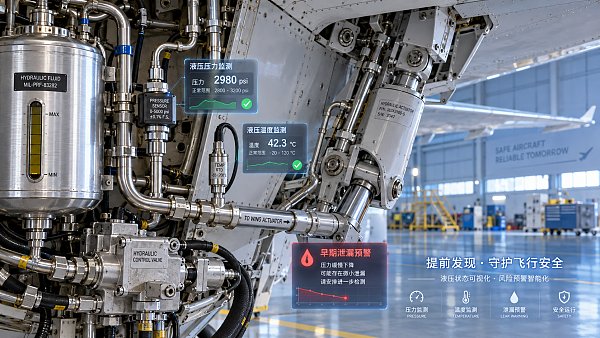
 Oct 02, 2026How Aircraft Hydraulic Safety Alerts Help Detect Leaks and Pressure Loss EarlyAircraft hydraulic safety alerts detect leaks and pressure loss early through smarter monitoring of pressure, fluid quantity, temperature, pump behavior, and actuator response.● Marcus Valve
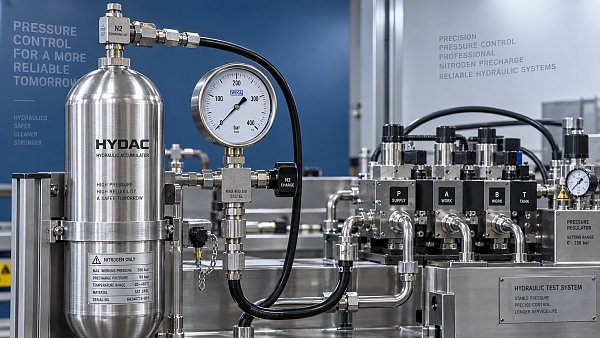
 Sep 27, 2026Hydraulic Accumulator Precharge: How to Set It for Reliable Pressure ControlHydraulic accumulator precharge guide: set nitrogen pressure accurately for stable control, usable fluid volume, safer operation, and longer system life.● Marcus Valve
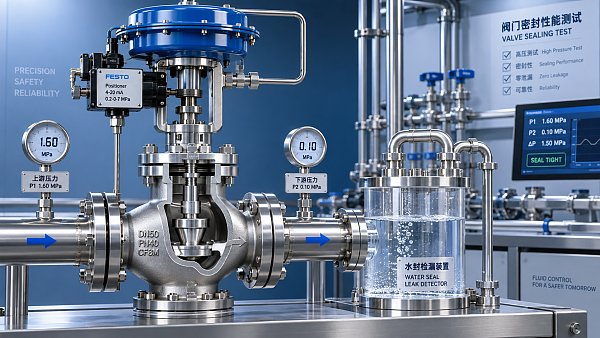
 Sep 26, 2026Valve Leakage Class Data: How to Interpret Allowable Leakage for Critical ServiceValve leakage class data explained: learn how to assess allowable leakage, test media, pressure differential, seat design, and standards for critical valve service.● Marcus Valve
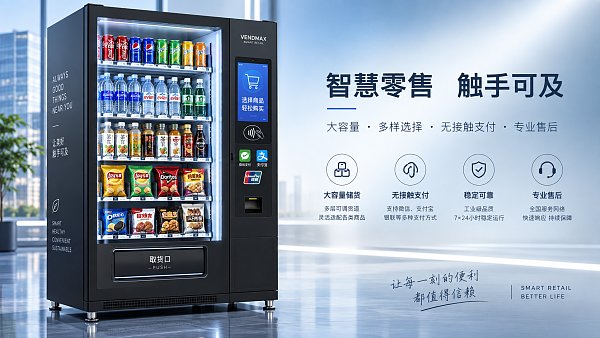
 Sep 21, 2026Wholesale Vending Machines: A Buyer’s Checklist for Pricing, Capacity, and Service SupportWholesale vending machines buyer’s checklist: compare delivered pricing, real product capacity, payment options, installation needs, and dependable service support.● Marcus Valve
 Sep 20, 2026How to Evaluate a Hydraulic Manifold Manufacturer for High-Pressure SystemsHydraulic Manifolds manufacturer evaluation guide: compare pressure ratings, materials, machining, testing, cleanliness, and traceability for reliable high-pressure systems.● Marcus Valve
 Sep 08, 2026How to Specify High-Pressure Fluid Power Systems for Demanding Industrial Duty CyclesFluid Power high pressure system specification guide: optimize duty cycles, fatigue life, cleanliness, thermal control, safety, and supplier reliability.● Marcus Valve
 Sep 02, 2026How to Set Piston Accumulator Precharge Pressure for Reliable Hydraulic PerformancePiston accumulator precharge pressure: learn how to set P0, P1, and P2 for dependable hydraulic energy storage, safety reserves, and pulsation control.● Marcus Valve
 Aug 27, 2026How to Reduce Hydraulic Manifold Pressure Drop Without Undersizing Flow CapacityHydraulic manifold pressure drop: learn practical ways to cut energy loss, protect flow capacity, improve thermal stability, and optimize valve and port design.● Marcus Valve
 Aug 17, 2026How to Choose the Right Outdoor Patio Heater for Commercial SpacesOutdoor patio heaters for commercial spaces: learn how to choose the right model for comfort, safety, durability, and lower operating costs.● Marcus Valve
 Aug 12, 2026How to Select Hydraulic Components for Industrial Machinery by Load, Pressure, and Duty CycleHydraulic components for industrial machinery: learn how to match load, pressure, and duty cycle to reduce downtime, avoid oversizing, and improve reliability.● Marcus Valve
 Aug 09, 2026How to Size a High Pressure Hydraulic Accumulator for Peak Load StabilityHigh pressure hydraulic accumulator sizing made clear: learn how to define pressure windows, usable oil volume, and response speed for stable peak loads and smarter selection.● Marcus Valve
 Aug 03, 2026What Criteria Matter Most When Comparing Solutions for a B2B Buying Decision?Solution comparison criteria for B2B buying: learn how to weigh technical fit, supplier reliability, TCO, scalability, and supply-chain risk to choose with confidence.● Marcus Valve
 Jul 27, 2026How to Choose Custom Printed Guitar Picks for Branding, Events, and Retail SalesGuitar picks custom printed: learn how to choose the right material, thickness, print quality, packaging, and supplier for branding, events, and retail success.● Marcus Valve
 Jul 24, 2026How Do Metronomes and Tuners Work Together to Improve Practice Accuracy?Metronomes and tuners work best together to improve practice accuracy. Discover how they sharpen timing, stabilize pitch, and help musicians build more reliable performance results.● Marcus Valve
 Jul 23, 2026Product Selection for Electronic Components: Key Criteria for Reliable Design ChoicesProduct Selection for electronic components starts with reliability. Learn how to evaluate thermal, compliance, and supply-chain risks to build durable, cost-efficient designs.● Marcus Valve
 Jul 21, 2026How to Select Stainless Steel Level Transmitters for Corrosive Liquid ApplicationsStainless steel Level Transmitters selection for corrosive liquids starts with media, seals, and pressure. Learn how to choose reliable, compliant options that cut failure risk and downtime.● Marcus Valve
 Jul 12, 2026Luxury Vinyl Tile for Commercial Spaces: How to Compare Wear, Cost, and MaintenanceLuxury vinyl tile commercial flooring guide: compare wear layer, lifecycle cost, and maintenance needs to choose a durable, low-risk option for busy commercial spaces.● Marcus Valve
 Jul 10, 2026Component Specification Requirements Explained: How to Review Tolerance, Load, and FitComponent specification requirements explained clearly: learn how to review tolerance, load, and fit to reduce risk, improve uptime, and make smarter approval decisions.● Marcus Valve
 Jul 09, 2026Playground Borders: Which Materials Work Best for Drainage, Safety, and Low MaintenancePlayground borders compared by drainage, safety, and maintenance. Discover whether rubber, concrete, timber, composite, or metal is the best fit for your project.● Marcus Valve
 Jul 08, 2026Digital Pressure Transmitters Selection Guide: Accuracy, Output Signal, and Pressure RangeDigital Pressure Transmitters selection guide covering accuracy, output signal, and pressure range. Learn how to compare options for reliable performance, compatibility, and lower lifecycle costs.● Marcus Valve
 Jul 05, 2026Indoor Playground Maintenance Checklist: Daily, Weekly, and Monthly Tasks That MatterIndoor playground maintenance made practical: discover the daily, weekly, and monthly tasks that improve safety, reduce downtime, and extend equipment life.● Marcus Valve
 Jun 30, 2026Product Selection by Current Rating: How to Match Electrical Loads and Safety MarginsProduct Selection by current rating made practical: learn how to match real electrical loads, derating factors, and safety margins for safer systems, longer component life, and smarter buying decisions.● Marcus Valve
 Jun 26, 2026Pressure Transmitters Selection Guide: Key Specifications for Industrial SystemsPressure Transmitters selection guide for industrial systems: learn key specs, avoid costly mistakes, and choose the right fit for reliable performance.● Marcus Valve