Hot Articles
Popular Tags
Total Reliability standards and the gaps suppliers still miss
As Total Reliability standards reshape industrial sourcing, many suppliers still overlook the gaps that directly affect Operational Uptime improvement and risk exposure. From High-Pressure Hydraulic Cylinders for construction to choosing the right Aerospace Fasteners supplier, buyers now need verifiable data, Total Reliability certification, and predictive supply chain case studies in manufacturing to separate compliant vendors from truly dependable partners.
For information researchers, procurement managers, commercial evaluators, and channel partners, the challenge is no longer finding a supplier that can quote quickly. The real challenge is identifying which supplier can maintain quality consistency across 12- to 36-month sourcing cycles, absorb raw material volatility, document compliance by batch, and support operational continuity when a production line cannot afford even 4 hours of unexpected downtime.
In industrial markets shaped by fragmented logistics, stricter standards, and multi-country sourcing, Total Reliability has become a decision framework rather than a marketing claim. It connects engineering validation, supplier process maturity, traceability discipline, and supply-chain responsiveness into one measurable expectation. Yet many vendors still meet only the visible part of that requirement.
This article examines the standards behind Total Reliability, the supplier gaps that still go unnoticed, and the practical checks buyers can apply when evaluating components, systems, and long-cycle industrial partners across hydraulics, fasteners, flow control, AMH, and AI-driven supply-chain orchestration.
What Total Reliability Means in Modern Industrial Sourcing
Total Reliability is often misunderstood as a narrow quality benchmark. In practice, it is a cross-functional sourcing standard that combines product performance, process repeatability, delivery resilience, and documented compliance. A cylinder, valve, connector, meter, or fastener may pass incoming inspection once, yet still fail the Total Reliability test if the supplier cannot hold the same tolerances over 20 shipments, across 3 plants, or under changing raw material conditions.
For industrial buyers, the concept matters because operational uptime depends on the weakest verified point in the chain. A high-pressure hydraulic assembly rated for 250 bar to 700 bar, for example, is only as dependable as its seal consistency, machining repeatability, documentation control, and replacement lead-time discipline. A similar rule applies to aerospace-grade fasteners, where material pedigree and torque retention can matter more than headline tensile values alone.
The market shift is also being driven by broader sourcing complexity. Procurement teams now compare suppliers not just by price per unit, but by 6 to 10 operational variables: lead-time stability, PPAP or equivalent documentation readiness, failure response time, batch traceability, country-of-origin exposure, test protocol transparency, and engineering support availability. As a result, a “compliant” supplier may still underperform in real-world reliability scoring.
The four pillars buyers usually expect
Most industrial sourcing teams now evaluate Total Reliability through four practical pillars rather than one quality certificate. These pillars create a more realistic basis for supplier comparison:
- Engineering reliability: dimensional tolerance control, fatigue performance, pressure resistance, corrosion behavior, and functional life under defined loads.
- Documentation reliability: mill certificates, inspection records, serial or batch traceability, revision control, and standard alignment with ISO, DIN, ASME, or IEEE where relevant.
- Supply reliability: on-time delivery consistency, safety stock strategy, secondary sourcing capability, and disruption response within 24 to 72 hours.
- Commercial reliability: quote stability, transparent surcharge mechanisms, claims handling, and the ability to support long-term sourcing programs instead of spot transactions.
Suppliers that are strong in only 1 or 2 pillars can still introduce hidden risk. That is why strategic sourcing specialists increasingly use weighted scorecards instead of relying on a single sample approval.
The table below summarizes how buyers can distinguish baseline compliance from higher-grade Total Reliability readiness across common industrial sourcing dimensions.
The key takeaway is that Total Reliability is not a premium label reserved for aerospace or defense. It is increasingly the baseline expectation in any operation where downtime, warranty exposure, or field replacement cost can exceed the original component price by 5x to 20x.
The Gaps Suppliers Still Miss Even When They Appear Qualified
The most common supplier gap is the difference between visible qualification and repeatable execution. Many vendors present inspection reports, process charts, or standard references during onboarding, but their systems are not mature enough to sustain performance when order volumes rise by 30%, when alloy prices jump within a quarter, or when one production site substitutes tooling without strong revision control.
A second gap is incomplete traceability. In sectors such as hydraulic systems, precision fasteners, and metering devices, traceability needs to connect raw material batches, machining or forming dates, surface treatment records, inspection data, and shipment references. If any one link is missing, buyers may face delays during root-cause analysis, especially when failures emerge 6 to 18 months after installation.
Five hidden weaknesses that trigger sourcing risk
The following weaknesses are frequently missed because they do not always show up during a short audit or sample review:
- Capacity mismatch: a supplier can prototype well but cannot maintain the same cycle time and tolerance at 5,000 to 20,000 units per month.
- Weak change management: material substitution, subcontracted finishing, or fixture updates occur without timely notice to the buyer.
- Single-point dependency: one forging source, one heat-treatment vendor, or one export route creates a fragile supply structure.
- Limited field feedback loop: failures are replaced, but not converted into design, process, or packaging corrections within 2 to 4 weeks.
- Commercial opacity: pricing seems low at bid stage but becomes unstable through freight surcharges, alloy adjustments, or rush-order premiums.
These issues matter because they directly affect uptime. In an AMH environment, a low-cost connector with inconsistent retention force may stop an autonomous mobile robot cell. In a flow metering application, a small calibration drift can distort process control and downstream inventory planning. In heavy equipment, a poorly documented cylinder rebuild kit can lengthen maintenance shutdowns from 8 hours to 2 days.
Why “meets standard” is often not enough
Meeting a standard at one point in time is different from maintaining performance across the full product life cycle. Buyers should ask whether the supplier can show trend evidence over at least 3 consecutive lots, not just a single certificate. A mature supplier should also explain how it handles nonconformance containment, escalation thresholds, and preventive action timing.
In some sourcing scenarios, buyers may encounter placeholder catalog references or incomplete product entries such as 无. That alone is not the problem. The real issue is whether underlying technical files, revision history, and commercial ownership are controlled. In Total Reliability terms, data integrity must be as dependable as the part itself.
Suppliers that cannot clearly map specification, process, documentation, and recovery plan into one auditable chain are usually the ones that create the largest hidden cost after the PO is issued.
How Procurement Teams Should Evaluate Reliability Beyond Price and Certificates
A practical procurement model should compare suppliers on both technical and operational evidence. That means moving from passive review of brochures and certificates to active assessment of process capability, response speed, logistics resilience, and documentation discipline. For most industrial categories, a balanced scorecard with 5 to 7 weighted criteria delivers better sourcing outcomes than pure unit-price comparison.
One useful approach is to divide supplier review into three gates: qualification, verification, and continuity. Qualification checks basic fit. Verification tests whether the supplier can prove reliability under realistic conditions. Continuity determines whether the relationship remains stable through market changes, engineering updates, and volume swings over 12 months or more.
Suggested evaluation matrix for B2B buyers
The matrix below can be adapted for hydraulic components, fasteners, intelligent flow control products, AMH subsystems, and digital orchestration tools.
This type of matrix helps buyers avoid a common error: treating all sourcing risks as price risks. In reality, a 3% price premium can be economically justified if it prevents one line stoppage, one field recall, or one delayed project handover. That is why commercial evaluation teams should quantify total cost of unreliability, not just landed cost per piece.
Questions worth asking before approval
- Can the supplier provide 3 recent lots with dimensional and material consistency records?
- What is the standard lead time, and what happens if demand increases by 25% within one month?
- Which process steps are subcontracted, and how are they controlled?
- How quickly can a claim be contained, and what documentation is available within the first 48 hours?
- Is there a second-source or safety-stock strategy for critical SKUs?
These questions are especially useful for distributors, resellers, and agents who must protect downstream credibility. If the upstream supplier lacks transparency, the channel partner inherits the reputational risk.
When buyers are dealing with multi-category portfolios, an intelligence platform such as G-ISC becomes valuable because it connects engineering benchmarks, regulatory interpretation, raw material movement, and trade-policy shifts into one sourcing view rather than isolated vendor conversations.
Where the Biggest Reliability Gaps Appear Across Critical Component Categories
Not every reliability gap looks the same. In hydraulic and fluid power systems, the problem often lies in pressure-cycle durability, seal compatibility, rod surface treatment, and contamination control. In precision industrial fasteners and connectors, the hidden risks more often involve material substitution, plating inconsistency, vibration loosening resistance, and poor torque-tension correlation.
For AMH systems, reliability depends heavily on integration quality. A sound mechanical structure can still underperform if sensors, battery management, navigation modules, or software interfaces are not synchronized. In intelligent flow metering, calibration drift, media compatibility, and signal stability over time are common blind spots. In AI-driven supply-chain orchestration software, the key issue is not only algorithm design but also data cleanliness, refresh frequency, and exception handling logic.
Category-specific reliability checkpoints
The table below shows how reliability risks differ by industrial pillar and what buyers should verify before long-cycle sourcing decisions.
A useful sourcing lesson is that reliability must be validated at the application level, not only the part level. A fastener that passes lab testing may still fail in a high-vibration environment. A flow meter suited for water at stable temperatures may perform differently with aggressive media, pulsation, or variable pressure. A software platform that forecasts well at weekly intervals may struggle when procurement teams require near-real-time updates every 15 minutes.
Why multi-pillar intelligence matters
This is where G-ISC’s five-pillar model becomes strategically useful. It allows decision-makers to view technical performance, raw material exposure, logistics risk, and standards alignment together. If titanium or nickel input costs shift sharply within 30 days, or a trade rule changes in a key export corridor, the reliability conversation must include supply continuity and commercial planning, not only design suitability.
Even seemingly minor catalog ambiguity, including entries such as 无, should prompt buyers to verify whether the supporting technical and transactional data is complete. Strong sourcing decisions depend on clean evidence, not assumptions built around familiar product labels.
For channel businesses and regional distributors, category-specific reliability mapping also supports better portfolio planning. It helps determine which SKUs need local stock, which require tighter warranty screening, and which should be sourced only from vendors with robust engineering support.
How to Build a More Reliable Supplier Selection and Monitoring Process
Improving supplier reliability is not only about tougher qualification. It also requires a monitoring model that keeps technical, operational, and commercial indicators visible after the first order. Many sourcing failures happen because buyers run a strong onboarding process but a weak post-approval process. A supplier that performs well in quarter one may degrade by quarter three if no one tracks change notices, defect trends, or delivery variance.
A better model is to establish a 5-step reliability management cycle: define criticality, audit evidence, verify performance, monitor continuity, and act on variance. This cycle should be adjusted by category. A non-critical bracket does not need the same review depth as a high-pressure cylinder, flight-sensitive fastener, or plant-wide metering device.
Recommended 5-step process
- Classify components by risk level: critical, important, or routine, based on downtime impact and replacement complexity.
- Define required evidence: certificates, test records, process maps, subcontractor controls, and lot traceability.
- Run application-based verification: sample approval, installation review, and if needed, pressure, fatigue, or environmental testing.
- Track monthly or quarterly KPIs: on-time delivery, defect rate, corrective action closure, and change-notice discipline.
- Escalate early: if a supplier misses agreed thresholds for 2 consecutive review periods, initiate containment or dual-source planning.
This process gives procurement and commercial teams a common language. Engineering sees performance evidence, sourcing sees continuity risk, and management sees business exposure in measurable terms. In many organizations, that alignment alone reduces avoidable supplier churn and emergency buying.
KPIs worth tracking after approval
- On-time delivery rate by month and by SKU family.
- PPM or defect trend by lot, especially for high-impact components.
- Average response time to nonconformance reports, ideally below 48 hours for first containment.
- Revision or engineering-change notification compliance.
- Price variance frequency linked to steel, nickel, or titanium exposure.
For buyers that manage cross-border supply chains, the monitoring process should also include trade-policy checks and logistics route exposure. A supplier may remain technically strong while becoming commercially unstable due to customs delay, tariff changes, or shipping lane disruption. Reliability, in that sense, is always both physical and informational.
Organizations seeking fewer sourcing surprises should build a supplier base around documented proof, application fit, and responsiveness under change. Those are the conditions that separate quote providers from dependable long-term industrial partners. To assess component categories, benchmark vendors, or obtain a more structured sourcing view, connect with G-ISC, request a tailored evaluation framework, and explore more solutions for reliability-focused procurement decisions.
Recommended News
 Oct 09, 2026How to Assess a Jade Bangles Manufacturer for Authenticity and OEM QualityAssess a jade bangles manufacturer for authenticity, treatment disclosure, OEM consistency, quality control, certification, and export-ready documentation.● Marcus Valve
 Oct 02, 2026How Aircraft Hydraulic Safety Alerts Help Detect Leaks and Pressure Loss EarlyAircraft hydraulic safety alerts detect leaks and pressure loss early through smarter monitoring of pressure, fluid quantity, temperature, pump behavior, and actuator response.● Marcus Valve
 Sep 27, 2026Hydraulic Accumulator Precharge: How to Set It for Reliable Pressure ControlHydraulic accumulator precharge guide: set nitrogen pressure accurately for stable control, usable fluid volume, safer operation, and longer system life.● Marcus Valve
 Sep 26, 2026Valve Leakage Class Data: How to Interpret Allowable Leakage for Critical ServiceValve leakage class data explained: learn how to assess allowable leakage, test media, pressure differential, seat design, and standards for critical valve service.● Marcus Valve
 Sep 21, 2026Wholesale Vending Machines: A Buyer’s Checklist for Pricing, Capacity, and Service SupportWholesale vending machines buyer’s checklist: compare delivered pricing, real product capacity, payment options, installation needs, and dependable service support.● Marcus Valve
 Sep 20, 2026How to Evaluate a Hydraulic Manifold Manufacturer for High-Pressure SystemsHydraulic Manifolds manufacturer evaluation guide: compare pressure ratings, materials, machining, testing, cleanliness, and traceability for reliable high-pressure systems.● Marcus Valve
 Sep 08, 2026How to Specify High-Pressure Fluid Power Systems for Demanding Industrial Duty CyclesFluid Power high pressure system specification guide: optimize duty cycles, fatigue life, cleanliness, thermal control, safety, and supplier reliability.● Marcus Valve
 Sep 02, 2026How to Set Piston Accumulator Precharge Pressure for Reliable Hydraulic PerformancePiston accumulator precharge pressure: learn how to set P0, P1, and P2 for dependable hydraulic energy storage, safety reserves, and pulsation control.● Marcus Valve
 Aug 27, 2026How to Reduce Hydraulic Manifold Pressure Drop Without Undersizing Flow CapacityHydraulic manifold pressure drop: learn practical ways to cut energy loss, protect flow capacity, improve thermal stability, and optimize valve and port design.● Marcus Valve
 Aug 17, 2026How to Choose the Right Outdoor Patio Heater for Commercial SpacesOutdoor patio heaters for commercial spaces: learn how to choose the right model for comfort, safety, durability, and lower operating costs.● Marcus Valve
 Aug 12, 2026How to Select Hydraulic Components for Industrial Machinery by Load, Pressure, and Duty CycleHydraulic components for industrial machinery: learn how to match load, pressure, and duty cycle to reduce downtime, avoid oversizing, and improve reliability.● Marcus Valve
 Aug 09, 2026How to Size a High Pressure Hydraulic Accumulator for Peak Load StabilityHigh pressure hydraulic accumulator sizing made clear: learn how to define pressure windows, usable oil volume, and response speed for stable peak loads and smarter selection.● Marcus Valve
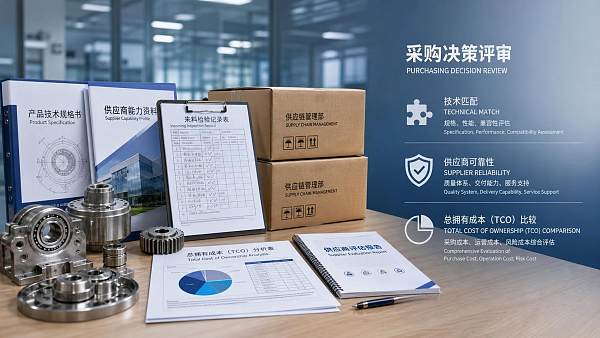
 Aug 03, 2026What Criteria Matter Most When Comparing Solutions for a B2B Buying Decision?Solution comparison criteria for B2B buying: learn how to weigh technical fit, supplier reliability, TCO, scalability, and supply-chain risk to choose with confidence.● Marcus Valve
 Jul 27, 2026How to Choose Custom Printed Guitar Picks for Branding, Events, and Retail SalesGuitar picks custom printed: learn how to choose the right material, thickness, print quality, packaging, and supplier for branding, events, and retail success.● Marcus Valve
 Jul 24, 2026How Do Metronomes and Tuners Work Together to Improve Practice Accuracy?Metronomes and tuners work best together to improve practice accuracy. Discover how they sharpen timing, stabilize pitch, and help musicians build more reliable performance results.● Marcus Valve
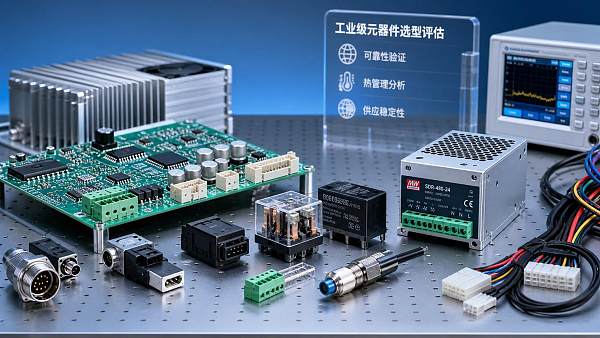
 Jul 23, 2026Product Selection for Electronic Components: Key Criteria for Reliable Design ChoicesProduct Selection for electronic components starts with reliability. Learn how to evaluate thermal, compliance, and supply-chain risks to build durable, cost-efficient designs.● Marcus Valve
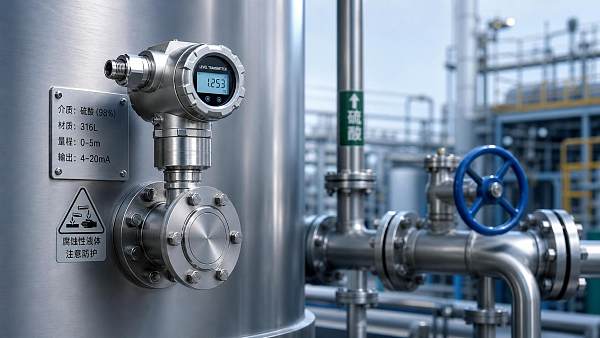
 Jul 21, 2026How to Select Stainless Steel Level Transmitters for Corrosive Liquid ApplicationsStainless steel Level Transmitters selection for corrosive liquids starts with media, seals, and pressure. Learn how to choose reliable, compliant options that cut failure risk and downtime.● Marcus Valve
 Jul 12, 2026Luxury Vinyl Tile for Commercial Spaces: How to Compare Wear, Cost, and MaintenanceLuxury vinyl tile commercial flooring guide: compare wear layer, lifecycle cost, and maintenance needs to choose a durable, low-risk option for busy commercial spaces.● Marcus Valve
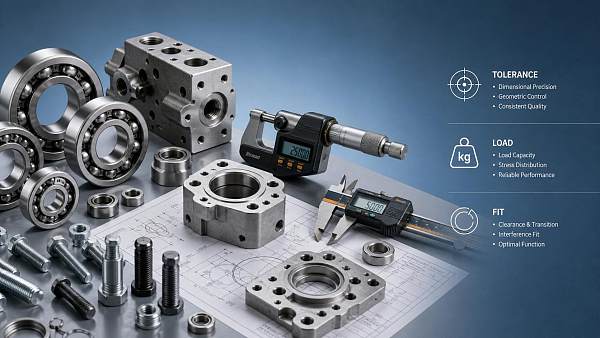
 Jul 10, 2026Component Specification Requirements Explained: How to Review Tolerance, Load, and FitComponent specification requirements explained clearly: learn how to review tolerance, load, and fit to reduce risk, improve uptime, and make smarter approval decisions.● Marcus Valve
 Jul 09, 2026Playground Borders: Which Materials Work Best for Drainage, Safety, and Low MaintenancePlayground borders compared by drainage, safety, and maintenance. Discover whether rubber, concrete, timber, composite, or metal is the best fit for your project.● Marcus Valve
 Jul 08, 2026Digital Pressure Transmitters Selection Guide: Accuracy, Output Signal, and Pressure RangeDigital Pressure Transmitters selection guide covering accuracy, output signal, and pressure range. Learn how to compare options for reliable performance, compatibility, and lower lifecycle costs.● Marcus Valve
 Jul 05, 2026Indoor Playground Maintenance Checklist: Daily, Weekly, and Monthly Tasks That MatterIndoor playground maintenance made practical: discover the daily, weekly, and monthly tasks that improve safety, reduce downtime, and extend equipment life.● Marcus Valve
 Jun 30, 2026Product Selection by Current Rating: How to Match Electrical Loads and Safety MarginsProduct Selection by current rating made practical: learn how to match real electrical loads, derating factors, and safety margins for safer systems, longer component life, and smarter buying decisions.● Marcus Valve
 Jun 26, 2026Pressure Transmitters Selection Guide: Key Specifications for Industrial SystemsPressure Transmitters selection guide for industrial systems: learn key specs, avoid costly mistakes, and choose the right fit for reliable performance.● Marcus Valve